

High-Altitude Firepower
India’s evolving mountain warfare mobility doctrine
Junaid Suhais
The operational environment of the Himalayas presents a unique and unforgiving set of challenges for ground force mobility. For the Indian Army, whose strategic posture is defined by its extensive high-altitude frontiers, mastering this environment is not an option but a necessity. The physics of mountain warfare punishes mass and rewards reliability. Extreme altitudes, often exceeding 15,000 feet, lead to rarefied air that significantly degrades internal combustion engine performance. This power loss, combined with steep gradients, narrow roads, and severe weather, places immense strain on heavy armoured platforms. Main Battle Tanks (MBTs) like the T-72 and T-90, designed primarily for plains and deserts, face operational limitations in such conditions. Their weight, ranging from 43 to 68 tonnes, tests the load-bearing capacity of bridges and culverts, while their engines require special fuel, lubricants, and frequent running, as often as every two to three hours, to prevent systems from freezing in temperatures that can plunge to -50 degree C.
The logistical tail required to sustain these heavy formations is immense. Fuel consumption, maintenance requirements, and the transport of spares become exponentially more difficult in terrain with limited access. This reality highlights a core principle of high-altitude operations: every kilogram deployed to the front line carries a significant logistical cost. Consequently, platforms that offer a superior power-to-weight ratio, high reliability, and reduced logistical footprints gain immense tactical value.
This long-standing challenge was brought into sharp focus by the military standoff with China along the Line of Actual Control (LAC) that began in 2020. The People's Liberation Army Ground Force's (PLAGF) deployment of the ZTQ-15 (Type 15), a modern 36-tonne light tank specifically designed for mountain operations, highlighted a critical capability gap for the Indian Army. While India did deploy its T-90 and T-72 MBTs to Ladakh, demonstrating tactical surprise and resolve, the operational strain and inherent limitations of using heavy armour in such terrain became evident. This event acted as a powerful catalyst, accelerating a doctrinal and procurement shift within the Indian defence establishment. It validated the need for a tiered mobility architecture and spurred the fast-tracking of indigenous programmes and niche acquisitions aimed squarely at solving the mountain mobility problem.
First Layer of Mobility
The foundational layer of India’s mountain mobility strategy is not a vehicle, but a network of roads, bridges, and tunnels. The Border Roads Organisation (BRO) has been at the forefront of a monumental infrastructure drive to enhance all-weather connectivity to forward areas. This effort has been backed by significant financial commitment, with the BRO’s budget allocation increasing steadily, reaching Rs 7,146.50 crore for the 2025-26 fiscal year, a 9.74 per cent increase from the previous year. The scale of this undertaking is vast; in a single day on 7 December 2025, the defence minister inaugurated 125 BRO projects, including 28 roads and 93 bridges, valued at Rs 5,000 crore, spread across nine states and Union Territories. This represents the largest single-day inauguration in the organisation’s history, underscoring the accelerated pace of construction. Between 2021 and 2024, the BRO completed 330 projects at a cost of Rs 8,737 crore.
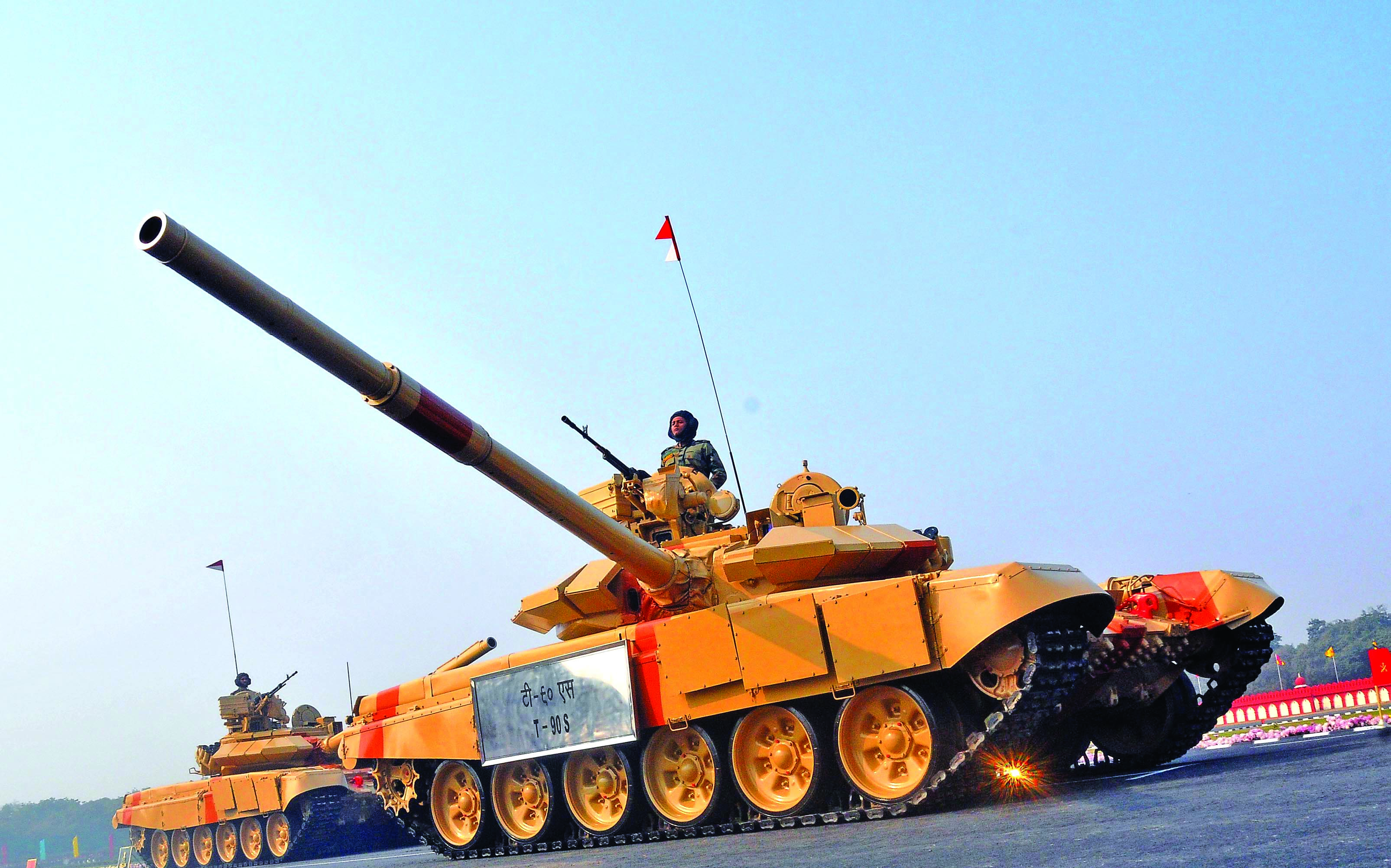
WORK HORSE T 90S tank
at the Army Day Parade
Of particular strategic importance is the construction of high-altitude, all-weather tunnels. The 920-metre Shyok Tunnel, inaugurated in December 2025 on the critical Darbuk-Shyok-Daulat Beg Oldi (DS-DBO) road, provides reliable access to areas near the LAC in eastern Ladakh. This engineering feat mitigates the impact of heavy snowfall and avalanches, which previously isolated forward posts during winter. Similarly, the 13.15 km Zojila Tunnel, being constructed at an altitude of 11,500 feet, is set to provide year-round connectivity to Ladakh via the Srinagar-Leh axis upon its expected completion in 2028. These tunnels are game-changers, drastically reducing travel times and ensuring that the logistical arteries supporting military deployments remain open throughout the year.
Subscribe To Force
Fuel Fearless Journalism with Your Yearly Subscription
SUBSCRIBE NOW
We don’t tell you how to do your job…
But we put the environment in which you do your job in perspective, so that when you step out you do so with the complete picture.






 VIDEO
VIDEO