The allocation for defence in the union budget for 2023-24 seems to cater mostly to committed liabilities. The defence minister also stated during Aero India 2023 that 75 per cent of the capital expenditure would be for purchases from domestic agencies. While nobody can deny the wisdom of being self-reliant, the way one goes about implementing policies and ensuring safeguards is important.
At the same time, indulging in wasteful expenditure and forcing on the armed forces equipment that is not suitable for future warfare is disappointing. While stating that this is not the time for war, the government does not seem to trust the armed forces to do what is right. It also does not seem to want to understand the hardware needs of future warfare. After reportedly clearing the release of Rs 6,500 crore for a lemon called LCA Mk 2, it allows unveiling to the whole world of a similar weight class of aircraft called the HLFT-42 by the same public sector manufacturer.
Fortunately, Lord Hanuman grabbed most of the attention. If it is a supersonic trainer in that class that is desired, then the LCA trainer already exists. What actually will be required is a replacement in the next decade for Hawk aircraft by an aircraft of the USAF T-7 Red Hawk class. For, as long as manned aviation continues to exist, contemporary trainer aircraft will be required. While the departments in the ministry of defence continue to meander incoherently, some other agencies in the national security apparatus seem to be doing things right, especially in preparing for non-kinetic aspects of warfare.
Quantum Onslaught
In future, the single biggest threat to our national defence will come from China’s use of quantum technologies. China is in the process of weaponising quantum computing and claims to have already developed a superconducting quantum processor. While such claims of quantum supremacy may well be part of cognitive warfare, if true, it will be capable of breaking the encryption standards of our security systems, financial systems, governance systems etc., thus plunging the country into chaos. Even block chains will be vulnerable.
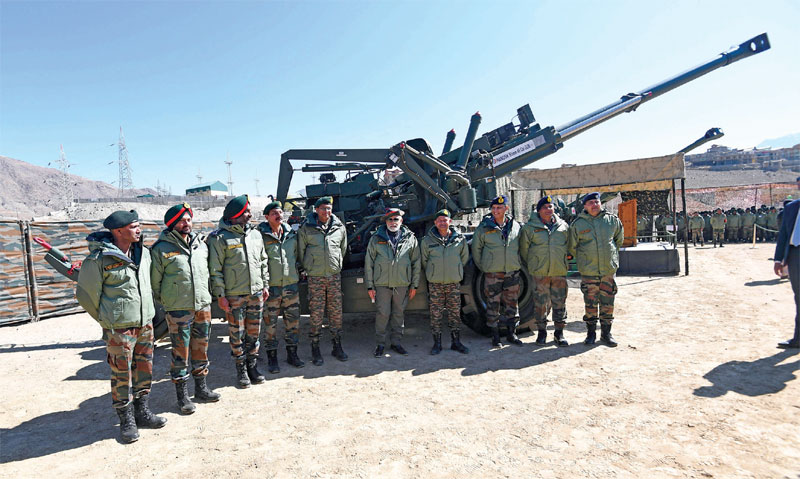
Indian Army needs greater numbers of artillery systems like Dhanush
The use of offensive quantum technologies will be all pervasive across cognitive, non-kinetic and kinetic warfare. Quantum radar may be able to see through stealth, while quantum metrology would offer un-jammable navigation platforms. Likewise, quantum electronic warfare will render our electronic warfare systems obsolete. Therefore, investing and succeeding in the development of quantum technology systems protected by post-quantum cryptography will make our systems inherently secure and uncrackable. Towards this aim, the recent formation of the Indo-US quantum co-ordination mechanism is a welcome step as Post Quantum Encryption (PQE) remains a top priority for the National Security Agency (USA) also. The IAF must prepare to adopt quantum technologies as soon as they become available. This will require elaborate planning and resource allocation.








 VIDEO
VIDEO