The United Kingdom’s (UK’s) Future Combat Air System (FCAS) project, known as ‘Team Tempest’ is expected to enter service from the mid-2030s. Along with other international 6th gen fighter programmes currently under way, it is likely to showcase the biggest advances in combat aviation seen in the last five decades.
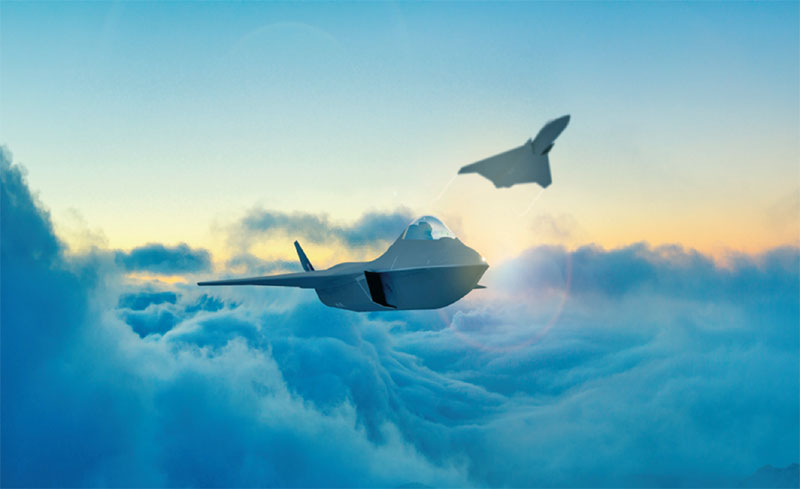
Concept imagery of the Tempest aircraft
Launched in 2018, the GBP 1.9-billion project will deliver a next generation combat aircraft known as the Tempest, to replace the Eurofighter Typhoon and Tornado. The core aircraft is expected to combine a whole network of capabilities, such as un-crewed aircraft and advanced data systems. It will be powered by an advanced propulsion system from Rolls-Royce.
Spooling Up
Rolls-Royce is collaborating with the UK Government, the Royal Air Force (RAF), BAE Systems, Leonardo UK and MBDA UK. Other companies involved are Bombardier Belfast, Collins Aerospace in the UK, GE Aviation UK, GKN Aerospace, Martin-Baker, QinetiQ, and Thales UK.
Significant advances in engine technology are expected to spawn an entire range of high-density power systems, for use on 6th Gen manned and unmanned concepts. Such vehicles will have significantly increased levels of electrification, to power not only the usual array of avionics, sensors and communications systems but also weapons, actuation systems and other accessories.
Rolls-Royce has tested a new, twin-spool demonstrator. It features optimised engine start and is fully electric and accelerated. Simultaneous twin shaft electrical generation provides enhanced power offtake capability; power-sharing between shafts enables mission optimisation/extension and surge margin recover. It also has the ability to manage highly dynamic electrical loads and spikes.








 VIDEO
VIDEO