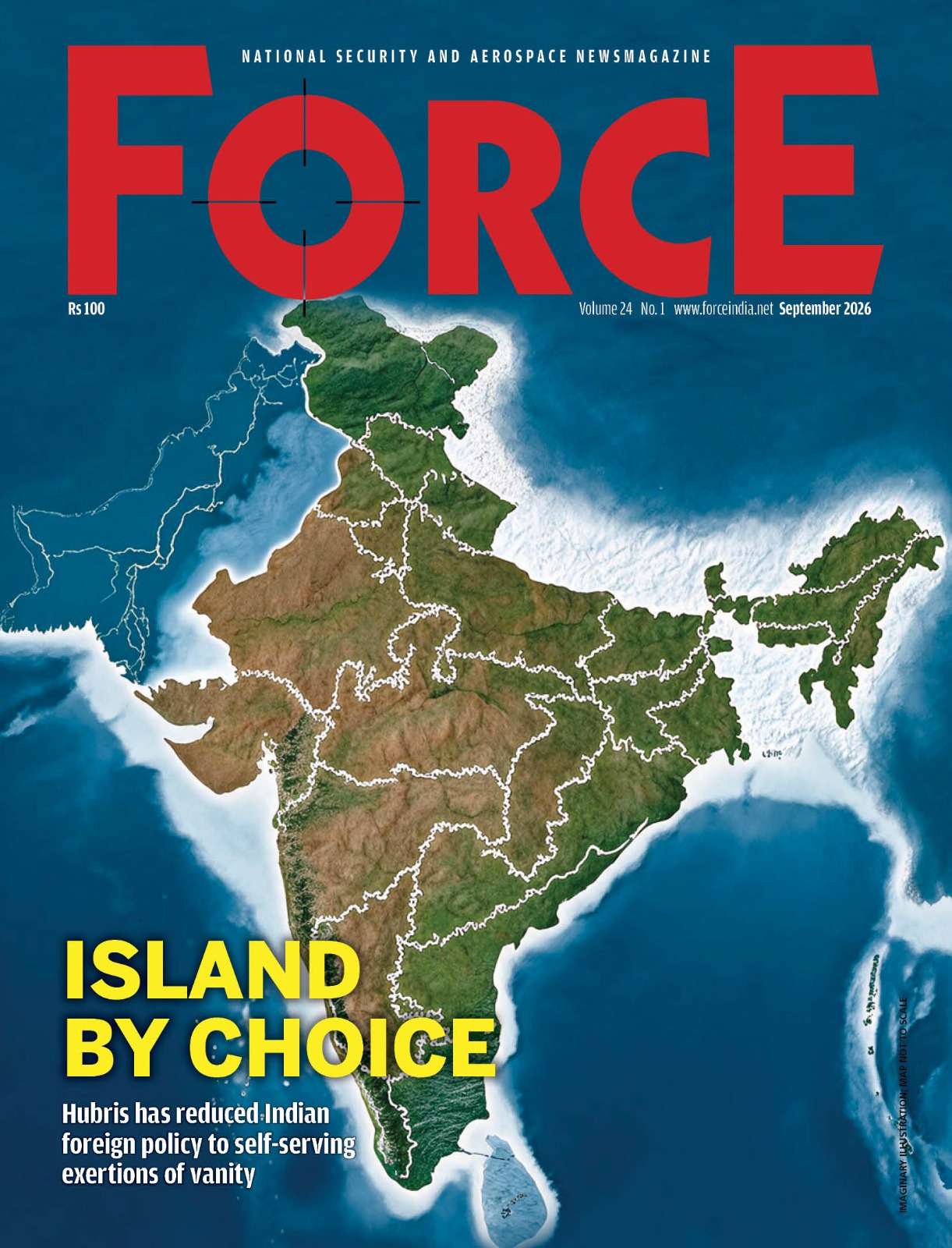
The Indian Ocean is significant in India’s maritime interests and concerns. India’s strategic position grants it a favourable position within the Indian Ocean Region (IOR), while its vast size, trade connections and exclusive economic zone (EEZ) establish a clear correlation between its security environment and the surrounding extended vicinity.
Given geopolitics in IOR, the Indian Navy (IN) ensures the maintenance of the highest levels of operational preparedness for potential conflicts, considering all relevant circumstances. Factors that need to be considered are the tempo and severity of contemporary warfare, the present security environment and the potential for an adversary to launch unexpected assaults on India. In such scenarios, promptly responding to unforeseen events could be paramount. Enhancing our intelligence capabilities and continuously monitoring and analysing the intentions of potential adversaries will contribute to the promotion of preparedness.
The advantageous geographical position of the Indian peninsula, extending into the Indian Ocean and adjacent to the Andaman Nicobar Islands, grants India a significant geostrategic edge over China. This advantage stems from India’s proximity to vital shipping routes and strategic bottlenecks. Thus far, India has effectively utilised its geographical advantage to preserve a favourable balance of power in relation to China. Over the past decade, China has significantly advanced its maritime capabilities. China believes in an expansionist approach. This has coincided with the expansion of the country’s economic and political dominance in the IOR. The Chinese interest in IOR is of utmost importance to China due to its heavy reliance on maritime transportation for global trade and energy requirements.
The Indian Navy is a highly proficient and integrated force that possesses the ability to operate effectively in three dimensions: above, on, and below the surface of the oceans. The IN’s multifaceted capabilities and constant presence in the Indian Ocean have attained it a position of maritime leadership. These measures align with the Prime Minister’s goal of achieving ‘Security and Growth for All in the Region’ (SAGAR). India’s maritime neighbours face various security threats, including escalating instabilities, developing geopolitical and ethnic fault lines, expanding military capabilities and evolving alliances.
Armed forces worldwide are increasingly recognising the significance of jointmanship. Consequently, considerable attempts have been expended recently to foster collaboration and facilitate the integration of India’s three armed forces. The three military branches, Indian Army(IA), IN and Indian Air Force (IAF), share the combined responsibility for the ground and air defence of the Andaman and Nicobar Islands. The headquarters, Andaman and Nicobar Command, in Port Blair, effectively coordinates it. The tri-services command represents the sole entity of its kind, overseen by a commander-in-chief who is appointed rotationally from the three Services. The naval officer-in-charge, Lakshadweep, leads the local naval defence operations of the Lakshadweep group of islands.






 VIDEO
VIDEO