A close examination of the Indian Army’s plans for procuring Future Main Battle Tanks (FMBT) and Future Infantry Combat Vehicles (FICV) reveals that Army HQ has decided to ape the same scientific and military-industrial processes that were adopted by Russia two decades ago for introducing a family of New Generation combat vehicles for the futuristic battlefields.
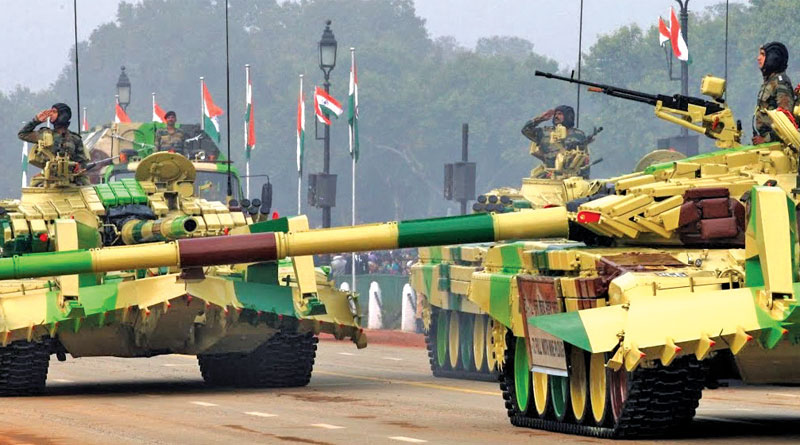
It was in last November that Indian Army HQ issued Request for Information (RFIs) calling for the procurement of approximately 1,770 new-generation, contemporary combat vehicle platforms in various kit combinations in a phased manner under its ambitious Future Ready Combat Vehicle (FRCV) project. The FRCV’s design will form the base platform for both the FBMT (meant for the replacing the existing T-72 family of medium battle tanks) and the FICV, with 2,610 of the latter being required. It is also planned to subsequently develop other need-based family of variants of the tracked FRCV. The FRCV’s FMBT variant will have an all-up combat weight of 50 tonnes, and it will also be required to:
The other FRCV variants envisaged include:
An identical approach has been adopted by Russia and the first firm indications of the kind of futuristic families of armoured vehicles required for the future digitised AirLand battlespace emerged in 2014 when, following 10 years of operations analysis starting in the mid-Nineties and the consequential 10 years of military-industrial R&D work that began in 2005, the Russian Army unveilled its Ob’yekt 148 T-14 Armata FMBT with an unmanned and automated turret, the Ob’yekt 149 T-15 tracked heavy fire-support combat vehicle (FSCV), the Ob’yekt 693 and Ob’yekt 695 Kurganets-25 tracked ICVs, and lastly the 8 x 8 Boomerang VPK-7829 wheeled APC. Just prior to that, the Russia’s Uralvagonzavod JSC had already developed the BMPT-72 FSCV for meeting immediate Russian requirements, which will in future be superceded by the Ob’yekt 149 T-15 tracked Heavy ICV.





 VIDEO
VIDEO