When on 26 December 2004, Tsunami struck due to an undersea earthquake off the Indonesian island of Sumatra, within 12 hours the first Indian naval helicopters were in Sri Lanka with relief material. In the next 24 hours, two Indian naval ships were already in Galle and Trincomalee and three others had been dispatched to Male. And within few days, the Indian Navy had converted two of its ships into hospital ships and sent them to Indonesia, which was the worst hit.
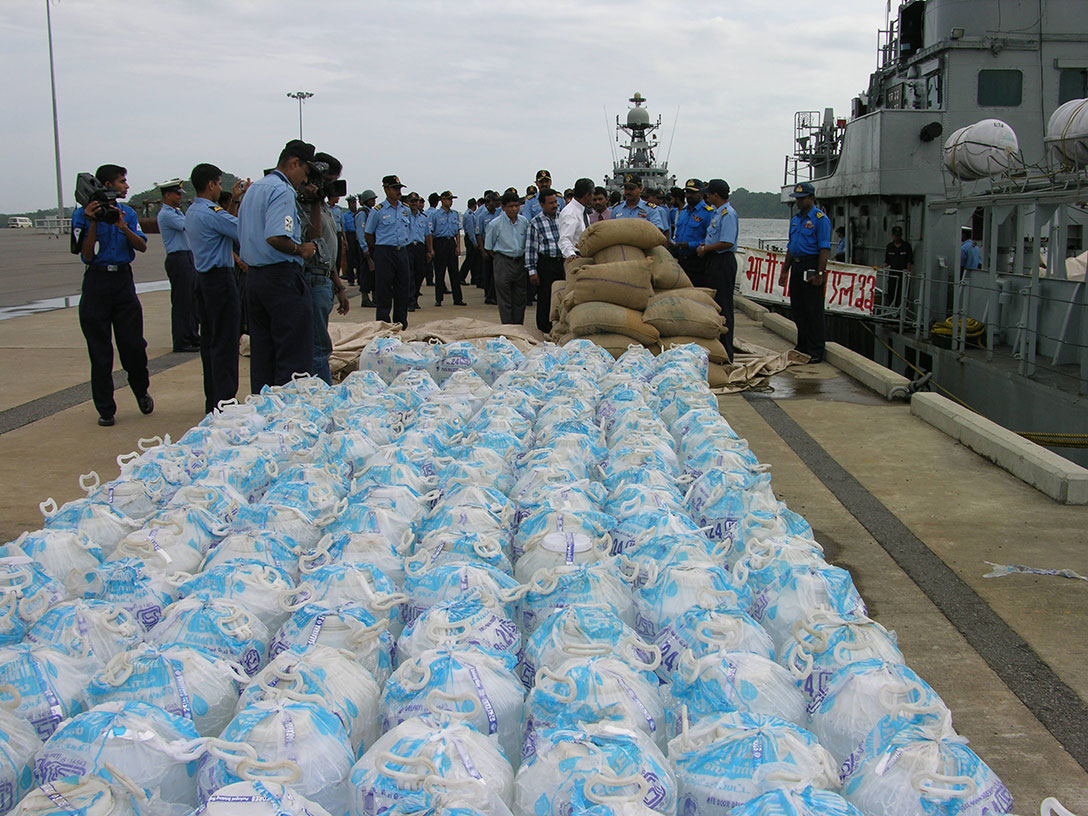
Indian Navy with the relief material post 2004 Tsunami
As India took lead in the relief effort in Sri Lanka following the devastating waves, which had also affected her own coastal states and islands, the USS Bonhomme Richard, a Navy helicopter carrier headed to Sri Lanka to join the US forces in the country, had to change its course to Indonesia. This was because no additional US troops were required as India had already dispatched enough on the largest relief mission — as the officials then described — outside her borders since Independence.
The Indian Navy is the first responder to many crisis situations around the Indian Ocean Region (IOR). Given the fact that the IOR stands significantly exposed to a wide-ranging natural disasters and India’s own vulnerability to them — 58.6 per cent of the landmass is prone to earthquakes of moderate to very high intensity; over 40 million hectares (12 per cent of land) is prone to floods and river erosion; of the 7,516 km long coastline, close to 5,700 km is prone to cyclones and tsunamis — quick access, mobility, availability of the desired relief material and the medical care are some of the key factors that define the Indian Navy’s role in relief operations.








 VIDEO
VIDEO