

A Bridge Too Far
The more the government promotes the narrative of normalcy in Kashmir, the more fault lines emerge
 Ghazala Wahab
In June, all small talk in Srinagar started with a single sentence, said with pleasure and wonderment. ‘Bahut tourists aa gaye na’ (a lot of tourists have come, no).
Two years back, Kashmiris not directly linked with the tourism sector saw the increasing number of tourists as government of India’s ploy to take attention away from the unresolved political issue, as well as evidence of its repeated failure in supporting growth of other economic sectors, such as horticulture. While they did not resent the tourists, they didn’t bother enough about them to comment. And if at all they did, it was mostly as a critique.
The summer before last, when according to official statistics, some tourism records were broken, prompting the Union Territory (UT) administration to deploy all resources, including the Indian Army, in the service of tourists, one retired academic remarked in the course of a conversation that, “Tourism contributes less than 10 per cent to the economy of Jammu and Kashmir. But because it is a high visibility sector, the government projects normalcy by showcasing the photographs of overcrowded Dal Lake or the slopes of Gulmarg.”
Then without really expecting an answer, he asked, “Do you know which is the biggest economic sector here, one that generates the maximum revenue and employment?”
After a moment’s pause, he said, “It’s horticulture, followed by agriculture. Kashmir generates nearly 70 per cent of India’s total apple production. Then there are other fruits like walnuts, almonds, apricots, cherries, saffron and so on. This sector gets very little support from the government and is mostly at the mercy of private operators, whether it is the transporters or cold storage networks. How many times have you heard about the modernisation of cultivation, storage and transport facilities?”
Another hidden facet about tourism is its cyclic nature. Most people who are engaged in the tourism sector do something else in the off-season. For instance, farming, weaving, handicraft and sometimes unskilled jobs, like working as orchard and farm labourers. So even those who earn their livelihood from tourism don’t do it full time.
So, what changed in 2026? Why everyone in Kashmir looked at tourists with pleasure and relief?
The change was the massacre of Hindu tourists in Pahalgam’s Baisaran meadow last year. Despite widespread condemnation by the Kashmiris of the terrorist attack on the tourists, the official stance on tourism changed. The government realised that it had opened far too many remote locations for tourism without adequate security. After all, irrespective of periodic claims, the officialdom is conscious of the reality that the façade of normalcy in Kashmir is maintained through a very extensive and opaque wall of security. One breach and the façade crumbles.
Hence, this year, the UT administration was being extra cautious. Word went that tour operators were told to go slow. However, as one journalist mentioned, tourism stakeholders in Kashmir from small hotels (homestays) and houseboat owners to transporters and tourist guides personally reached out to their customers, offering competitive rates, hospitality and their assurances. So, the widespread wonderment among the locals is at the success of this solidarity network.
“Most of the tourists this time are the recurring visitors,” he said. “They have returned as a demonstration of their faith in Kashmiri people.”
Among the recurring visitors, he pointed out to a specific category—Muslim tourists from mainland India. According to him, the traffic of Muslim tourists has been steadily increasing since 2019 for two reasons. The first is the convergence of the Muslim experience in mainland India with that of the Kashmiris. Even though, like the rest of Indian citizens, Muslims also view Kashmir from the nationalistic perspective, but they are a bit more empathetic because they feel that Kashmiris are targeted both for their religion and politics.
The second is the comfort factor. The public space in Kashmir is vastly Islamic, from the attire and the greeting to language, culture and cuisine. Add to that preponderance of mosques offering Muslim tourists a unique experience of offering prayer in different picturesque locations. Also, unlike other destinations, tourists in hijabs don’t stand out as oddities.
Conflict of Memories\
Another kind of tourism was underway in Kashmir this summer—religious tourism. According to the directorate of archives, archaeology, and museums of the J&K government, since 2019, the UT administration has selected 44 religious sites, mostly temples, for restoration and reopening at the total cost of nearly Rs 10,000 lakh. From this list, quite a few temples have already been reopened.
Restored temples need new pilgrims. Hence, this year, members of Kashmiri Pandit (KP) diaspora along with a few other KP groups, organised Global Kashmiri Pandit Heritage Tour & Conclave 2026 from June 6-14, in which around 300 KPs from the US, Canada, Europe, Australia and West Asia came to the valley on an eight-day tour. Not for sight-seeing, but to visit various temples, as well as to rekindle Kashmir’s Hindu past. The tour concluded with the conclave addressed by Lt Governor Manoj Sinha.
While lauding the tour initiative, Sinha’s address highlighted some aspects of the KP experience in the Nineties, such as the ‘genocide’, ‘massacres’ and ‘forced exile.’ For want of desire or time, he did not contextualise any of the terms he used. He praised the KPs for their resilience and urged them to ensure that the younger generation remains connected to their roots, cultural identity as well as history. To that end, he urged the delegates to invest in creation of educational and cultural institutions in Kashmir.
Interestingly, the most prominent KP organisations in India, Panun Kashmir and Kashmiri Pandit Sangharsh Samiti (KPSS) were neither consulted for this tour and conclave, nor were they invited. Sure enough, both criticised it. In a press conference held in Jammu, Panun Kashmir convenor Dr Agnishekhar castigated the organisers for playing into the hands of the government by showcasing ‘deceptive normalcy’ when all the issues which led to the exodus of the KPs remained unresolved. According to him, the government continued to ignore the concerns of ‘displaced families, Prime Minister Package employees and genocide survivors.’
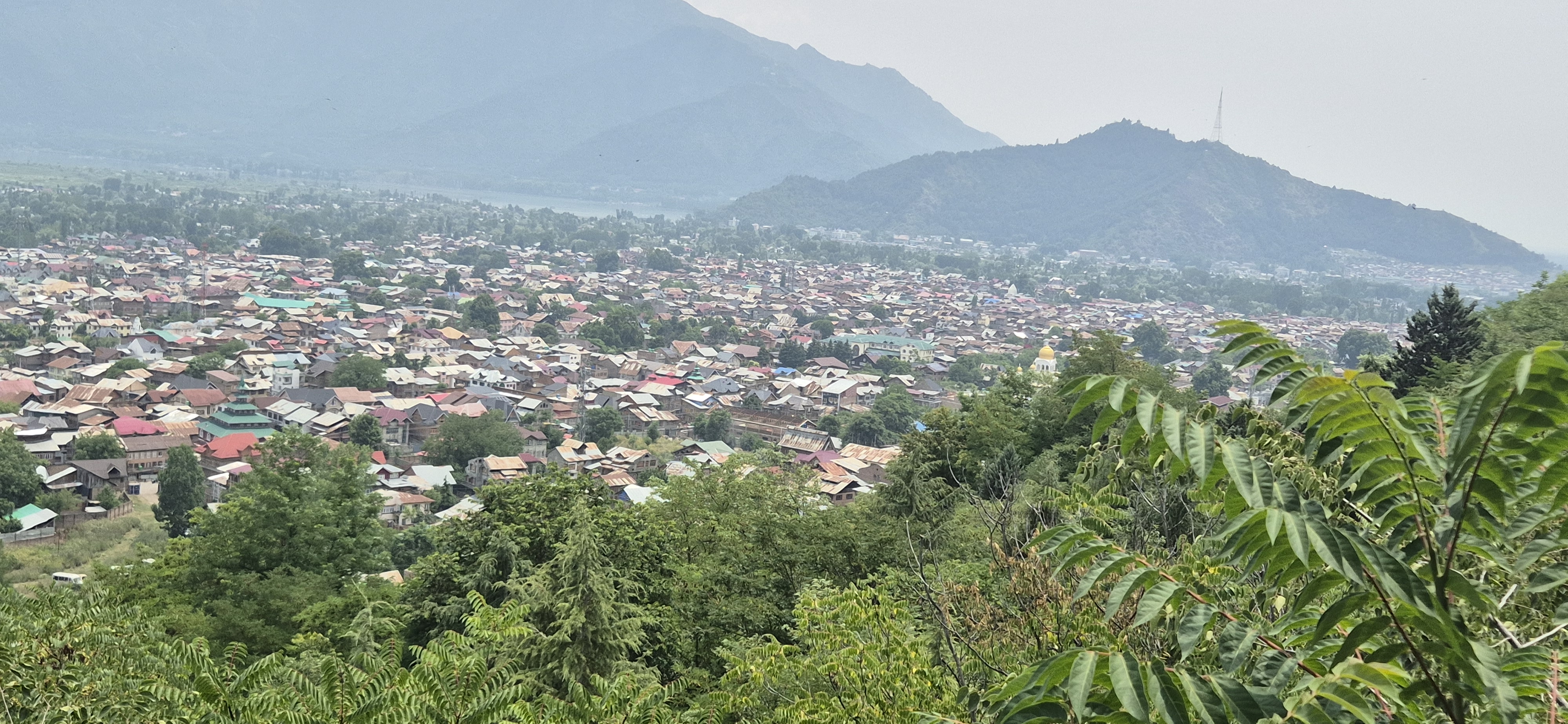
LEFT AND ABOVE A view of the Rainawari area of downtown Srinagar from the foothills of Hari Parbat which leads to
the ancient Hindu temple of Sharika Mata.Seen in the picture are the shrine of Makhdoom Sahib ‘Sultan-e-Arifeen’ (left)
and Gurudwara Chhattipadshahi (right). The temple, the shrine and the gurudwara within a kilometre of each other at the foot of the hill regarded
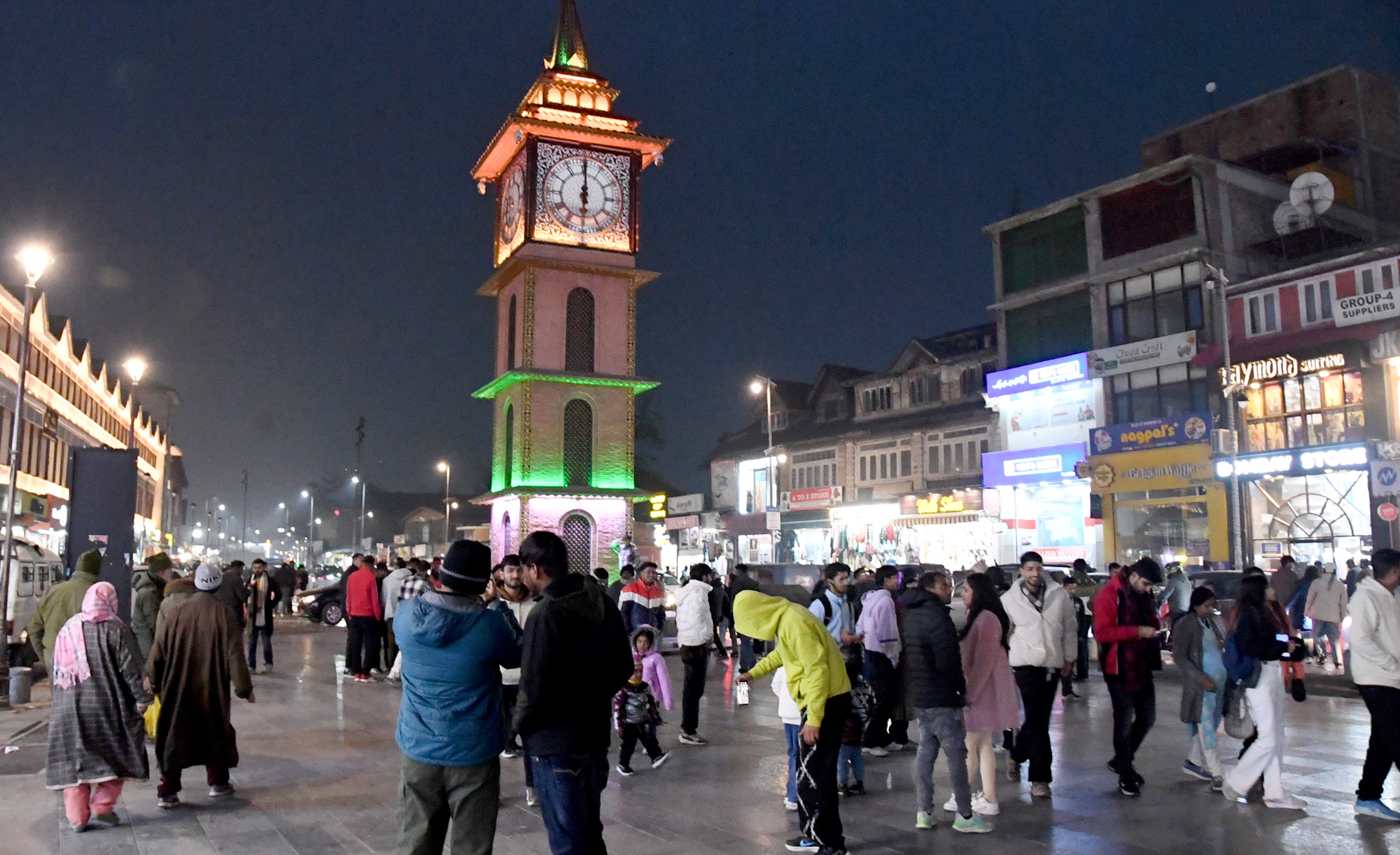
sacred in Kashmir; tourists thronging the clock tower at Lal Chowk
In a conversation with FORCE in Srinagar, president KPSS, Sanjay Tickoo was scathing when asked why he wasn’t invited for even the conclave. “They did not involve me because they know I will expose their agenda,” he says. Tickoos are among the 600 families which remain in the Valley. Surely, Kashmiri diaspora would be interested in the experiences of those who still live in the homeland.
The agenda that Tickoo refers to is decontextualisation of the killing and exodus of KPs. “Today, everyone only talks about the violence which erupted in January 1990, or 19 January 1990. That is the date KPs refer to as the one when synchronised threats of violence were issued from the mosques during the night. But the truth is that this did not happen overnight. The first incident of violence happened on 14 March 1989 with the death of Prabhavati,” he says.
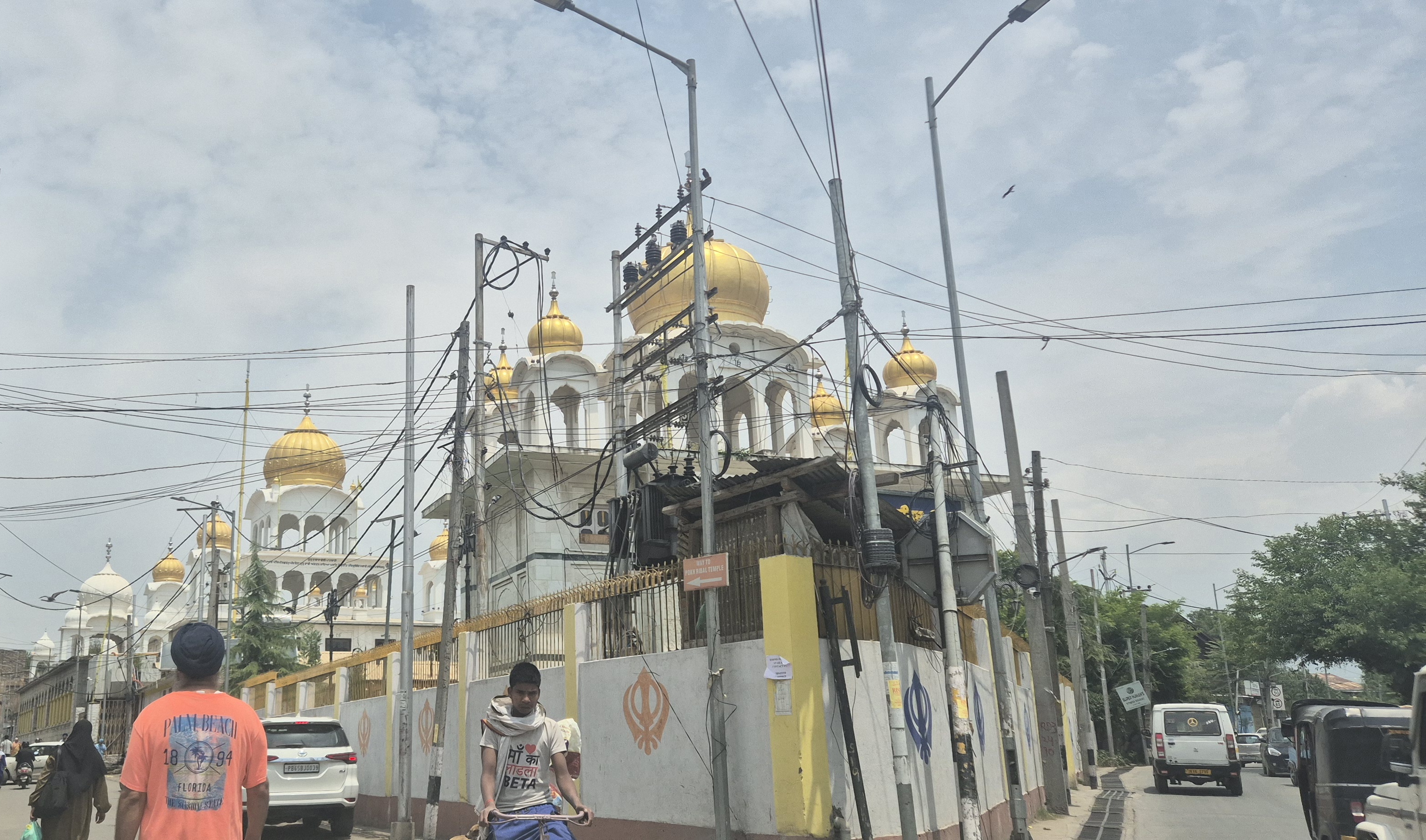

TOP TO BOTTOM Gurudwara Chhattipadshahi; devotees offering namaz at Hazrat Bal on Eid ul Zuha;
and Head priest and custodian of the Chari Mubarak of Amarnath, Mahant Deependra Giri,
along with a group of sadhus, performing Chari Mubarak Puja at Gauri Shankr temple at Pahalgam in August 2025
For Tickoo, this was an important incident because it portended the shape of things to come but nobody heeded it. A blast took place in one of the streets in Srinagar, which injured several people, including Prabhavati, the only non-Muslim victim. While all the injured were tended to in the government hospital, Prabhavati, with a vermilion dot on her forehead identifying her as a Hindu, lay in one corner. All duty doctors ignored her. She eventually bled to death.
But even this was not the first sign for Tickoo. He goes further back to 1986, when at an election rally in Habba Kadal, Farooq Abdullah told the audience that KPs should not look towards India for security. They should look at their neighbours, because only they will protect them in times of crisis. “What crisis was he talking about in 1986?” Tickoo asks rhetorically.
According to Tickoo, the circumstances for the ‘Muslim’ uprising in Kashmir were created by both the state and the Union government for short-term political gains. Young Muslims were allowed to get radicalised and then exfiltrate and infiltrate from the Line of Control (LC). Tickoo points to a pre-planned conspiracy which created the horror of 19 January 1990, when people came out on the streets shouting slogans which called for the killing of the KP men, capture of their women and so on. The mosques across the Valley blared such threats through the night. “From Kupwara (northeast Kashmir) to Jawahar tunnel (border with Jammu), it was the same story. In the pre-mobile era, who had the network for this kind of mobilisation?” he asks.
Coupled with sporadic killings, issuing of lists of names of next victims as well as the silence of the neighbours created a psychosis in which mass massacre seemed imminent. Yet, the state administration remained paralysed. The army remained in barracks.
Tickoo was 23 years old in 1993, and witness to the events which he has recounted several times. They are imprinted on his mind, just as they are on the minds of all Pandits who lived through the horror of 1990, whether in the Valley or, after escaping, in Jammu. These memories got sharpened with constant reiterations, as well as because of the contrast with the circumstances after fleeing Kashmir.
They, however, clash with the memories of the Kashmiri Muslims. While acknowledging the sectarian violence against Pandits, which led to their flight from the Valley, most insists that those killed were State agents operating against the insurgent movement. This is a self-exempting, but a flawed argument. Among those killed in Kashmir in the madness of 1990 (not taking into account the subsequent massacres like the Nadimarg in 1993 in which 23 KPs were killed) were women too. There were also instances of rape before murder.
Similarly, the government contention, also accepted by many Pandits, of Pakistan-sponsored terrorism being responsible for decades of unrest is also flawed. It takes away from the reality of Kashmiri nationalism since 1947. The Union government tried to subsume it into Indian nationalism after Independence, but it continues to exist. People with memories going back to the Sixties-Seventies will recall the existence and acceptance of the ‘us’ and ‘them’ framework, in which Kashmiri Muslims saw themselves as distinct from Indians. This clashed with the Pandit identity which was definitively Indian.
It will be naïve to think that religion played no role in this self-identification. While Kashmiri Muslims aspired for ‘azadi’ or independence at one point and were later content with the idea of quasi autonomy within India, they always had a soft spot for Pakistan because of both geographical history as well as religion. The first all-weather road which connected the Valley of Kashmir with the northern plains of Indian subcontinent was the Tithwal-Muzzaffarabad road, from where Kashmiris travelled to Poonch, Mirpur and thereafter to Lahore for higher education. To come to what became India after Partition, the route was from Lahore to Amritsar.
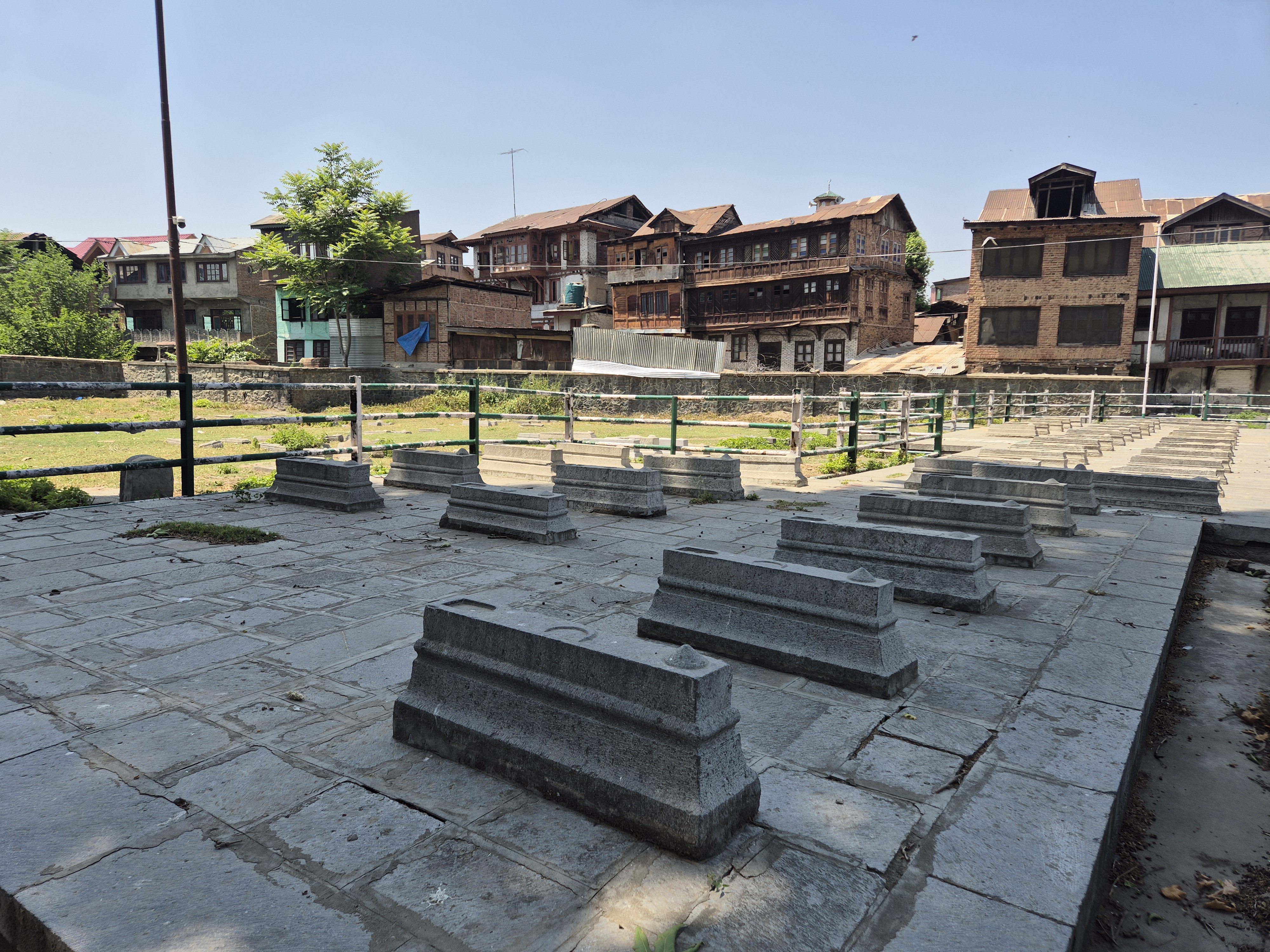
LEFT & RIGHT The first of the many Martyrs’ Graveyard, (Mazar e-Shuhada) in Srinagar. This one,
inside the compound of Ziyarat Naqshband Sahab, holds the graves of 22 Kashmiris who were killed by the Dogra army on 13 July 1931;
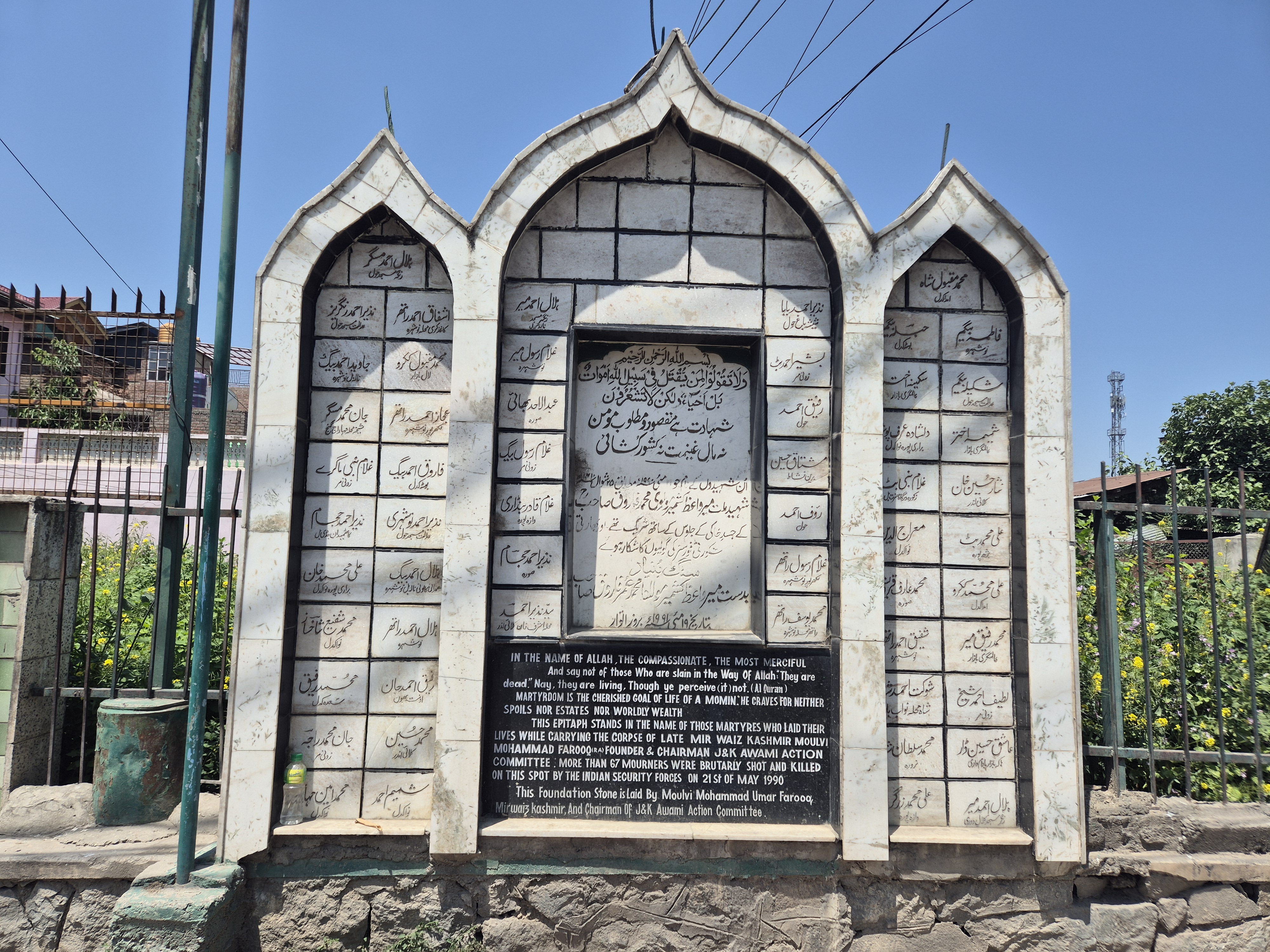
The plaque at the site of the 21 May 1990 Hawal massacre commemorating the dead
Similarly, for the Pandits, once the option of an independent state was off the table, India was the country of choice, for religious reasons of course. Hence, when Kashmiri separatism took a violent turn in 1989, the Muslims and Pandits, for all their everyday bonhomie, were on the opposite sides; and remain so. In this contestation of memories, when Pandits talk about the violence against them and their loss of homeland, the Muslims point out to their young killed and disappeared by the security forces. Each keeps going further back in history to show who has suffered more.
As a result, all debilitating emotions—brutalisation, hurt, betrayal—keep bobbing on the surface. Everything is viewed with suspicion. For example, commenting on the creation of new possible pilgrimage circuit for Pandits, one social entrepreneur said, “There is a huge push to promote pre-Islamic Kashmiri, mostly Brahminical, past. They (the local administration) think that this will eventually facilitate the return of Kashmiri Pandits and diminish the Islamic character of the Valley.”
The unresolved political issues aside, these sentiments do not allow the society to recover, as people keep looking back in animosity. A young Kashmiri academic and author, who insists with a laugh that he is not a nationalist, says, “It is a fact that there is a deep sense of remorse and guilt about 1990. No Kashmiri gloats about it. Since we have no control over our future, it would be best to look back with grace instead of accusation; and with empathy for each other, as both suffered and survived. That’s the only way we can retain our humanity.” That is the bridge the government needs to build.
But it’s easier said than done, especially when politics gets in the way of humanity. Unfortunately, India’s foreign policy has also been shaped largely by the Kashmir question and how which nation regards its position on the dispute. When India’s South Asian neighbourhood refused to see Kashmir through its lens, the government abandoned it to build closer ties with countries which agreed with its stance on terrorism in Kashmir, even when it is not in nation’s long term interest, for example, Israel.
More than any other time in history, this is the time to start a dialogue on Kashmir. After all, both Kashmiri Muslims and Kashmiri Pandits insist that New Delhi’s claims on normalcy are fictitious. That’s convergence to built on.






 VIDEO
VIDEO