

Finding Peace
Centre must first address Manipur’s grievances to rebuild the state
 S.K. Sood
In 1978, the Congress (I) propped up a young farmer from Moga in Punjab, J.S. Brar, as the head of Damdami Taksal after he came into limelight because of clashes between his followers and Nirankaris. They hoped to take advantage of his popularity and helped him form Dal Khalsa Party. Brar, later known as Bhindranwale, went rogue and the events that followed resulted in a national tragedy setting India back by many years. It continues to haunt us.
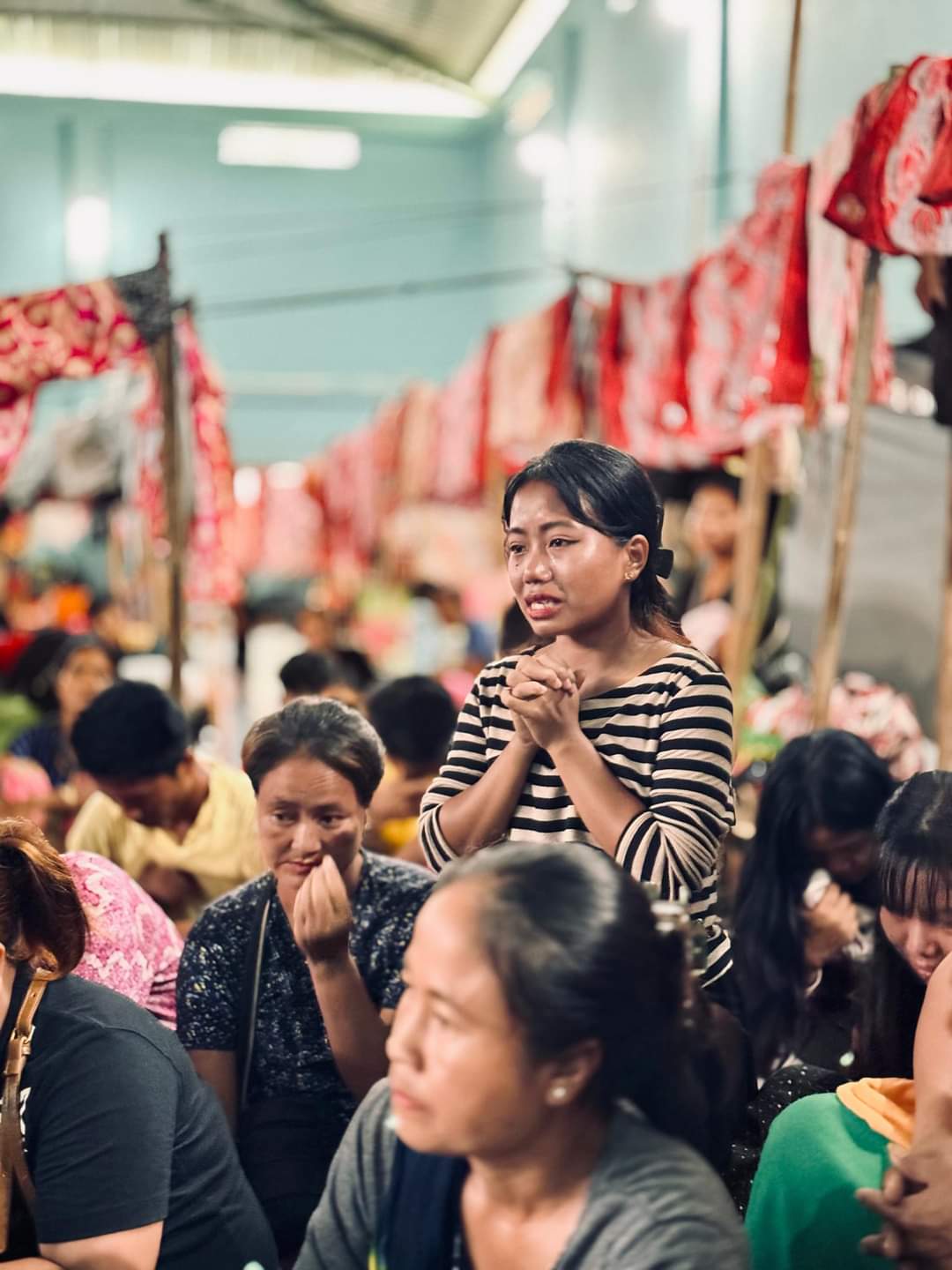
More than 40 years later, history is repeating itself in Manipur where the situation is far worse. The widespread violence between Meitei and Kuki communities which started over three years ago on 3 May 2023, has resulted in the death of over 200 innocent lives and displacement of over 60,000 people who continue to live in squalor and inhuman conditions in camps set up for them, with no prospect of their being able to return to their homes in the near future. The criminals from both communities resorted to violence with impunity, killing people, without any fear of repercussions, raping women and parading them naked and burning property.
The conflict started after the Manipur government failed to initiate measures to put in perspective the interpretation of an order of the high court of Manipur asking the government to ‘consider’ the case of Meitei community to be designated as scheduled tribes. The government also did not care to explain the implications of the order to the tribal people who are strongly opposed to the move. The government apparently failed to place before the court the crucial information regarding rejection of the demand of Meiteis on two occasions in the past. Probably placing the records of consideration and rejection by the registrar general in 1981 and then by the central government on recommendations of then chief minister of Manipur Nipamcha Singh — himself a Meitei — in 2002 would have prevented such order by the high court. Placing this information in the public domain would also have helped avert violence.
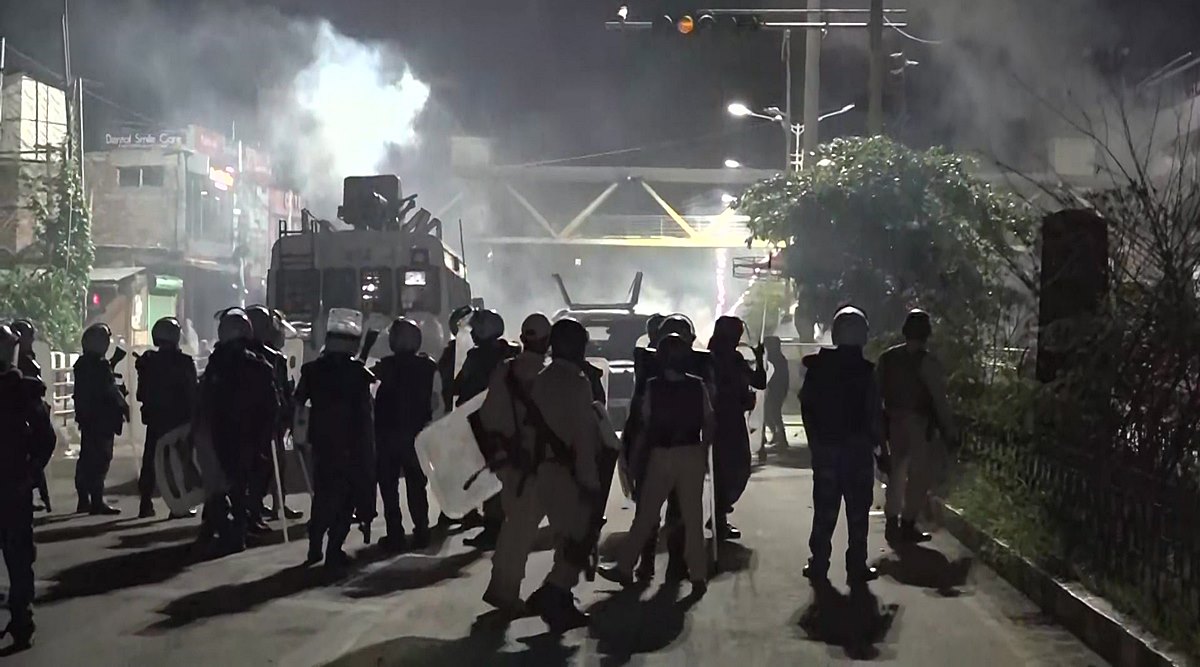
The then chief minister Biren Singh, also a Meitei, belonging to the ruling party at Centre, in spite of having vast resources of the state at his disposal, failed to act, and let the violence continue for almost two years till the President’s Rule was imposed in early 2025. This points towards either his incompetence or complicity in allowing the situation to deteriorate to the extent that chances of reconciliation appear remote.
In an audio recording available in public domain, Biren Singh is allegedly heard saying words to the effect that the home minister of India Amit Shah asked him to use bombs (against Kukis) carefully. The audio recording when matched with his voice samples by a forensic lab in Hyderabad indicated 97 percent match, further fuelling speculations about his complicity in giving a free hand to Meitei groups to continue violence against Kukis. The apparent free hand to Arambai Tenggol, a militant organisation of Meiteis, and letting the Meira Paibis — a Meitei women’s organisation — to obstruct the operations by Assam Rifles (AR) and other central forces also points towards that.
The Manipur Police too became badly divided on ethnic lines and its personnel allegedly got involved in violence. The Meiteis, including police personnel belonging to the Meitei community, wanted the AR to be withdrawn from Manipur as they perceived AR to be helping Kukis. The central armed forces, which were rushed into Manipur, were operating with the proverbial one hand tied behind their back as they were not receiving adequate operational, intelligence and logistic support from the authorities. The police often failed to protect the victims of violence and rapes, if they belonged to the community other than their own. The divide is still so severe that a Meitei policeman cannot be posted in a Kuki area and vice versa. They cannot even visit areas dominated by the different community to investigate cases. Barriers have been established to separate the Meitei and Kuki areas and protocols almost similar to those existing on international border crossings have been put in place. The person belonging to other community cannot cross these barriers. People from Kuki dominated Churachandpur cannot go to Imphal which is Meitei dominated — a mere distance of two hours — to catch a flight. They are forced to travel several hours to Aizawl to reach other parts of the country.
That the situation was allowed to deteriorate to this extent is inexplicable. The central government, which should have imposed President’s rule to bring the situation under control, failed to do so until 2025. Imposition of President’s rule would have enabled deployment of central forces directly controlled by the Centre. The Armed Forces Special Power Act (AFSPA) which is promulgated only in some parts — mainly the hill areas dominated by Kukis and Nagas — of the state, should have been extended uniformly across the state. This would have enabled the central forces to operate freely and apprehend the troublemakers besides recovering thousands of weapons looted from Manipur Rifles and India Reserve Battalions and now available in the society.
The government, instead, resorted to half measures and appointed a security advisor to the chief minister (CM). The advisor was handicapped not only because he was an advisor and did not have insights into the problems in Manipur, but also by the fact that the local police did not report to him. The police reported to the CM — whose impartiality was under contest as stated above. The advisor therefore did not have any operational control over police or central forces nor the authority to redeploy them in accordance with his assessment of the developing situation. The central government therefore failed in their duty as mandated by Article 355 of the Constitution, to ensure that Manipur state government ran in accordance with the Constitution. Suffice to say that the central government appeared missing in action till the imposition of President’s Rule in early 2025. Equally surprising was the lifting of President’s Rule early this year even though the larger issues fomenting violence had not been addressed.
Kukis believe that the violence could have been controlled within a week. However, given that the violence has continued for over three years in which the state and central governments have appeared partisan has instilled a suspicion amongst Kukis that the conflict was a deliberate pogrom aimed at the Kuki-Zo community. This sentiment has hardened their stance and resolve to settle for nothing less than a separate autonomous administrative zone for themselves.
Meanwhile, another dimension has been added to the worsening situation in Manipur by the Nagas — who so far had remained neutral — clashing with Kukis. The violence began with a Naga boy named Sterling being severely beaten and killed, allegedly by Kukis in Litan village in Ukhrul district. Subsequent to the killing of Sterling, the Nagas established checkpoints on National Highway 202 to — according to them — keep a check on illegal entrants i.e., Kukis from Myanmar. Since then, the national highway has witnessed frequent incidents of sniper fire, and the movement is severely restricted.
The violence further escalated with three pastors of Kuki community being ambushed and killed in Kangpokpi district on what is known as German Tiger road. This was an alternate route made by Kukis from Kangpokpi to Churachandpur, both dominated by Kukis, as they could not travel via Imphal. The ambush was allegedly carried out by people belonging to the Naga community.
This was the beginning of a hostage crisis between Kukis and Nagas. The Kuki militant organisation Kuki National Army (KNA) abducted 20 Nagas and in retaliation the Naga village guards abducted 30 Kukis. On the intervention of the government, both Kukis and Nagas released 14 hostages each. The Nagas also additionally released one minor and one more Kuki who was in need of medical attention.
The sequence of events has resulted in strict demarcation between the Naga and Kuki areas on the lines similar to that between Kuki and Meitei dominated areas.
The hostage crisis ended with recovery of dead bodies of six Naga hostages, a day after ‘United Naga Council’ intervened to have 14 remaining Kuki hostages released on 5 June 2026. In spite of the Kuki-Zo Council later admitting and apologising for the execution of the six Naga men, the cycle of violence started again. The Nagas attacked a Kuki village in Kangpokpi district and burned several houses besides killing three Kukis on June 5. They again attacked another village in Kamzong district on June 11 and killed two Kukis besides burning several houses.
The conflict between Kukis and Nagas has to be seen from historical perspective. The conflict between the two communities is at least 200 years old. Kuki-Chin-Mizo is a large community residing in Chittagong Hills of Bangladesh, Chin Hills of Myanmar and Mizoram and Manipur states of India. The main cause of conflict is the issue of how and when Kukis came and settled in Manipur.
The British had started controlling the affairs of Manipur kingdom after the treaty of Yandabo with Burma in 1826. The king of Manipur Gambhir Singh occupied the Imphal valley with the help of the British and it became the seat of the Meitei kingdom.
Colonel William McCulloch, who was the British political agent in Manipur for 27 long years, initiated the Kuki Settlement Policy in 1844 by moving Kuki communities on the periphery of the Imphal valley to serve as a human buffer against the Naga raids. The Kuki settlements referred to as Sepoy villages, served as first line of defence for the Meitei rulers and British interests in Manipur. The Nagas have a feeling that the Kukis have usurped their land and are not indigenous people.
Kukis, on the other hand, contest that the Constitution of India doesn’t define ‘indigenous people’ although it defines who the tribals are; and Kukis are tribals settled in these areas from much before Independence. They also assert that they are patriotic Indians by citing that they had fought against the British in the Anglo-Kuki War of 1917–1919. The Anglo-Kuki war was a major tribal uprising against British colonial rule which tried forced labour recruitment for World War I. Also known as the Great Kuki Rebellion, this was further ignited by excessive taxation, and threats to the traditional authority of the tribal chief.
The Nagas have a different perspective. They believe that the Kukis carried out atrocities against Nagas during this period. They claim that by April 1918, 20 Naga villages were attacked by Kukis and 193 persons were killed besides several of those who went missing. In October 1918, 20 Kubui Naga villages were burned, killing 85 Nagas in retaliation for attack against a Kuki village. The animosity developed during this period has continued till date.
Another cause of conflict between the Nagas and Kukis is the difference in the pattern of land holding. Amongst Nagas, the land is held by the community, whereas among the Kukis, the land belongs to the village chief. Hence, if the Kuki chief has more than one offspring who want to move out or if a strong rival to the chief who doesn’t want to remain under him, move out, a separate village is established. The Nagas allege that many times, the proliferation of villages occur on the land belonging to Nagas leading to friction between the two communities.
The most violent period of conflict between Naga and Kukis was from 1992 to 1997. It started with kidnapping and killing of a Kuki villager in April 1992 in Moreh town on the border with Myanmar. This was followed by a quit notice by Kuki Students Organisation (KSO) to Nagas to vacate Moreh in 24 hours. In September 1992, ‘Kuki war declaration committee’ issued a notice and declared war against the Nagas.
In response, ‘Naga United Council’ issued notice to Kukis settled in Naga areas after 1972 to vacate their houses. The five-year violence led to deaths of over 470 Kukis and 207 Nagas besides displacement of thousands of people. Five thousand houses were burnt and over 300 Kuki villages totally disappeared.
The Nagas feel that the conflict emanated from the desire of Kukis to dominate main routes of trade and commerce. The Kukis, on the other hand, contend that the conflict with Nagas was staged by the authorities and they were made a scapegoat against Nagas to counter their demand for a greater Nagaland.
For now, the peace between Nagas and Kukis is holding after the apology submitted by Kuki-Zo Council for the execution of the six Naga men. However, this peace is fragile, and things may flare up again if the government does not handle the conflict with sagacity. As said above, Manipur is a sensitive border state. The people of the state are emotional and take immense pride in tribal customs. They are unquestioningly loyal to their tribes.
The government needs to take urgent steps to bring the situation in Manipur under control and bring different warring communities to the negotiation table. The most important step that the government must take is to demilitarise the society, which is flushed with modern weapons both brought in from across the porous border as well as looted from the armouries of the state armed police and India Reserve Battalions.
The pain suffered by the people at the receiving end of the unadulterated savagery is immeasurable and it needs a closure. Conditions need to be created for thousands of displaced people of different communities to return to their homes. They need to be adequately compensated and helped in beginning their lives afresh. Another important area to focus is revival of the economy of the state which is among one of the poorest in India.
Bringing peace to this beautiful state must get top priority, and people who know the psyche of the people of Manipur need to be involved in negotiations irrespective of political considerations. Unity and integrity of India is beyond compromise.






 VIDEO
VIDEO