

Compass | Towards Peace
If trust is not built in Manipur now, the rifts will become unbridgeable
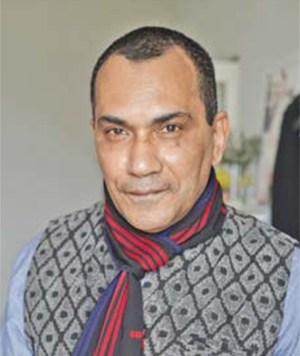 Sudeep Chakravarti
Do we—do you?—wish for Manipur to be at peace? Or do we—do you?—wish for Manipur to be in pieces? I asked these questions at the beginning of a public lecture in Imphal in end-August. The topic? Building trust in Manipur.
To my mind—and surely, in the consideration of those in Manipur who believe in equitable futures—the events that triggered May 2023 were entirely avoidable. And here we are, three years later, with a torn and traumatised gateway state at India’s border with Myanmar.
The state’s three major ethnic groups, the Meitei, the Naga, and the umbrella Kuki-Chin-Zo remain deeply suspicious of the other. And two hyphenations, Meitei-Kuki and Kuki-Naga, who have hurt, maimed, and killed each other—most recently, four Naga men, two just boys, killed by suspected Kuki militants just the day before my talk in front of politicians, army and security officers, bureaucrats, academics, and students. As I write this, news arrived of two Kuki villagers being killed by suspected Naga militants. Are we to see a redux of the horrors of the early 1990s?
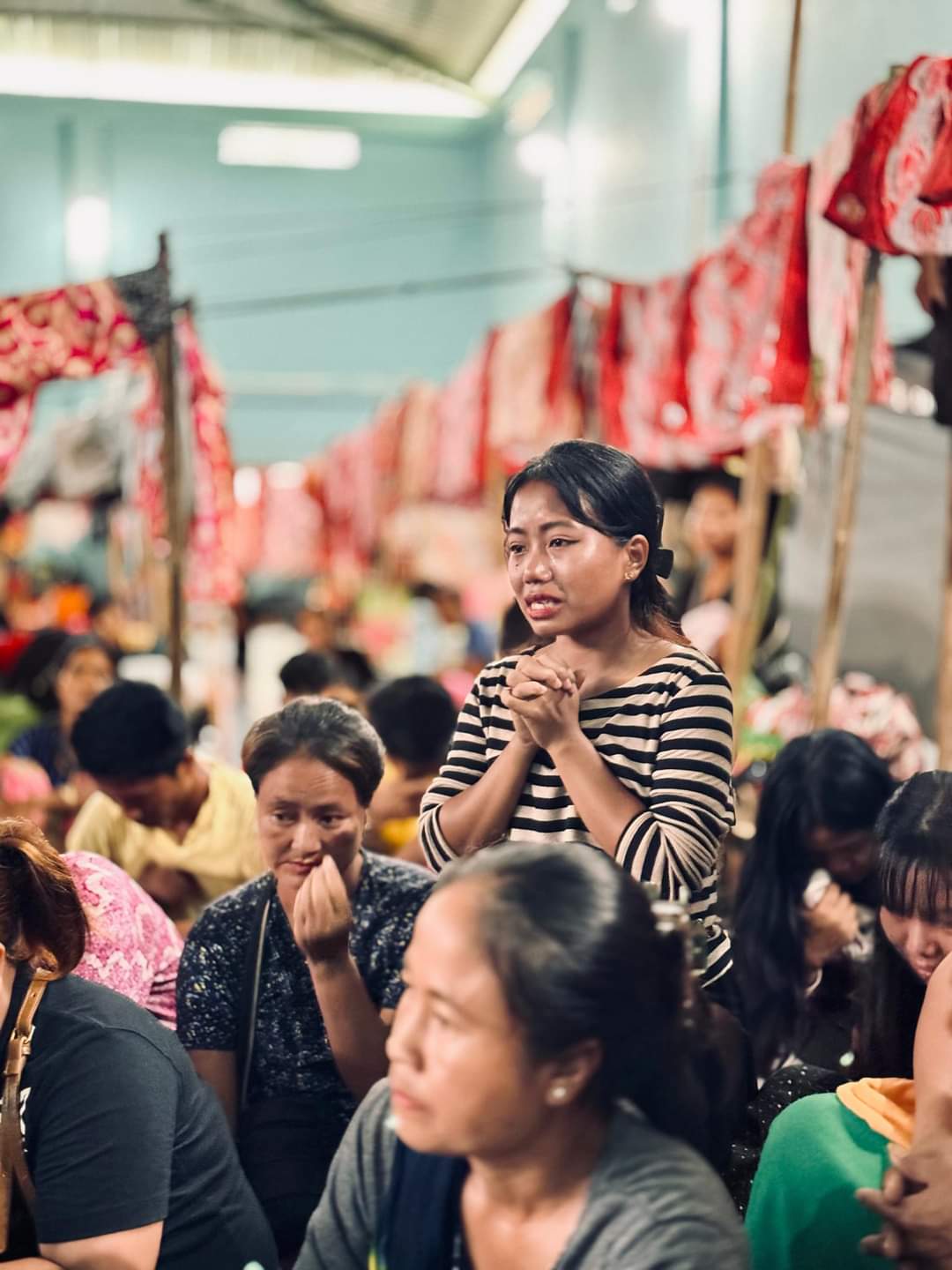
From the current cycle of conflict alone Manipur has clocked nearly 300 dead and more than 60,000 displaced people, while renewed violence and security operations continued to pose risks, as does hostage-taking and the expansion of violence beyond the initial Meitei vs Kuki-Chin-Zo construct. Alongside, there is destruction of homes and religious sites, territorial separation, armed mobilisation, economic disruption—and a profound collapse of trust between communities.
Manipur Must Listen to Itself
In its eagerness to listen to New Delhi, Manipur has for long forgotten to listen to itself. Not just Imphal Valley where most Meitei live, but also the hills, home to the Nagas and the Kuki conglomerate. Each community appears to have forgotten what it is to listen to another community.
Even so, over the past two years there have been several initiatives and proposals—all geared towards damage control, and towards generating trust and truth-telling. There have been engagements by the Union ministry of home affairs, Meitei and Kuki-Zo civil-society initiatives for dialogue, reiteration of Naga concerns, articulation of the priorities of security-forces, and concerns of human-rights organisations.
There have been other discussions. A recent commentary on Manipur in India Today-NE, for example, stated that the separation of populations can institutionalise ethnic division, and argued for the safe return of the displaced, impartial policing, inclusive dialogue, and the protection of coexistence. Another recent analysis, in the Imphal Review, recommended institutionalised dialogue, youth exchanges, joint economic initiatives, and rehabilitation. People’s Union for Civil Liberties also proposed a roadmap in late-2025.
So, in a way what I propose is a synthesis, with the addition of several complementary points.
What we need is a policy-oriented approach to trust and truth-telling, rather than a claim that any one community or institution has either absolute say, or that any one community or any one institution has endorsed the entire framework. The central premise of the approach is that Manipur cannot be brought back to peace simply by stopping the shooting and the killings, nor by imposing a settlement from New Delhi.
The process needs to be sequenced. Security. Humanitarian recovery. Political dialogue. Justice and truth alongside reconciliation. And, finally, a new institutional compact for co-existence.
A Framework For Trust, For Peace
This multi-level framework—call it the Framework for Security, Political Dialogue, Justice, Reconciliation and Shared Development for Manipur—is necessary because the conflict in Manipur has moved beyond the stage of an ordinary law-and-order crisis. The violence that began in May 2023 deepened a three-sided dimension involving Meitei, Kuki-Chin-Zo, and Naga interests, while armed groups, border dynamics, Myanmar’s continuing instability, and competing political claims complicate any simple settlement.
And clearly there are people—and not just from any one community—who would wish for Manipur to remain on a hair-trigger between peace and implosion. And for them the political economy of conflict remains more seductive than one of peace.
The time is right for a Manipur Peace and Reconciliation Compact built around the following pillars:
- An immediate and monitored reduction of violence;
- An inclusive political dialogue mechanism;
- Safe movement and humanitarian access across ethnic boundaries;
- A comprehensive return, rehabilitation, and restitution programme for displaced persons;
- A truth, justice, and reconciliation architecture;
- A negotiated framework for political and administrative grievances without redrawing boundaries as the first resort;
A structured programme for disarmament, demobilisation, and rehabilitation; and
A long-term social and economic compact linking communities through education, trade, infrastructure, and shared institutions.
This Compact can create an encompassing Manipur Peace Council involving all ethnic groups and including civil society organisations—such as COCOMI, or the Coordinating Committee on Manipur Integrity, an influential Meitei civil society organisation—as well as political organisations—the United Naga Council and its counterparts, for instance. And women, youth, internally displaced persons, traditional institutions, independent constitutional and human-rights experts, and elected representatives.
No single organisation can be, or should be, treated as automatically representing an entire ethnic community. This is particularly important because representation itself has become contested.
The objective should not be ‘reconciliation’ in the narrow sense of asking communities to forgive one another. The immediate objective could be coexistence with security and dignity. Reconciliation can develop over time. Indeed, one finds with examples that abound in the subcontinent, that rehabilitation—difficult and complex as it may be—is often easier than reconciliation.
Recognise the Conflicts
The principal mistake would be to treat Manipur as one conflict with one cause. There are at least five interconnected conflicts.
The first is the Meitei–Kuki-Zo conflict, centred on competing perceptions of land, political representation, security, migration, tribal protection, historical grievance, and territorial control.
The second is the Naga question, which predates the current crisis. Naga political aspirations, the activities of NSCN(I-M), and the relationship between Naga-inhabited areas and Manipur’s territorial integrity are factors in Manipur’s political, historical, and emotional environment. Moreover, an analysis by the Manohar Parrikar Institute of Defence Studies and Analyses noted that Naga, Kuki, and Meitei insurgencies have each acquired political relevance through claims of community protection and self-determination. My own writing and that of several colleagues in Northeastern India have also recorded similar observations.
Then we have the insurgency-security conflict. Armed groups have operated for several decades in Manipur. The state consequently possesses an entrenched security architecture involving the Indian Army, Assam Rifles, Central Armed Police Forces, and Manipur Police.
Point four: Humanitarian conflict created by displacement. A person who has lost a house, farm, shop, village, or place of worship does not experience peace simply because a ceasefire is declared. Even so, while the absence of conflict is not peace, it does give us a foundation to build upon.
Point five is the conflict of narratives. Communities now possess competing accounts of who initiated the violence, who is responsible for atrocities, who is an indigenous inhabitant, who represents whom, and whether the conflict is primarily ethnic, territorial, constitutional, demographic, or security related.
A peace process that attempts to settle all five questions simultaneously will fail. The approach is therefore about sequencing and then, calibration and revisiting of approaches when something does not work.
No-Go Areas, Not Red Lines
The initial stage should seek agreement on what no community is permitted to do.
All recognised community representatives, political parties, armed organisations willing to participate, and the central and state governments should endorse minimum commitments: No attacks on civilians. No hostage-taking. No ethnic expulsions. No destruction or occupation of homes and religious institutions. And no obstruction of humanitarian or emergency movement.
Moreover, meaningful dialogue needs to have local structures. We need to recognise that New Delhi cannot be a controlling authority. It needs to display the maturity of a facilitator.
At one level, there cannot be a substitute for the MHA for continuing to conduct high-level negotiations concerning security, armed groups, constitutional questions, political arrangements, border management, and such.
Equally, however, there needs to be a continuous inter-community dialogue. The mandate of such dialogue would be narrower but no less crucial than higher-level dialogue: freedom of movement, security of property, return of the displaced, local security, securing schools, markets, and religious sites, for instance. And the security of access to agriculture, securing community boundaries, and to mediate local disputes.
None of this is likely to be effective without village and district networks. This is important for long-term success. Former neighbours should eventually be able to speak to one another without New Delhi mediating every conversation. The objective is not to make villagers determine constitutional arrangements. It is to solve practical problems.
Beyond all this, the state must become predictable. A peace process cannot function while civilians believe that armed actors determine their survival. Security forces need to prevent attacks and secure highways and essential corridors, besides recovering illegal weapons and preventing armed mobilisation. They are also crucial for supporting humanitarian access and facilitating the return of civil administration.
Safe movement is the first visible test of peace. The peace process should identify a limited number of protected humanitarian and economic corridors. The list aspects of such corridors can include hospitals, markets, schools, and colleges, Imphal’s airport—which remains off-limits to the Kuki peoples—major towns and agricultural areas across the ethnic divides, and of course relief centres. Movement should be guaranteed through jointly monitored arrangements involving civil administration, police, and neutral observers.
Only then can one move to the aspects of displacement, and the return of people, and the claims and settlements of property. Within the overall framework, a Manipur Return and Restitution Mechanism could be established to deal with documentation and verification of claims. Replacement, compensation, and grants for reconstruction come under the umbrella of this function. (Two major caveats apply here. Displaced person cannot be compelled to return simply to produce statistics demonstrating normalisation. Nor should property questions be settled through majoritarian pressure.)
Truth-Telling and Outcomes
As people cannot be asked to forget killings, sexual violence, disappearances, burned homes, or displacement, and as reconciliation cannot become a euphemism for immunity, I fully support the idea of a Manipur Truth, Justice and Reconciliation Commission to cover crimes committed from 3 May 2023 onwards. Such a Commission is necessary to document killings, sexual violence, disappearances, torture, forced displacement, destruction of property, among a gamut of ills.
The Commission cannot replace courts. Serious offences remain the preserve of the ordinary criminal-justice system. This distinction is essential.
These are a complicated mix of red lines and grey areas, but we need to have the belief and fortitude to navigate them.
One thing stands out clearly, however. Manipur requires a structured Disarmament, and Demobilisation Programme that builds in a return to society. It should apply to willing members of all armed organisations and not merely armed members of one ethnic community. The journalist and researcher Pradip Phanjoubam, for example, has advocated comprehensive disarmament for any peace process to have a chance.
A ceasefire without political dialogue risks producing a frozen conflict. A political settlement without disarmament risks producing armed bargaining. Disarmament without rehabilitation risks producing renewed insurgency. And peace without justice in any case creates long-term resentment.
The pivotal question concerns competing political visions.
Kuki political demands, Meitei concerns about territorial integrity, and Naga political aspirations cannot simply be declared illegitimate. But neither should one community’s demand automatically determine the future of the entire state. There can be no territorial change without extensive consultation, constitutional procedure, and consideration of the interests of affected communities.
Non-Territorial Mechanics
Indeed, before discussing territorial restructuring, the peace process should examine non-territorial mechanisms of autonomy and protection. These could—and should—include, among other matters, the following: Strengthened Autonomous District Councils; greater fiscal autonomy for the councils; local development authorities; stronger customary-law protections, and for cultural and linguistic institutions; guaranteed representation; district-level planning; and constitutional safeguards. A study by the Institute of Defence Studies and Analyses has noted the possibility of non-territorial approaches to the competing political claims of Manipur’s insurgent movements.
This does not pre-judge the eventual political settlement. It creates space for negotiation.
In this, the Naga issue cannot be secondary. Any settlement that treats Manipur as exclusively a Meitei–Kuki-Zo dispute will be incomplete, and as mentioned earlier, the United Naga Council and other Naga institutions must have a permanent place in the peace. The objective should be to establish what practical arrangements can coexist while the larger political question remains under discussion. In that regard, it is heartening to note the resumption of the long-stalled outreach between the government of Manipur and the UNC.
In addition, Manipur’s international border cannot be separated from its internal conflict. Myanmar’s civil war affects refugee flows and the mobility of armed groups. It also plays to illegal trade, and movement of narcotics and weapons. Some Indian think-tanks have highlighted the need to integrate Myanmar’s instability, refugee management, and border policy into analysis of the Manipur conflict.
Equally, the media needs to be a part of the peace architecture, especially as Manipur’s media environment is itself divided. The conflict has generated competing information ecosystems, accusations of bias and intense mobilisation via social media. In June 2026, a seminar organised by the Editors’ Guild of Manipur, and the state Directorate of Information and Public Relations explicitly addressed media for communal harmony and responsible journalism. This is a welcome step; we recall the Editors Guild of India cautioning Manipur’s media three years ago for partisan reporting.
The objective, as always, is better journalism, not controlled journalism.
Focus on Youth and Economics
We now come to youth and education, always the most valuable long-term investment for peace. A child who spends three years hearing that another community is responsible for the destruction of his or her home may inherit the conflict even if adults eventually sign an agreement. The subcontinent knows well the resentments of partition-politics that bleed into future generations.
There have been excellent suggestions on the lines of a Manipur Youth Peace Fellowship. The suggestion is that students from different communities should participate in activities including university exchanges; joint research; sports; cultural programmes; entrepreneurship programmes; environmental projects; and oral-history projects—this last has tremendous potential for mutual understanding, for healing.
Naturally, schools should not be forced into artificial ‘unity’ narratives. Nobody believes them anyway—if ever they did. Instead, students should learn the history of Manipur from multiple perspectives. The objective is not to create one official history. It is to create citizens capable of understanding that two or more communities can remember the same event differently without hurting, even killing, one another over the disagreement.
Economic interdependence and a shared prosperity can become one of the strongest long-term incentives for peace. Priority areas could include agricultural supply chains; horticulture; handloom; handicrafts; tourism; digital services; higher education; healthcare; renewable energy; and of course, border trade where security conditions permit. A particularly useful mechanism, as some have suggested, could be inter-district economic corridors, in which market access requires communities to cooperate.
Timetables and Commitments
One can go on about timetables, about what needs to happen in Year 1, Year 2, Year 3—or Year 10. I have a model, a rubric, which I am happy to share. But such a timetable—any timetable—is meaningless without transparency and commitment.
Perhaps a variation of the so-called Manipur Dashboard, a Manipur Peace Dashboard—maintained and monitored by a group multi-community representatives, human rights lawyers and media can track a number of things, including violent incidents; civilian casualties; weapons recovered; displaced persons returned; the number of houses reconstructed; the number of schools reopened; the number of functioning hospitals; functioning—open to all—roads; functioning markets; resolved property claims; the number of inter-community meetings; rebel cadres rehabilitated; just about anything that signals a society intent on recovery.
Because delivery should be demonstrated.
As I see it, the root causes of conflict are—and I have been sharing this to students and public audiences alike for some years: Disrespect for identity, denial of dignity, blocking of aspiration, non-delivery of governance and the criminal justice system, and vote-bank politics. And we know that a sense of security creates political space. Understanding expands that space for negotiation and solutions.
And so, a viable trust building exercise require concessions from everyone, ranging from the Union and state governments and Meitei, Kuki-Zo, and Naga civil societies, to armed organisations. The central principle really is: Do not confuse peace with agreement. The most realistic initial objective cannot be reconciliation. At best, it needs to begin as a form of institutionalised coexistence.
Could a trust compact for Manipur contain the Ten Commitments—an idea that paraphrases what the Young Mizo Association have attempted to do with societal behaviour, or what Meghalaya has attempted to do with governance?
1. Protection of civilians.
2. Territorial integrity through constitutionalism.
3. Security for all communities.
4. Voluntary return.
5. Restitution of property with independent investigation of claims.
6. Justice, regardless of the identity of the perpetrator.
7. Disarmament—with non-state armed formations progressively demobilising.
8. Political dialogue.
9. Shared development with the peace dividend reaching all regions.
10. An outlook for future generations.
Manipur does not need another declaration that peace has returned. It needs institutions that make renewed violence increasingly difficult. It requires demonstration beyond the limits of a purely security-centric approach. Besides, Manipur should be treated not simply as a disturbed state requiring stabilisation as a bulwark of India’s Look East and Act East policies, but first as a society requiring a new political compact. The task is to institutionalise that space. Let us begin with that.
In any case, does the idea of Manipur really have a future except as an idea of shared peace and prosperity?
(The writer works in the policy-and-practice space in South Asia and the Indian Ocean Region. His column, ‘Compass,’ focuses on South Asian affairs and overlooked South Asian flashpoints)






 VIDEO
VIDEO