

Caught in the Crossfire
National security is at stake if the conflict in Manipur is not resolved soon
 Thongkholal Haokip
The three-year long ongoing conflict in Manipur between Meiteis and Kukis is one of the largest civil war-like situations in post-Independent India. The fact that it is still simmering since 2023, shows how widespread and deep-rooted it is. On the face of it, the conflict is a result of the opposition by tribal student groups in the Manipur hills against the single-bench judgement of the Manipur High Court.
The court had directed the state government in April 2023 to submit a recommendation in response to the ministry of tribal affairs on the scheduled tribe status demand by the Meiteis. However, the violence that followed the peaceful protest rally on 3 May 2023 was much more complex; it had layers of multiple and overlapping conflicts as old as the post-colonial Indian state.
The intensity of the conflict manifested not only through the number of people killed and how prolonged it was, but also through the deep division and polarisation it created because of political machinations. It is going to take decades to restore the broken social fabric in the state. The conflict has already resulted in total segregation of the two communities. The Manipur government under N. Biren Singh had taken quite a partisan position in total demonisation of the Kukis, leading to a strong demand by the them for a separate administration in the form of a Union Territory with legislature.
Ending Manipur Conflict
Only two major steps were taken to systematically control, rather than address, the demand of the Kukis. The measures, imposed from the top, are both undemocratic and Hobbesian.
The first was an attempt by New Delhi to strategically strike a balance between the ‘Manipur territorial integrity’ slogans and handling of the increasingly stronger demand for Kuki political autonomy which were expressed in various political talks. Earlier, the Kuki insurgent groups, which signed suspension of operations (SoO) agreement with the government of India and the government of Manipur in 2008, were at loggerheads with the N. Biren Singh government on the issue of extension of SoO in 2023, as well as on the political talks for settlement of the Kuki demands. Singh’s government wanted the ceasefire to be scrapped, openly taking an ethnocratic stand. However, the central government extended the ceasefire or the SoO agreement with Kuki insurgent groups in September 2025. Yet, the Manipur ‘territorial integrity’ clause was maintained to appease the Meiteis.
The second strategy was more political. As there was a strong demand among the Kukis that their 10 MLAs should resign to pressurise the government for political autonomy, the government created two posts of deputy chief minister. One MLA each from Kuki and Naga tribes were accommodated in this arrangement, with a Meitei chief minister. Meanwhile, within the Kuki community there was a strong opposition to this arrangement, which was thought to weaken their political demand.
Despite such allurements, the resolve to maintain separation between the two communities through the enforcement of buffer zones that were created at the peak of the conflict remains strong. This has been used by the Kukis as a strategy to continue their political struggle. Earlier, when the President’s rule was imposed in the state in February 2025, there was an attempt, on the instruction of the Union home minister, to forcibly impose free movement of people on all roads and to ‘take strict action against anyone attempting to create obstructions’. This was done to restore, as stated in the home ministry’s press release, ‘lasting peace in Manipur’. However, there was strong opposition when the security forces attempted to open the roads. Dozens of women were injured and one young man was killed in the confrontation.
.jpg)
Ethnic Cleansing Continues
The Kukis’ persistence in their political demand may have also irritated the other community in Manipur—the Nagas. They had participated in the Naga political struggle, which demanded consolidation or integration of what they claimed as ‘contiguous Naga areas’. The government of India did not make any commitment on this when the historic 16 Point Agreement was signed with the Naga People’s Convention on 26 July 1960. The Kukis have been at the receiving end of the Naga movement, particularly in their effort to integrate the so-called Naga areas in Manipur. The shared spaces become exclusive territory where other ethnic groups in these spaces are considered ‘outsiders’. Between 1956 and 1987, 67 Kuki villages were uprooted in Tamenglong, Ukhrul and Senapati districts, and 36 people were killed, according to Kuki civil and human rights groups.
The Census of India also recorded the decrease in the number of villages. In Ukhrul subdivision, the number of villages decreased from 253 in 1951 to 223 in the next decennial census in 1961, which indicated that in a span of 10 years 30 Kuki villages, or even more, were uprooted. In Tamenglong subdivision, the 1951 census recorded 240 villages, which reduced to 163 in the 1961 census, a decrease of 77 villages. The Mao region in northern Manipur hills also recorded a similar pattern wherein the number of villages in this region reduced from 82 in 1951 to 68 in 1961, which is a decrease of 14 villages. During this decade the Kuki-dominated southern hills, on the contrary, observed an increase in the number of villages. Most of the uprooted Kuki villages were re-established in these subdivisions or districts. In Churachandpur subdivision, the number of villages increased from 263 in 1951 to 290 in the 1961 census, an increase of 27. In Tengnoupal subdivision, there was an increase of 23 villages, from 221 in 1951 to 244 in the 1961 census.
Research shows that such conflict-induced displacement also occurred beyond the international border, into Myanmar. The conflict that broke out in 1993 was more widespread, displacing about one lakh people internally. Almost all Kuki villages in Naga dominated districts were uprooted.
During the last six months of tension in Manipur, this pattern of ethnic cleansing is once again observed. Kuki villages in Naga-dominated districts such as Ukhrul, Kamjong, Noney and bordering areas were attacked, villagers killed and several hamlets burnt down. This included Litan-Sareikhong, Songphel and Mullam in Ukhrul district; Lanchah, Kultuh, Phaimol villages in Kamjong district; K. Songlung, Loibol Khullen, Kharam Vaiphei, and Thingkhojang villages in Kangpokpi district and adjacent to Noney district, Leikot, Nungthut, Teikhang, Lenglong, and Khongmol in Noney district. More than a dozen Kuki tribespeople were killed in these attacks by Naga armed militants. Despite these rampant attacks on Kuki villages, there was selective policing and search operations conducted mainly on the Kuki areas while largely ignoring such policing and other security measures in the adjoining Naga villages.
Welfare Schemes and Fake Villages
This increase in the number of villages in Churachandpur, Tengnoupal, Chandel and Kangpokpi districts was viewed with suspicion during the recent conflict. It was implied that these villages were created by ‘refugees’ and ‘illegal immigrants.’ However, this is being selectively blind to history and conflict-induced intra-state forced population movements.
The former chief minister N. Biren Singh led this campaign during his second tenure starting 2022. He chose to vilify the whole community as illegal immigrants from Myanmar. On 16 December 2023, he made a strong statement that ‘foreigners cannot be allowed to sneak into the state and set up illegal villages.’ Claiming that there has been an ‘unnatural growth of 996 new villages due to illegal immigration’, the former chief minister asserted that ‘the unnatural growth of new villages and population, (was) causing massive changes to the demography.’
Singh was aware of the existence of fake villages or non-existent villages created in the state to benefit from welfare schemes. For instance, on 10 September 2022, Singh, while updating the electoral verification programme of 2019 wherein as many as 67,844 voters, which included fake voters, were removed, posted on his official social media handles that ‘the State Government has singled out and also recommended [to] the Centre for the omission of 282 deserted hamlets under MGNREGS’.
An editorial in Imphal Daily also noted that ‘in 2018 there was official confirmation about 136 villages in Chakpikarong sub-division of Chandel district not traceable though the same villages were earlier enlisted as human settlement areas.’ The social welfare department also disclosed in the same year ‘that 7,038 people out of over 65,000 enlisted for availing monthly financial assistance under the Indira Gandhi National Old Age Pension scheme were found to be fake’. This acute problem of non-existent beneficiaries and villages is not specific to the hills alone. There were reports in Imphal valley that names of non-existing villagers were found in the list of beneficiaries under 2018 Pradhan Mantri Kisan Samman Nidhi (PM-KISAN) in Bishnupur district.
Administrative Error
This narrative of framing the entire Kuki population as ‘illegal immigrants’ or ‘refugees’ was initiated a decade earlier, particularly when social media became widespread. An administrative communication between the then deputy commissioner of Manipur and the sub divisional officer of Ukhrul in 1968 has been frequently posted in social media regarding the resettlement of displaced Kukis in Ukhrul subdivision, which the letter inadvertently mentioned as ‘Kuki refugees from Burma’.
In another viral letter to the ministry of relief and rehabilitation on 15 February 1973, the displaced Kukis who, perhaps, without knowledge of the term, formed an association under the name ‘Burma Kuki Refugees’ Association Manipur’. However, in the subject of the letter itself, while seeking relief and rehabilitation measures, they identified themselves as ‘Kuki Burma Repatriates’, which indicated that they were of Indian origin sent back by the Burmese government. On 14 December 1973, the Indian Parliament discussed the compensation for Indian repatriates from Burma. Furthermore, Tamu district in Sagaing region of Myanmar bordering Manipur, where most Kuki habitation can be found, is a strip of fertile plains where locals are engaged in paddy and other cultivations. Like the Imphal valley, this district attracts settlers, which is in contradiction to the unsubstantiated allegations of push factors of migration.
This kind of administrative error is not uncommon even today. During the first month of Manipur conflict in 2023, many displaced families moved to Mizoram. To give ‘conducive and hassle free’ admission of internally displaced students to government and government-aided schools in Mizoram, the school education department of Mizoram issued a letter to all concerned authorities on 24 May 2023 ‘so that every child who escaped violence gets access to universal education’ in Mizoram.
However, these displaced students were addressed as ‘refugee students’ who had come to Mizoram due to ‘the recent turmoil in Manipur state’. When it was pointed out to the director of school education that these were internally displaced Indian students, and not refugees, a new letter superseding the previous one was issued the same day, replacing ‘refugee’ with ‘internally displaced’ students. While there may not have been enough informed people in the early Seventies to rectify such administrative errors, using those confidential communications knowingly to vilify the whole community, campaigning to disenfranchise them, to the extent of deporting them is not only vicious but evil. However, this form of political mobilisation, hate speech, demonisation, harassment and violence against minorities is not uncommon in India today. Vilification of the Kukis is mainly to delegitimise the political demand of the Kukis, which is thought to be gaining momentum in the current Manipur crisis.
Cross-Border Terror Attacks
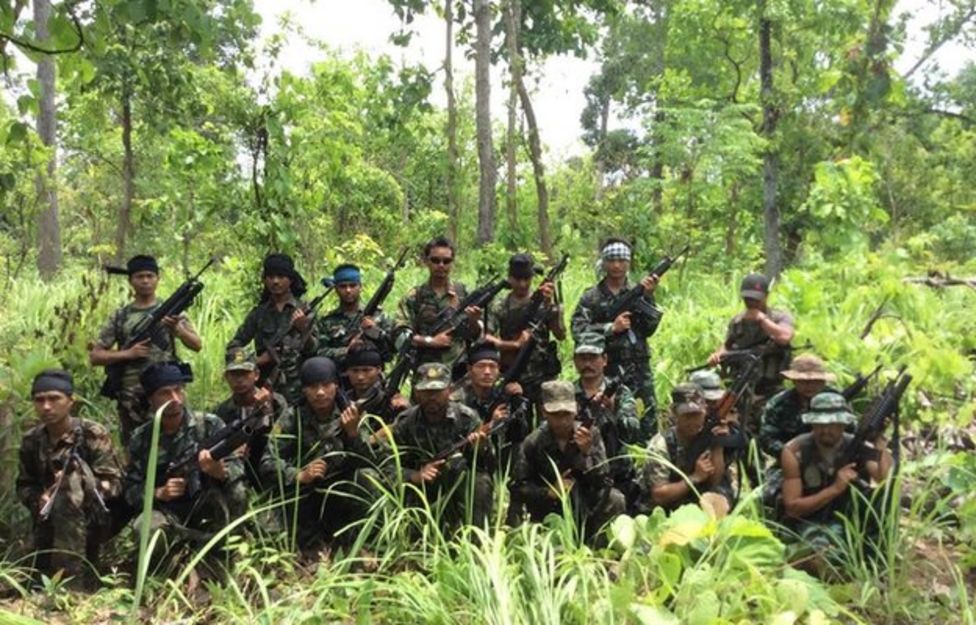
On 11 June 2026, a pre-dawn attack on a small Kuki village, Kultuh, near the Indo-Myanmar border in Kamjong district by armed militants killed two persons from the village. Several houses were also burnt down. Prominent Kuki civil organisations of the district—the South Eastern Kuki Youth Organisation and Eastern Kuki Chiefs’ Association—claimed that the attack was jointly carried out by Myanmar-based NSCN-IM (Eastern Frank) and Shanni Nationalities Army (SNA). Similar attacks were carried out in Lanchah and Phaimol villages in this border district, including Molnoi village situated close to but on the other side of the Indo-Myanmar border.
Many people killed in such cross-border attacks were hapless local or church workers making a living out of swidden cultivation. A prominent religious association in Manipur, the Kuki Baptist Convention, in a press release condemned the cross-border attack and also revealed the identity and their association with the church conglomeration. As per the press note, one of the deceased, Letminlun Haokip, was incumbent Head Deacon (Church Pastor) of Kultuh church and also held the post of general secretary, Parish No. 17 and the other, Lunminthang Haokip, was serving as the incumbent youth chairman of Kultuh church, and also as the youth secretary of Parish No. 17.
These attacks underline the urgent need to halt such border crossing through border fencing and strict vigil of the border by security forces. On the other hand, various Tangkhul Naga civil bodies have been opposing border fencing in Kamjong district arguing that their land and people cannot be divided by ‘artificial border’. Such arbitrary division between people and land happened to many communities in the border areas, including the Kukis. However, the Kamjong district has become a conduit of militant movements between Imphal valley and Sagaing region of Myanmar, and is possibly a drug route from the golden triangle in Southeast Asia in recent times. Transborder insurgency exacerbated by drug trafficking has huge national security implications, fuelling ethnic conflicts in Manipur and other states of the Northeast.
Way Forward
Ethnic conflict in Manipur has huge national security implications as the state shares large porous border with politically unstable Myanmar. What India needs to urgently implement is the fencing of international border with Myanmar and construction of border roads. The continued opposition to such border fencing by local people and the deadlock that emerges should be settled through negotiations by addressing the concerns of local people in the borderlands.
There is also a need for stricter vigil of the border through the establishment of more border outposts, particularly in the Kuki villages in the border areas which face attacks by armed groups from beyond the border. These outposts should be manned by the central paramilitary forces as Manipur police and other forces controlled by the state government are widely accused of being partisan during the conflict. These measures are in concert with the recent objective of ‘securing the nation’ from terrorism, which the central government publicised on 19 June 2026 as one of its achievements in the last 12 years.
Because of the internal turmoil in Manipur and Myanmar, India’s Act East policy has been stalled. Despite this difficult situation, India can convert this as an opportunity to build road and rail connectivity internally in the Northeast. Unlike in the last two decades, the road connectivity need not necessarily be Asian highways and the national highways connecting state capitals. And the roads should be supplemented by economic corridors and border roads connecting districts and towns. One such project should be to extend the recently approved Shillong-Silchar high speed corridor to Churachandpur town in Manipur, and to further extend this all-weather road to New Samtal in Chandel district, which is the southeastern part of Manipur on the Indo-Myanmar border close to Khampat town in Myanmar. These measures in improving connectivity will help solve many national security issues.
Lastly, political issues in Manipur, which centre on land, territory and resources, have fanned ethnic conflicts in this fragile region for decades and continue to endanger national security of the country, and so must be taken care of at the earliest.
(The writer is assistant professor, Centre for the Study of Law and Governance, Jawaharlal Nehru University, New Delhi)

 VIDEO
VIDEO