Catalyst for Chaos

Russia’s nuclear-powered missile and the next deterrence frontier calls for scrutiny and discussions
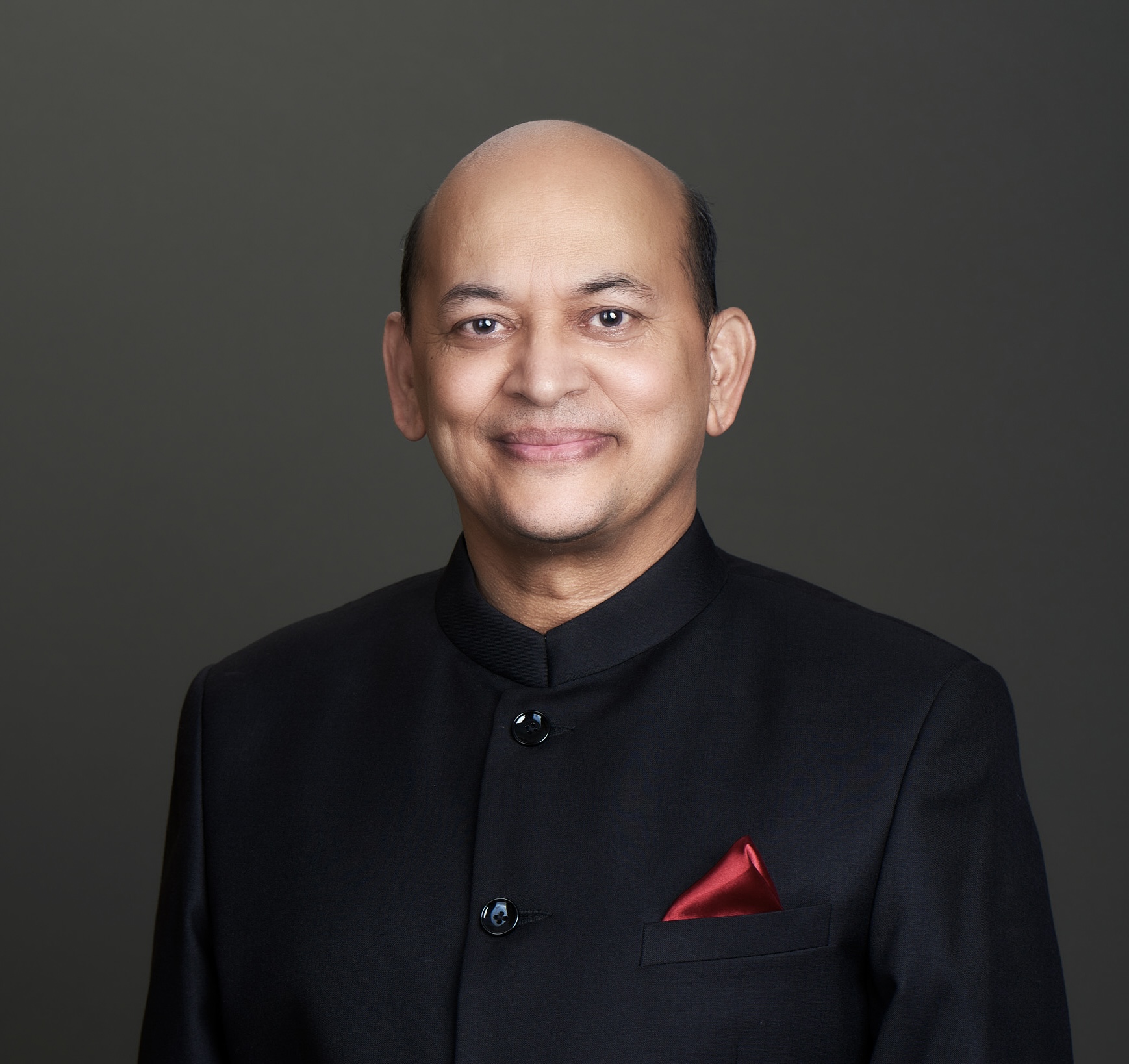
RAdm. Sanjay Roye (retd)

When Russia first revealed the 9M730 Burevestnik, a nuclear-powered, nuclear-armed cruise missile, it was hard to tell whether the announcement belonged more to science fiction than reality. President Vladimir Putin’s 2018 unveiling speech promised a missile with ‘virtually unlimited range,’ capable of flying under radar, circling the globe, and striking from any direction. Moscow described it as a revolutionary leap in strategic deterrence: a missile that could render Western missile-defence systems obsolete.

Seven years on, the Burevestnik is again making headlines. Russia’s military leaders recently claimed a successful test, with the missile reportedly flying 14,000 km over 15 hours before reaching its target. Reuters reported that the system had been under experimental development for years and that the latest tests took place at an Arctic range long associated with nuclear-propelled prototypes. Whether or not these claims stand up to independent scrutiny, one thing is clear: Russia wants the world to believe it has crossed a new threshold in long-range nuclear capability.


A ‘Flying Chernobyl’ or the Future of Deterrence?

The Burevestnik, as its name suggest is a ‘catalyst for chaos’. Literally translated to ‘Storm Petrel’, a small seabird that flies in stormy weather or, metaphorically, a person who causes or thrives on trouble and conflict, the Burevestnik is designed around an audacious concept. A compact nuclear reactor that heats air for propulsion, powering a cruise missile that can remain airborne for hours or even days. In theory, such a weapon could travel enormous distances, loiter near potential targets, and evade radar by flying just tens of metres above the terrain.



ABOVE & RIGHt 9M730 Burevestnik Sputnik India and 9M730 Burevestnik RT on X


It is, however, a profoundly dangerous idea. A nuclear air-breathing engine releases radioactive exhaust into the atmosphere. Western analysts, including the Bulletin of the Atomic Scientists, have described the missile as a ‘flying Chernobyl.’ The risks are obvious: a crash during testing or flight would scatter radioactive debris across whatever territory lies below. Even a successful test spreads low-level contamination along its route.

Further, Russia’s record has not been reassuring. Past trials have ended in failure or explosions. In 2019, an accident linked to this programme killed several engineers at a northern Russian test site. Despite this, Moscow continues to invest political and financial capital in the project. The question is—why?


Strategic Signalling More Than Military Utility

At one level, the answer lies in the physics of deterrence. Russia sees the US and North Atlantic Treaty Organisation (Nato) missile-defence systems as undermining the credibility of its nuclear deterrent. By developing delivery systems that can bypass those defences—hypersonic glide vehicles, underwater drones, and now nuclear-powered cruise missiles, Moscow is trying to restore the psychological balance of fear that underpins deterrence.

But at another level, Burevestnik is a weapon of theatre as much as of war. Announcing such a missile is itself an act of strategic communication. It says to Western capitals: you cannot be sure your defences will work; you cannot be sure where we might strike. Even if the system never reaches full operational deployment, the perception of its existence forces adversaries to rethink their assumptions about warning time, flight path, and interception.

In this sense, the Burevestnik functions less as a battlefield weapon and more as a tool of coercive diplomacy. It projects innovation, audacity, and unpredictability; all qualities Russia wants associated with its strategic identity.


The Physics and the Politics


Technically, the Burevestnik sits at the intersection of possibility and folly. The idea of nuclear propulsion for cruise missiles is not new. The United States explored it under ‘Project Pluto’ in the late Fifties, but the programme was abandoned for a simple reason: the safety risks outweighed the military benefits. A nuclear-powered missile, by design, contaminates everything in its path.

To build such a system, Russian engineers must fit a reactor small enough to mount on a missile, yet powerful enough to generate sustained thrust. It must endure the vibrations of launch, shield its own electronics from radiation, and dissipate extreme heat; all the while remaining light enough to fly. These are staggering engineering challenges.

Even if overcome, the missile’s supposed strengths come with weaknesses. Subsonic flight makes it slow; a 15-hour global flight offers plenty of time for detection. Low-altitude operation complicates radar tracking, but not impossibly so; modern airborne early warning and infrared sensors could, in theory, detect its heat signature. And unlike an intercontinental ballistic missile, whose high-speed re-entry leaves little response time, a wandering nuclear cruise missile would invite interception attempts long before reaching a target.


Arms Control and New Age Weapons

Where the Burevestnik truly matters is on the negotiating table. Its mere existence exposes the growing inadequacy of existing arms-control frameworks. Treaties like New START were built around counting ballistic missiles, not nuclear-powered cruise weapons that can launch from hidden pads and fly in unpredictable patterns.

As arms-control expert Jeffrey Lewis observed, “Verification depends on predictability; the Burevestnik is designed to defeat predictability.” If Russia ultimately fields such a weapon, it will force a rewriting of the rulebook. It would be forced to either include this new class of missile or to acknowledge that the old treaties have outlived their ability to stabilise strategic competition.

The strategic logic is unsettling. By advertising such systems, Russia invites rivals to invest in countermeasures leading to new sensor constellations, advanced interceptors, perhaps their own experimental weapons. The result is not deterrence stability, but a renewed arms race disguised as technological one-upmanship.


Moral and Environmental Frontier

Beyond strategy lies a moral question. A weapon that intentionally spews radioactive exhaust over the planet represents a boundary humanity has thus far declined to cross. During the Cold War, both superpowers tested nuclear propulsion concepts but quietly shelved them, recognising that environmental contamination was not a sustainable price for marginal gains in deterrence. By resurrecting the idea, Russia challenges that norm.

If other powers follow, the world could see a new class of radiological weapons whose environmental cost would extend beyond the war zones. Unlike the temporary fallout of a nuclear detonation, the chronic pollution from repeated testing and flight of nuclear-powered missiles could linger in air currents and ecosystems for generations.


The Storm Petrel’s Shadow

To conclude, the Burevestnik is a paradox. It embodies technological audacity but strategic anxiety. It reflects both Russia’s ingenuity and its insecurity in the face of Western missile-defence advances. Whether the missile ever achieves the reliability and safety needed for deployment is almost beside the point. Its symbolism already works. It tells the world that Moscow is willing to break taboos, revive dangerous ideas, and test the boundaries of deterrence to preserve its sense of parity.

In that sense, the ‘bird’ lives up to its name, signalling that a storm is coming. One might argue that Russia’s nuclear-powered missile may never become a fleet reality, but the political and psychological storm it represents is already reshaping the global conversation about what deterrence, and danger, will look like in the decades ahead.


Subscribe To Force

Fuel Fearless Journalism with Your Yearly Subscription

SUBSCRIBE NOW

We don’t tell you how to do your job…
But we put the environment in which you do your job in perspective, so that when you step out you do so with the complete picture.