

By Invitation | How MBDA is Building Missile Capability in India
Aatmanirbhar Bharat needs partners, not just suppliers, says Ludovic Dumont, Country Head MBDA and MBDA India General Delegate

The landscape of global defence procurement is undergoing a fundamental paradigm shift. For decades, the relationship between emerging military powers and global Original Equipment Manufacturers (OEMs) was largely transactional: a government identified a capability gap, purchased a finished system ‘off the shelf,’ and relied on the OEM for spares and maintenance. However, India’s pursuit of aatmanirbhar Bharat (Self-Reliant India) has decisively ended this era.
Today, the benchmark for success in the Indian market has shifted from the quality of the hardware to the depth of the industrial footprint. The Indian government has made it clear that it no longer seeks mere vendors; it seeks partners. The goal is not just to ‘Buy in India,’ but to ‘Make in India’ and, crucially, to ‘Design and Develop in India.’ For international defence giants, the question is no longer whether they support the vision of self-reliance, but how deeply they are prepared to embed themselves within India's sovereign defence industrial ecosystem.
For the European missile leader MBDA, the transition from supplier to strategic partner has been a journey over five decades—one that now serves as a blueprint for how high-technology firms can align their corporate interests with a nation’s drive for strategic autonomy.
A Half-Century Foundation: Beyond the Transaction
MBDA’s relationship with India is not a recent pivot designed to satisfy current policy trends. It is a partnership rooted in over 50 years of cooperation. By any measure, India is one of MBDA’s most significant international partners, with more than 50,000 MBDA-designed missiles manufactured on Indian soil through various partnerships.
The sheer breadth of the current portfolio demonstrates a deep integration across all three branches of the Indian armed forces. The Indian Air Force (IAF) relies on a sophisticated suite of MBDA systems, including the Meteor beyond-visual-range (BVR) missile, the SCALP cruise missile, the MICA air combat missile, and the ASRAAM on Jaguar aircraft. The Indian Navy utilises EXOCET missiles aboard its Kalvari-class submarines, while the Indian Army has long utilised the MILAN anti-tank missile, manufactured locally by Bharat Dynamics Limited (BDL).
However, historical supply—even at this scale—is no longer sufficient. In the current strategic climate, the Indian government judges overseas companies not by the equipment they have delivered in the past, but by the industrial ecosystem they help create for the future. The shift from ‘Product-Centric’ to ‘Capability-Centric’ engagement is where MBDA has focused its recent efforts.
Moving Up the Value Chain: From Assembly to Development
The cornerstone of MBDA’s current strategy is the move beyond licensed manufacture toward indigenous development and high-end production. This is most visible in the joint venture, L&T MBDA Missile Systems Limited.
While many international partnerships result in simple assembly plants—what defence minister Rajnath Singh has cautioned against by stating India does not wish to be merely an ‘assembly workshop’—the L&T MBDA partnership is designed differently. Centred at a state-of-the-art facility in Coimbatore, this joint venture focuses on both local production and local development.
As MBDA General Delegate India Ludovic Dumont has noted, this distinction is critical. Local production ensures that the ‘nuts and bolts’ are made in India, but local development ensures that the ‘brains’—the engineering expertise, the systems integration, and the design iterations—remain in India.
Building sovereign capability in missile technology is an immense challenge. It requires more than just factory floors; it requires a sophisticated infrastructure of testing facilities, quality assurance protocols, and a workforce capable of managing the extreme complexities of hypersonic speeds, precision guidance, and propellant stability. By integrating with Larsen & Toubro, MBDA is helping to cultivate a domestic engineering class capable of sustaining and evolving these complex weapons systems over several decades.
The Strategic Pivot to Indigenous Sustainment
One of the most telling indicators of MBDA’s commitment to aatmanirbhar Bharat is its recent focus on Maintenance, Repair, and Mid-Life Overhaul (MRO) capabilities. In May 2026, MBDA reached a landmark agreement with the Indian Air Force to establish indigenous MRO capabilities for the MICA missile.
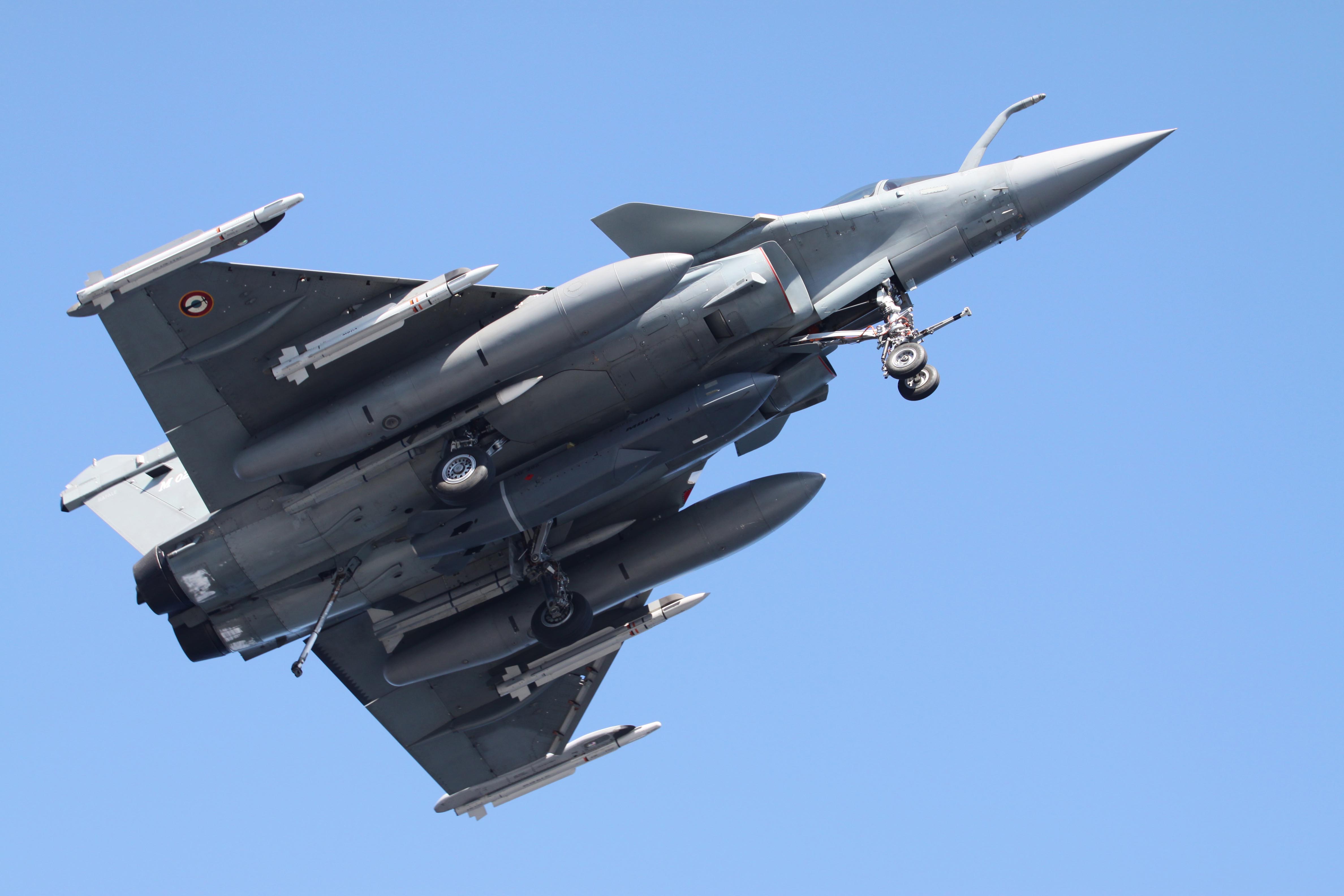
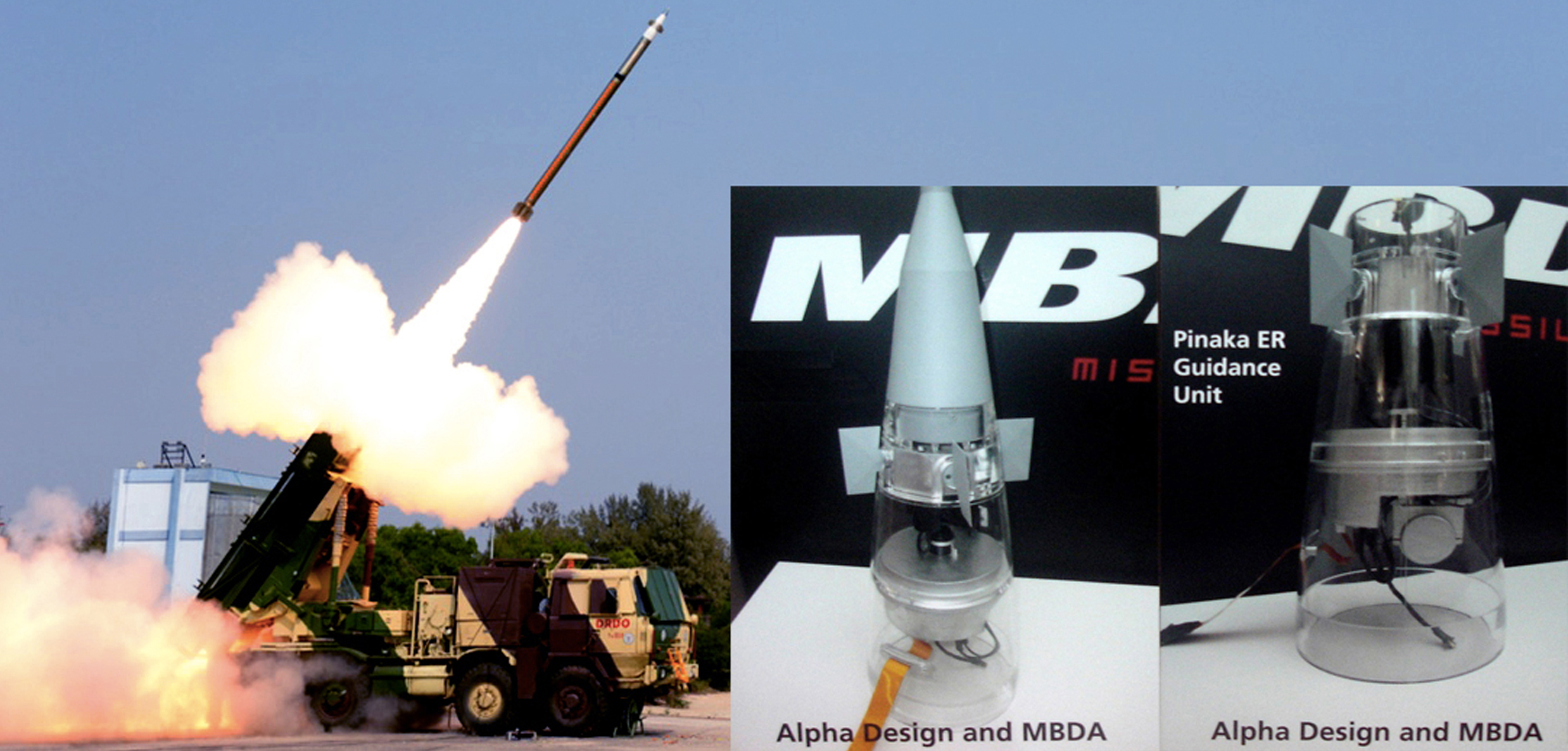
Left & right MICA METEOR on Rafale and Pinaka-2 with MBDA’s GPS terminal guidance kit
To the casual observer, MRO might seem like a secondary concern compared to the glamour of designing a new missile. Strategically, however, it is a cornerstone of sovereign autonomy.
True self-reliance is not achieved when a missile is delivered; it is achieved when a nation can keep that missile operational without needing to ship components back to Europe or the United States for repair. Dependence on foreign OEMs for lifecycle support creates a strategic vulnerability—a ‘kill switch’ that can be triggered by diplomatic shifts or geopolitical tensions.
Under the MICA MRO agreement, the Indian Air Force will operate the facility, while MBDA provides the critical ‘enablers’: industrial equipment, technical data, tooling, training, and engineering support. By transferring this technical data and operational know-how, MBDA is effectively handing over the keys to the system’s longevity. This ensures that India can maintain, upgrade, and support its air combat weapons independently, reflecting the core philosophy of aatmanirbhar Bharat: reducing external dependence to secure strategic autonomy.
Cultivating a Broad Industrial Ecosystem
MBDA recognises that for India to become a global defence hub, the capability cannot be concentrated in a single joint venture. It must be distributed across a wider industrial base.
The company’s strategy involves a multi-tiered approach to collaboration:
1. Defence Public Sector Undertakings (DPSUs): Continuing the long-term partnership with Bharat Dynamics Limited (BDL) to leverage state-owned manufacturing scale.
2. Private Sector Giants: Utilising the engineering prowess of firms like L&T to drive innovation and efficiency.
3. Small and Medium Enterprises (SMEs): Integrating smaller Indian firms into the global supply chain, allowing them to meet international quality standards and eventually export their components.
At Aero India 2025, this ecosystem approach was on full display. MBDA highlighted that its collaboration with SMEs is central to its long-term strategy. By helping Indian SMEs develop the precision manufacturing capabilities required for missile components, MBDA is helping to build a resilient, tiered industrial base. This creates a ‘multiplier effect’ where the skills learned through MBDA projects can be applied to other indigenous Indian defence programmes.
Sovereignty Through Partnership: A New Model for the Global South
The language MBDA employs in its Indian operations marks a departure from traditional corporate rhetoric. The company does not frame localisation as a ‘regulatory requirement’ or a ‘contractual hurdle’ to be cleared to win a bid. Instead, it frames it as a shared objective of sovereignty.
This shift in perspective is vital. When an OEM views localisation as a burden, it tends to transfer ‘low-hanging fruit’—simple parts and basic assembly. When an OEM views localisation as a partnership in sovereignty, it is more likely to share the high-value intellectual property and technical processes that allow the partner nation to grow.
By aligning its corporate goals with India’s national security objectives, MBDA is positioning itself as a ‘vested partner.’ The logic is simple: as India’s domestic capability grows, the market for high-end, co-developed systems expands. A more capable Indian defence industry is not a threat to MBDA’s business; it is the primary driver of its future growth in the region.
The Legacy of Capability
As India continues to climb the value chain of defence production, the expectations placed upon international partners will only increase. The era of the ‘supplier’ is over; the era of the ‘industrial partner’ has arrived.
MBDA’s trajectory in India—from the early days of licensed production to the establishment of the Coimbatore facility and the implementation of indigenous MRO for the MICA missile—illustrates the path forward. The success of these initiatives will not be measured solely by the number of missiles delivered to the Indian armed forces, but by what remains in the country after the contracts are signed.
The true legacy of this partnership will be found in the engineers trained, the SMEs scaled, the technical data archived in New Delhi, and the production lines in Coimbatore. By focusing on capacity building, MBDA is helping India move closer to a future where it does not just buy the best technology in the world, but develops it.
For a nation determined to transition from being one of the world’s largest importers of arms to a leading exporter of defence technology, such partnerships are indispensable. In the pursuit of aatmanirbhar Bharat, MBDA has recognised the fundamental truth of the modern era: the only way to remain relevant in India is to help India become sovereign.





 VIDEO
VIDEO