The scuffle in the Galwan Valley can be dubbed as one of the most serious transgressions by Beijing against India in Ladakh (western sector) in recent years with the Chinese forces going as far as bringing in equipment for construction of bunkers.
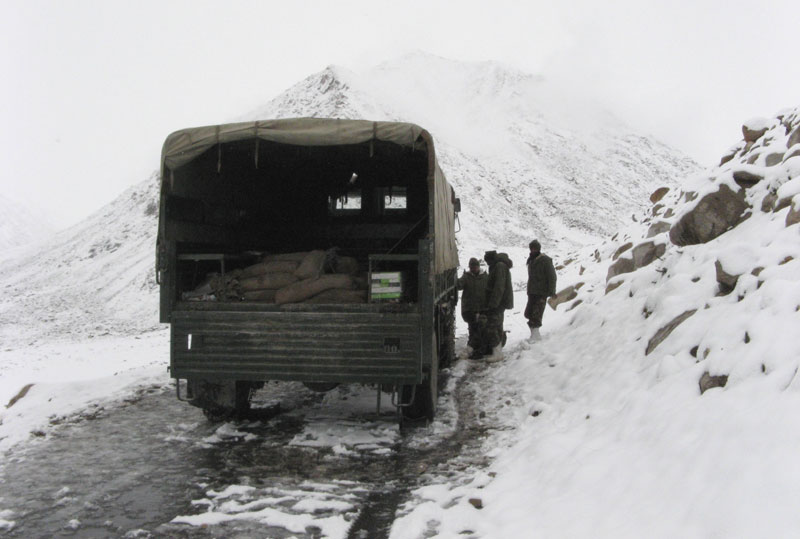
HOSTAGE TO WEATHER The road from Leh to Pangong Tso via Chang la
The Indian and Chinese armies have brought in reinforcements into the area around Galwan river as well as Pangong Tso lake, Demchok and Daulat Beg Oldie (DBO) along the Line of Actual Control (LAC) in Ladakh, resulting in what in military jargon is called a standoff. The Indian Army is also resorting to ‘aggressive patrolling’ in several sensitive areas.
It is believed that China has pitched about 85 tents in the area to house its increased troop deployment. Several rounds of talks between local military commanders failed to end the standoff. China’s state-run media Global Times quoted the country’s analysts as saying that the move is ‘believed to be the strongest military response…’ along the border ‘since the Doklam standoff.’
Tensions in Eastern Ladakh first started erupting on the evening of 5 May 2020 when 250 Chinese and Indian soldiers were engaged in a violent face-off, leaving troops on both the sides wounded.
The Trigger
Apparently, India’s current spate of border infrastructure construction activities has riled People's Republic of China (PRC). The Chinese have been lodging their reservations to the construction of a bridge near the Galwan river in eastern Ladakh, even though it is inside the Indian territory. There is no proper demarcation of the LAC. While India maintains that the LAC starts at Finger 8, the Chinese claim it begins at Finger 2.
Therefore, laying its claim on the territory, the Chinese have objected to the construction of Indian infrastructure and emboldened its border control measures by bringing in a large number of troops from Border Defence Regiment (BDR). Sources say India has decided to conduct ‘mirror deployment’ in the region.
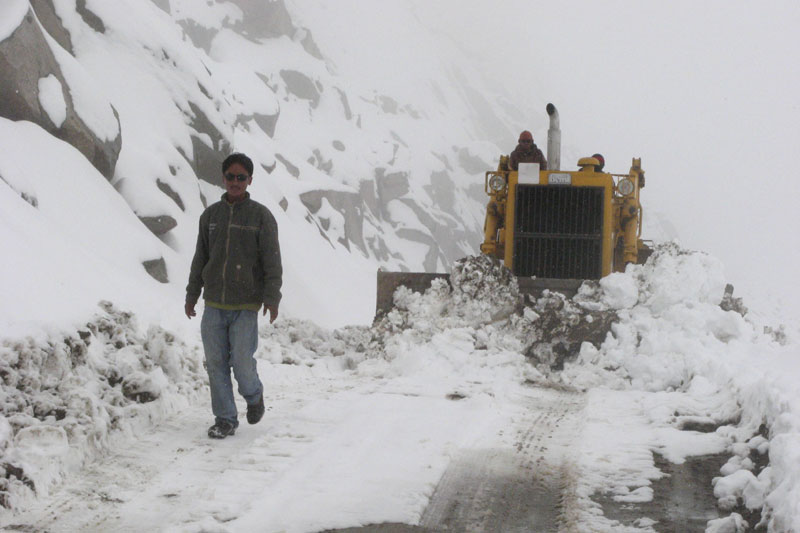
The road from Leh to Pangong Tso via Chang la
Stretching from Ladakh to Arunachal Pradesh, the two countries share the world’s longest unmarked land border which stands at 3,488 kilometres. Beijing and New Delhi are at odds on the perception of their respective frontiers, leaving the Sino-India border un-demarcated.
In response to a query on recent India-China border flare ups, the US principal deputy assistant secretary of state for South and Central Asian Affairs Alice Wells said there is a method to the Chinese operation and such tactics are part of Beijing’s strategy to constantly disrupt the status quo on the border and in the South China Sea.








 VIDEO
VIDEO