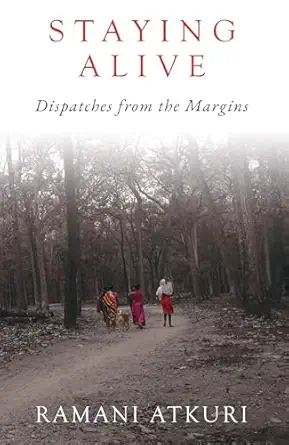
 Ramani Atkuri
Draupadi, the village health worker, told me how things had changed when the villages were relocated in 2009, when the Achanakmar forest was declared a tiger reserve and it was decided that the core area should have no human habitations.
The villagers were moved in a hurry, and lived in tents of plastic sheeting in the new location for over a year, till their houses were constructed. Although each household was promised ₹10 lakh in compensation along with 5 acres of land, they were ultimately given only ₹50,000. The rest was apparently accounted for by the costs of constructing the houses and community amenities, such as the school, AWC, road, borewell and so on. They had to construct houses themselves and were paid daily wages for it. This money for their wages was taken from the compensation allocated for relocation and rehabilitation. The villages of Bankal, Bokrakachar and Sambhardhasan were relocated to the Kari Dongari panchayat, near Kari Dongari village. The allotted land was fenced, depriving the people there (mostly Yadavs and other backward castes) of grazing areas for their cattle. This generated deep resentment, as the relocated Baigas—seen as uncivilized groups historically confined to the jungles—had now become encroachers on land the villagers considered their own. Tensions escalated, with the locals uprooting the government’s fencing and allowing cattle to graze on the crops the Baigas tried to cultivate on their land. The land itself was not very fertile and had previously been used mainly for grazing rather than agriculture.
After a few years of conflict and poor yields, the Baigas gave up. Their traditional sources of income, based on collecting and selling minor forest produce like tendu leaves, mahua flowers, sal leaves and seeds, were now unavailable because they no longer had access to the forest. Some migrated to nearby towns as daily wage labourers. Others started purchasing mahua flowers and distilling mahua liquor at home. This was a relatively easy source of income without the demands of manual labour, but it also led to alcohol dependence among the men.



 VIDEO
VIDEO