How planning and providence helped the army in the battle of Asal Uttar. An extract
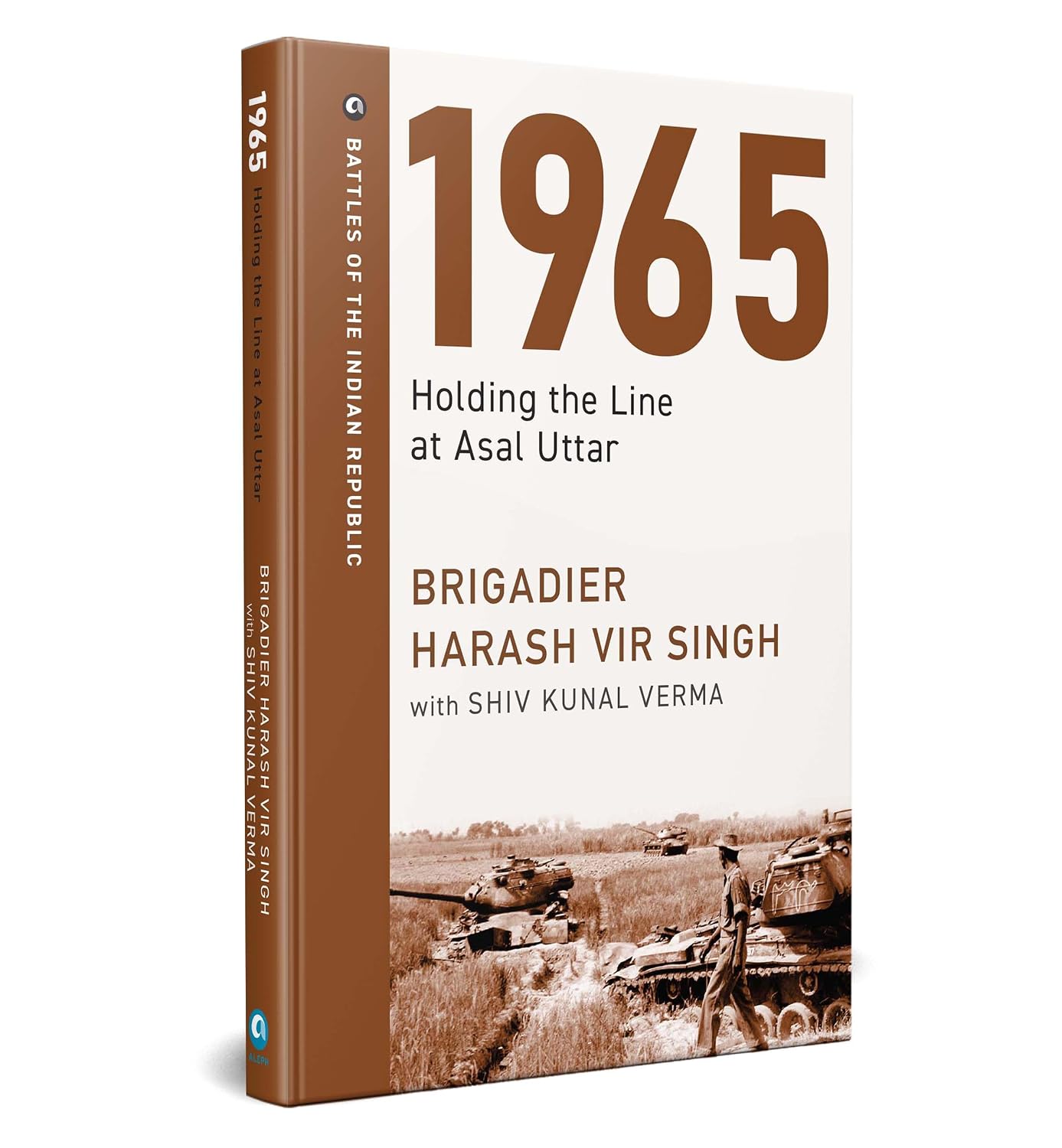 Brigadier Harash Vir Singh with Shiv Kunal Verma
On the night of 6 September, Major General Gurbaksh Singh reviewed the situation. The Division had encountered fierce artillery fire during its advance and had been compelled to fall back in order to regain cohesion. The pause that followed was no longer simply a withdrawal. It was a moment in which the division chose its ground. That ground was Asal Uttar.
After the failure of the multi-point offensive on the Ichhogil Canal, the situation in the Khemkaran Sector had altered in both shape and meaning. Out of the six infantry battalions of 4 Mountain Division, only three and a half remained intact. These battalions were scattered across a wide stretch of country and were not in compact positions that could offer any serious obstruction to a determined thrust along the two natural axes of advance from Khemkaran, one toward Bhikkiwind and Amritsar, and the other towards Patti and Tarn Taran. The only armour available to the division was the Sherman regiment of the Deccan Horse.



 VIDEO
VIDEO