The health worker in a PPE kit, a mask and protective covering on the head is an emblematic image of the present pandemic which will remain with us long after its havoc and fury have been spent.
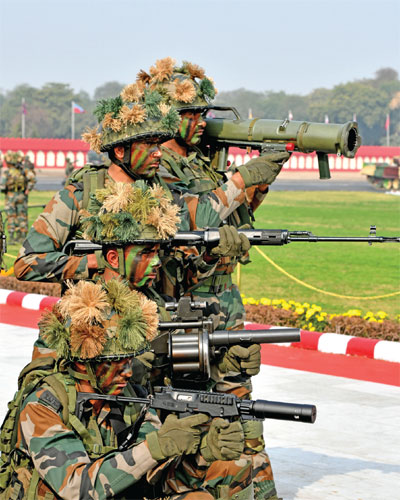
The fireman in his shining helmet and engine (so beloved of children), and the soldier on the ground seeking protection on the battlefield, follow the same principles of maximum personal security with need to retain flexibility and agility to carry out his/ her task. The parallels continue whichever way one looks at it, but reverting to the main point, the purpose of protecting the individual is to allow him to continue to be effective without falling prey to an enemy, a deadly disease or a calamity.
The first time the criticality of personal protection was brought home to me was during operations when fighting against the LTTE as part of the Indian Peace Keeping Force in northern Sri Lanka. Encounters with the militants were not frequent but their ingenious improvised explosive devices (IEDs) were taking toll of our soldiers all the time. The incident referred to occurred inside deep jungles when a column of commandoes accompanied by their supporting Sappers were searching for a suspected hideout. A tripwire activated an IED which was an improvised Claymore mine and injured two officers and some jawans.
Many of them suffered pellet wounds in their backs because the way the IED was placed to hit individuals coming at the back rather than the front where the tripwire was placed. As a psychological tool it was deadly because no one knew who the IED would hit. In this case if these soldiers had been wearing bullet proof jackets, the numbers of injuries would have been much less. Two lessons can be drawn from this, one that in low intensity operations whether against insurgents or terrorists, encounters are infrequent but their IEDs can cause great damage and protective equipment can prove useful. In conventional war, where the conditions are different, the protective jackets serve the same purpose, but their efficacy is dependent on many other factors.
From time immemorial, the soldier has sought to protect himself while fighting. This protection has ranged from body armour, to moving in a protected vehicle such as an armoured personnel carrier or a tank. However, whatever measures are adopted they have to be compatible with allowing the soldier to use his weapon, firepower and the ability to move quickly, which is mobility. The need for protection has to be balanced between effectiveness and mobility.
Personal protection is more than protective
clothing and weapon systems
I believe that even with optimum protection provided, the efficacy of the soldier is dependent on how skilled he is in his art on the battlefield. This consists of training, field craft and battle drills, the need for discipline, teamwork and leadership. The point being made is that while the criticality of specialised equipment cannot be denied, the importance of personal protection is dependent not only on protective clothing and transportation but also on a host of other factors related to a soldier’s trade. This is the reason why the best equipped armies in the world can be defeated in the larger sense by seemingly weaker enemies.








 VIDEO
VIDEO