

Being Unserious
Pravin Sawhney
The Indian media loves referring to Pakistan’s Tactical Nuclear Weapons (TNW) just as their Pakistani counterpart relish citing Indian Army’s Cold Start doctrine. These terms make sensational front-page stories.
One such incidence happened with the Indian Air Force (IAF) chief, Air Chief Marshal B.S. Dhanoa at his media interaction on October 5. Asked how India would tackle Pakistan’s TNW, the air chief said, “We have a draft nuclear doctrine which will take care of nuclear weapons.” After a pause, he added, “The Indian Air Force has the capability to locate, fix and strike targets across the border.”
Except for one newspaper, all others reported the next day that ACM Dhanoa had confirmed the ability to locate, fix and target Pakistan’s TNW. Well, he did not really say that; in his exuberance or naivety, he allowed the media leeway to quote him out of context. Much on expected lines, Pakistan’s foreign minister Khawaja Asif, who was in Washington, felt obliged to warn India of ‘dire consequences’ adding that ‘nobody should expect restraint from Pakistan either’.
Cold Start and TNW are globally recognised terms, but they have different connotation in the context of India and Pakistan. Cold Start was first mentioned in 2004 to the media by the then Indian army chief, General N.C. Vij. He did this without consulting the government and the air force, because, within months, once the import of what he had said sunk in, Cold Start was re-named ‘pro-active strategy’, which is what it was. But the damage had been done, which we will discuss later.
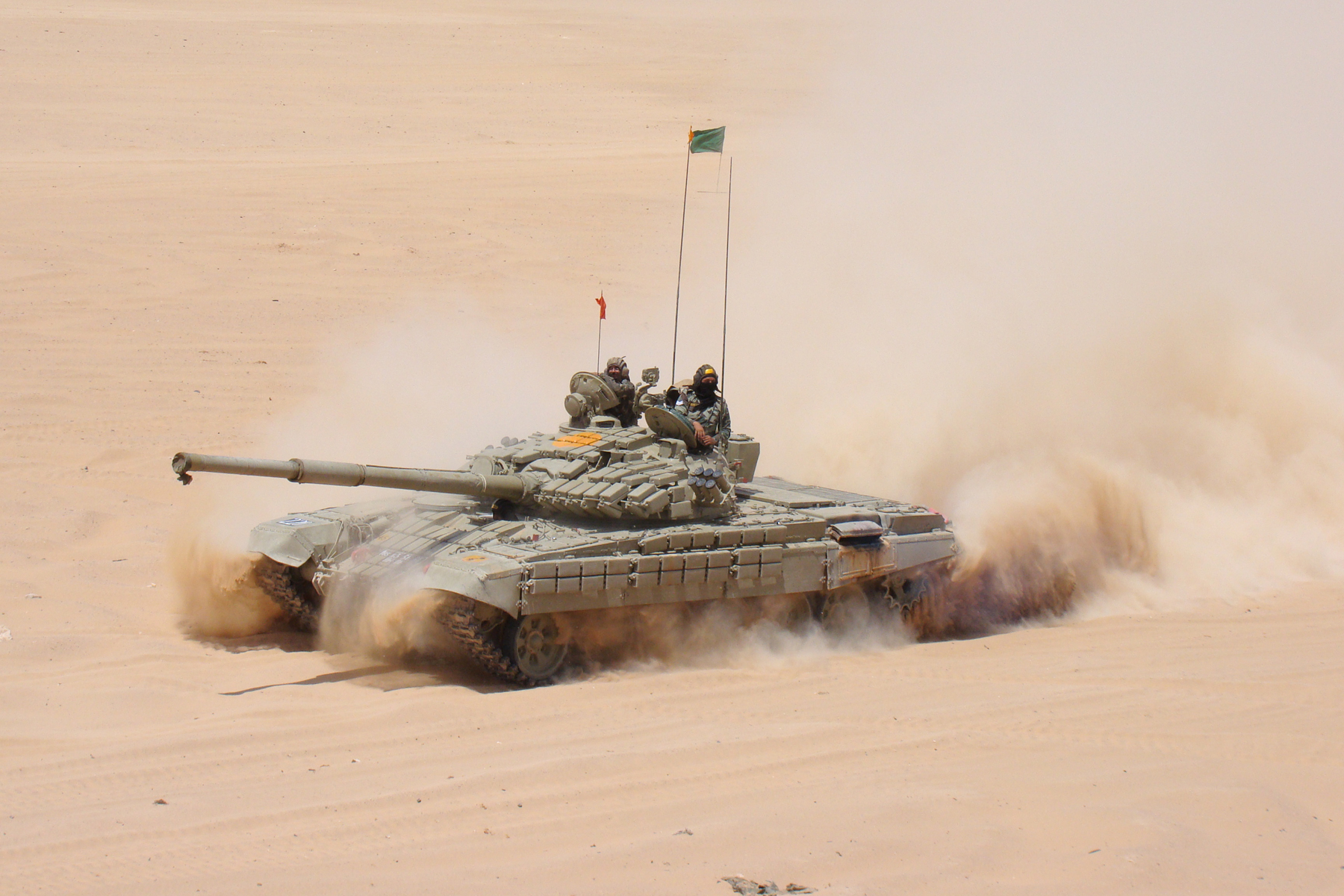
Cold Start meant instant crossing over into enemy territory once the decision to wage war was taken. Cold Start implied surprise, suggesting that war preparedness existed to maintain the swift tempo of operations. Given Pakistan’s elongated geography and high-profile assets close to the border, it was bound to ring alarm bells in Pakistan.
The proactive strategy, on the other hand, is meant to reduce the Indian Army’s war mobilisation time, and retain the element of surprise with phases of offensive actions crafted to unhinge the enemy so that it makes wrong operational assessments and commits its reserve forces (strike or offensive formations) early in war which could then be decimated by air and land firepower.
Unlike Pakistan, India has a problem in mobilisation of its strike formations — a consequence of geography. Since Pakistan operates on interior lines, it can mobilise its holding or defensive formations to move into battle locations in 72 to 96 hours. Its strike formations can be mobilised for crossing the border simultaneously. This is not the case with India.
Given India’s sub-continental size, the Indian Army operates on exterior lines of communication with its strike formations spread across the hinterland. While it can mobilise its holding formations in 72 to 96 hours, the strike formations would take between 10 to 15 days. Historically, this provided a tremendous advantage to Pakistan in the initial stages of war. However, the problems will be accentuated as any war is expected to be intense and short (lasting no more than two weeks) since international pressure for a ceasefire on account of nuclear weapons would be enormous.
Give this, according to the ‘pro-active strategy’, the mobilisation time for offensive formations was sought to be reduced by two methods: the appropriate forward location of certain portions of strike reserves called integrated battle groups, and a review of the Operational Rail Move Plan (ORMP) to move the remaining elements of the strike corps faster. Incidentally, the ORMP was tested for the first time after the 1971 war during the 2001-2002 Operation Parakram, and it was not much of a success.
While the Pakistan Army knows all this, it was not willing to lose the opportunity provided by General Vij. It announced the presence of TNW in its inventory, which it said was meant to provide strategic deterrence at tactical level to halt the Cold Start manoeuvre.
By definition, TNW are very low-yield — ranging from sub-zero to a few kilotons — weapons, which are held at field-formations level for use in battlefield. Given this, there was global furore since (a) Pakistan had lowered its nuclear threshold, thereby, increasing the risk of a nuclear war, and (b) as TNW were to be held by field commanders, there was danger of them falling in the hands of non-state actors.
Pakistan’s TNW came to called ‘loose nukes’ which they are not for three reasons. One, The Pakistan army chiefs draw strength by holding nukes capability tightly under their command, control and supervision (director general, Strategic Plans Division, always an army officer, responsible for nukes, reports to the army chief). Nukes’ issues are neither shared with the government, nor with the other two defence services. Given this, why would the army chief give away his source of power to his field commanders?
Two, since halting of India’s Cold Start would be on Pakistani soil, Pakistan army would damage itself more than the enemy. Given the high density of its own population close to the border — even the once wasteland opposite India’s Thar desert is now a populated green belt — thermal radiation from even low-yield TNWs would blight human DNA and disable civilians in the vicinity for generations. Depending on the wind direction, the damage within Pakistan could be colossus.
And three, if the Pakistan Army was serious about use of TNWs, why would it seek parity with the Indian military at the warfighting level (called the operational level of war), where outcomes are decided? The Pakistan Army believes that given its geographical location, total nukes control, and viable conventional force, Pakistan’s foreign policy can never be geo-politically marginalised.
Moreover, senior Pakistani officers have made it clear that they believe all nukes, whether strategic or tactical, should be held at the highest level without dilution of authority. For example, Lt Gen. Khalid Kidwai, the longest serving head of Pakistan’s Strategic Plans Division, made numerous presentations after retirement to convey this message in western capitals.
While all this is fine, India’s war dilemma is this: since Pakistan has conceded having TNW, this factor now has to be dovetailed in India’s conventional warfighting plans. Thus, whatever Indian Army’s capabilities, any meaningful thrust inside Pakistan along the entire border is ruled out. It is one thing for analysts to say in peacetime that the Indian Army’s mobile columns would bash on regardless of TNWs. It is quite another if TNWs get actually used; the war would come to a stand-still.
If Gen. Vij had not mentioned Cold Start, Pakistan, even while having the capability, would not have brought TNWs in the war narrative for fear of global opprobrium. This would have given freedom and options to Indian fields commanders for manoeuvre in semi-mountainous and open terrain. Pakistan, instead of India, would have faced the dilemma of actual use of TNWs in case of an Indian armour breakthrough. This is no longer the case. Gen Vij’s bravado has constricted Indian mobile forces’ options in war, an area where it scored over Pakistan.



 VIDEO
VIDEO