Though a natural leader, Sundarji was a man in a hurry. As extract.
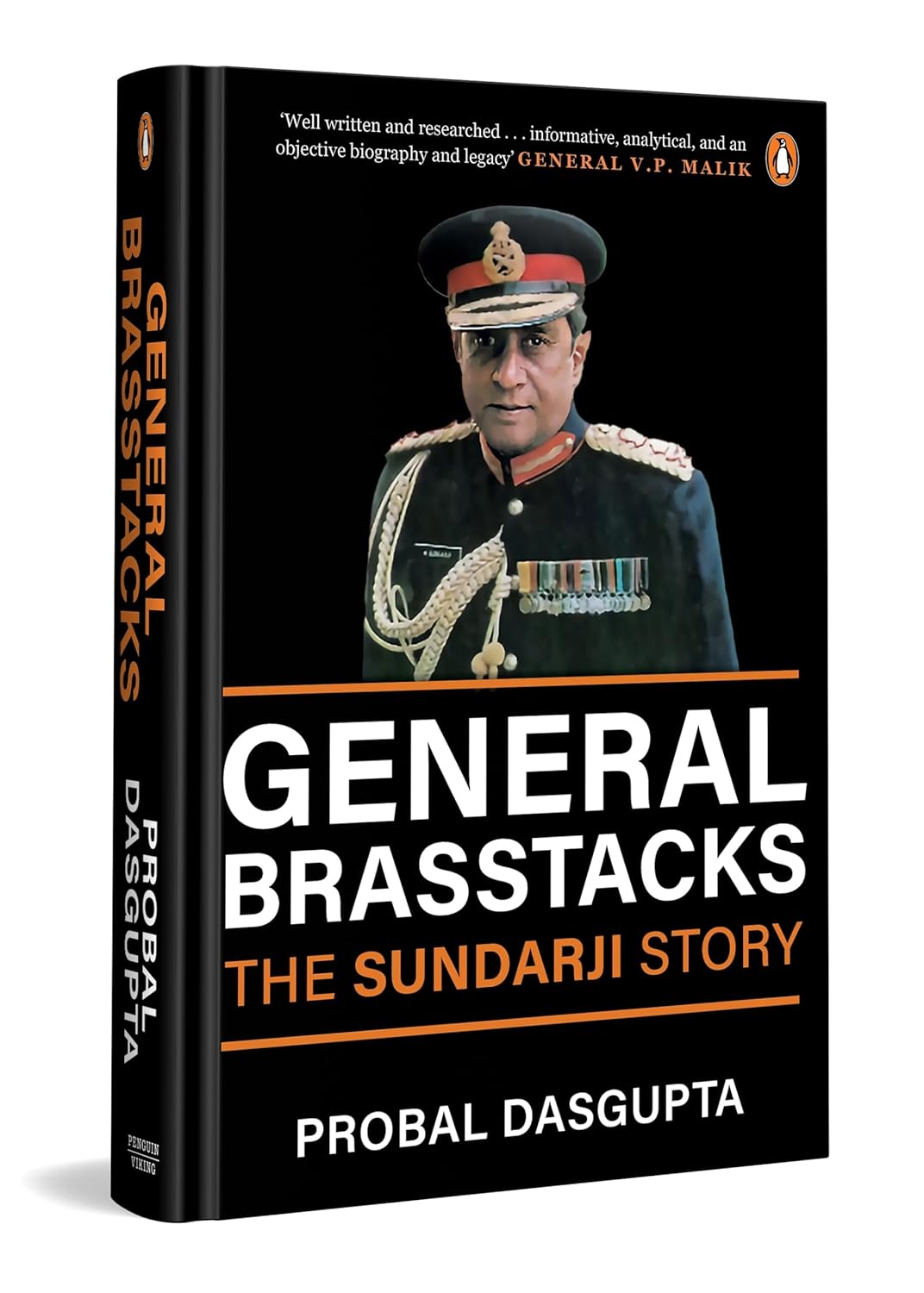 Probal Dasgupta
Sinha left, and in his place arrived the ambitious Sundarji, a study in contrast, with a markedly different personality from his predecessor. Unlike Sinha’s desire for details and clarity in approach, Sundarji was a man in a hurry, given to spontaneous swagger and an occasional exaggerated air of confidence. He had earlier already impressed the political leadership with his dynamic thinking on mechanization of forces, exercise in deserts and in establishing a new regiment. A growing reputation as a modern, brilliant, high-profile general accompanied him.
***
In January 1984, guided by a faction of moderates led by Rajiv (Gandhi), the government tried to initiate talks with an increasingly powerful but recalcitrant Bhindranwale, but did not succeed. On Army Day, 15 January, in line with his own thinking, the defence minister gave Lt Gen Sunderji an early warning. Sundarji was told to prepare for an operation if things didn’t work out. Evidently, the optimists led by Rajiv were losing hope.
Unsurprisingly, four months later, the talks with the militants broke down. While Bhindranwale engaged the government in talks, he used this time to beef up his defences. Around the same time, in early April, journalist Satish Jacob of the BBC noticed trucks carrying construction material into the Golden Temple. It appeared that the militants were planning a longer stay, perhaps even setting themselves up for a comprehensive defence.
Near the structure, Jacob saw a slim man clad in a white salwar-kameez, who seemed to be in charge. A veteran of two wars for the Indian army, Maj Gen Shabeg Singh was ‘a’ slim man of medium heigh sporting a flowing beard. The years after the war in 1971 found him in the middle of an unseemly controversy. He was charged with corruption and court-martialled. The army invoked a rare rule to ensure his rank and pension were stripped off him a day before he was set to retire. Settled in his home state of Punjab, Shabeg was approached by Bhindranwale in the early 1980s. The general rebuffed him then. Subsequently, Shabeg fought and won his case in the high court against the government. By then, his soldierly pride was deeply hurt and he felt betrayed after giving years of service to the country. When the irrepressible Sikh leader approached him again, he agreed to join in. The soldier had embraced the militant.








 VIDEO
VIDEO