Militaries use electronic protection (EP), also known as electronic countermeasures, to defend against electronic attack (EA) and electronic surveillance (ES). Long considered an afterthought after the Cold War, EP has risen again to be perhaps the most important aspect of electronic warfare (EW) with China fielding increasingly sophisticated jammers and sensors. EW includes tactics and technologies to shield radio transmissions from being detected or jammed. Typical techniques include using narrow beams or low-power transmissions as well as advanced waveforms that are resistant to jamming. EA includes jamming, where a transmitter overpowers or disrupts the waveform of a hostile radar or radio.
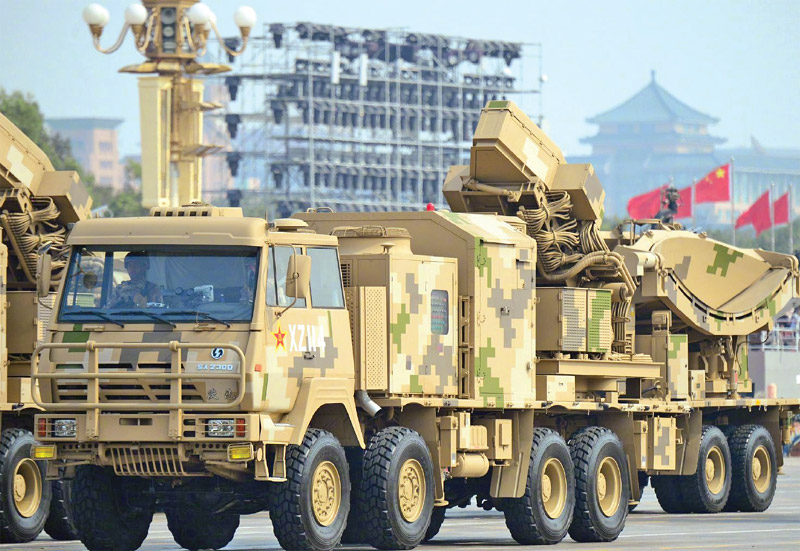
PLAGF’s Microwave Communications Jammer
China’s People’s Liberation Army Ground Forces (PLAGF) has since early 2019 has been integrating EW into its air-defence operations, starting with its 80 Air-Defence Brigade. In 2017 an EW regiment was re-subordinated to the brigade and re-organised as a battalion. Initially, the brigade did not know how to employ its new EW battalion: members of the battalion received complaints about how their equipment would interfere with aerial surveillance, and it was suggested that the battalion play the opposing force during force-on-force exercises. However, after the brigade was defeated in an exercise by an opposing force that jammed the brigade’s radars, the brigade was apparently convinced of the utility of its EW battalion and therefore decided to integrate elements of the battalion into each fires element whenever the brigade deployed, thereby combining jamming and surface-to-air missile (SAM) fires to improve the efficacy of its air-defence operations.








 VIDEO
VIDEO