
Address the Roots
Urban radicalisation is a serious concern and can be controlled through a focussed approach
Sanjiv Krishan Sood
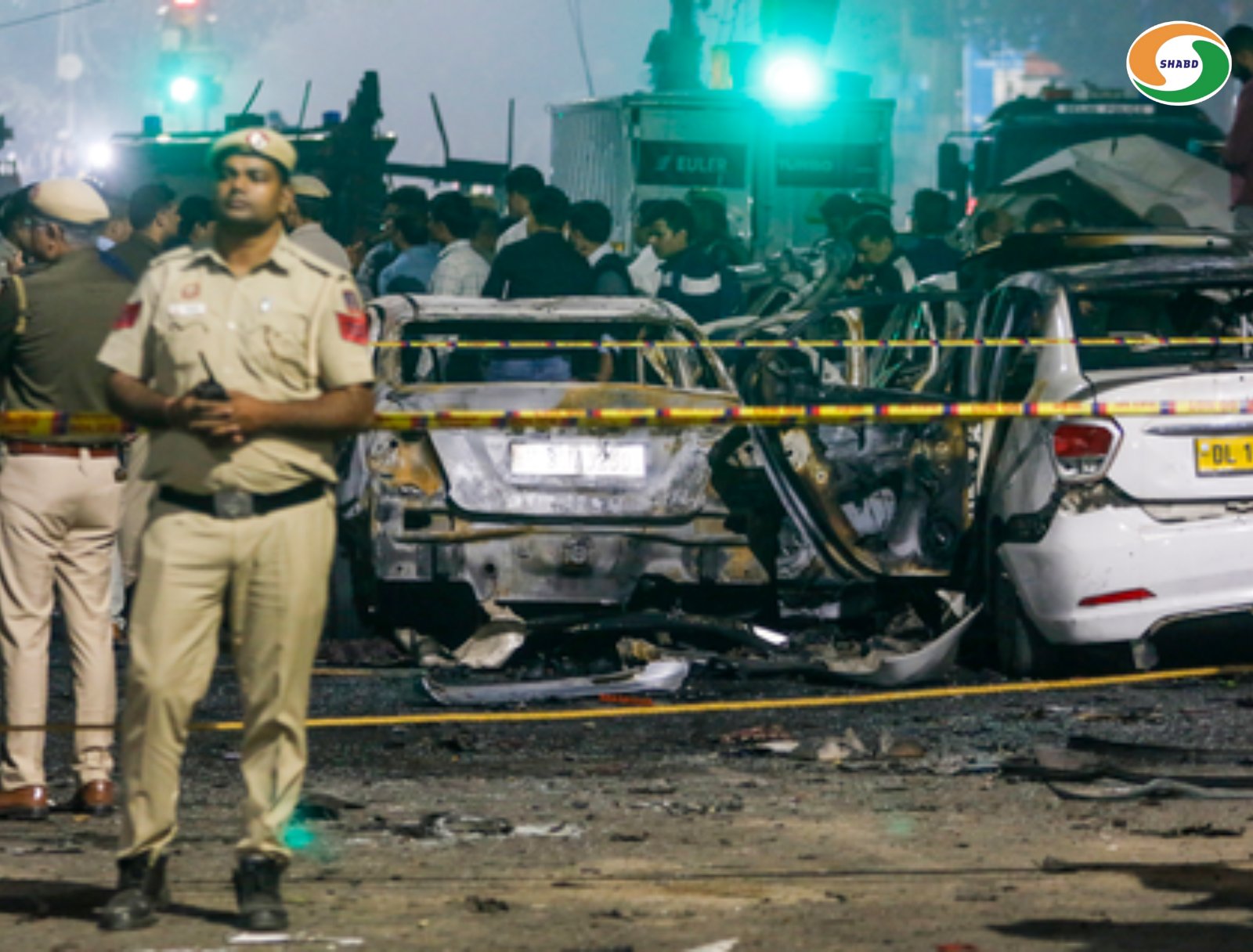
The strategic community and media have added a new phrase ‘white collar terrorists’ to our lexicon after the Red Fort bombing on 10 November 25.
The investigations have revealed that the Red Fort bombing was carried out by a set of radicalised urban, well-educated professionals who were competent medical practitioners. The normal lifestyle of the perpetrators, besides their reported humane approach and competence in their profession kept them below the radar of intelligence and security agencies. Everyone known to them as also their relatives have stated that it was beyond their imagination to even envision that they could be involved in such a monstrous plot that could take several lives and spread terror among masses.
The perpetrators of the heinous crime do not fit the profile of a terrorist that we normally associate with. The terror acts, especially the ones where suicide bombing is involved, have been carried out by the youth who generally belong to deprived background besides being uneducated. Such impoverished youth is easily lured by small amounts of money. They are easy targets for indoctrination and radicalisation by subversive elements and religious preachers who present them with a rosy scenario of higher purpose of life through sacrifices for protection of religion.
Involvement of youth from the educated strata appears to have taken everyone by surprise, hence the label ‘white collar terrorists’. However, this narrative of educated professionals carrying out acts of terrorism being a new phenomenon is contrary to the facts. The ideological fountain heads of militant movements have largely been persons from elite backgrounds. Osama Bin Laden, besides being highly educated, belonged to one of the richest families of West Asia. Ayman al-Zawahiri, who headed al Qaeda from June 2011 until his death in July 2022 and was the main plotter of 9/11 attacks, was a doctor and belonged to an elite family in Egypt. Omar Sheikh of Harkat-ul-Ansar had studied in London School of Economics. The perpetrators of 9/11 in the US were all very well educated including some being engineers. Other militant organisations like the Irish Republican Army (IRA) and Ku Klux Klan too had educated elements both among the leadership as well as ground level operatives.
Closer home in India, Burhan Wani, despite being a school dropout, was intelligent and proficient in computers. The Maoist movement is led by many extreme Left-wing thinkers who have often led operations against security forces and public authorities. Many terrorists in Punjab were highly qualified. In fact, the defences in the Golden Temple in 1984 were organised by a decorated ex-serviceman—Maj. Gen. Shabeg Singh. Many militants in the Northeast India also come from wealthy families.
We should therefore not get persuaded by the narrative that involvement of people from the educated strata of society is a new phenomenon. The fact is that the establishment and the strategic community is extremely fond of inventing fancy phrases and nomenclatures like ‘urban Naxals’, ‘love jihad’, ‘vote jihad’ and even ‘UPSC jihad’ etc as propaganda to capture public imagination.
Red Fort Blast
The underlying impact of this narrative is that a particular group or community gets typified and branded for all ills, even though only a miniscule minority belonging to that religion or professional group are the actual culprit. We already find slogans like ‘doctors of death’ etc., getting currency after the involvement of doctors from Faridabad-based Al Falah University in Delhi bombing was discovered. Such institutions, professionals, communities and the people associated with them are branded anti-national. These institutions and individuals are scarred for life irrespective of the fact whether they are guilty or not.
The basic question that needs to be addressed is what radicalises people enough to sacrifice their lives in an act of suicide bombing?
In 2005, the European Commission defined ‘radicalisation’ as ‘the phenomenon of people embracing opinions, views and ideas which could lead to acts of terrorism as defined in Article 1 of the Framework Decision on Combating Terrorism.’
It may, therefore, be seen that radicalisation does not refer to religious radicalisation only. Individuals and groups may get radicalised for different reasons. The insurgents in central India are radicalised due to the perceived deprivation of the forest resources upon which they consider their first right. The militants in Punjab were radicalised because they thought that they were facing religious and economic deprivation within their own land. The insurgents of Northeast belonging to different groups are/ were radicalised because they think that their ethnic, cultural as well as linguistic identities are different from the mainland, hence their national identity is separate from that of India. The Liberation Tigers of Tamil Eelam (LTTE) in Sri Lanka were radicalised because they thought that their identity as Tamils was getting subsumed by the majority Sinhala community and the Lankan government led by Buddhist Sinhala majority was discriminating against them. In India we often encounter caste-based radicalisation besides religious and ethnic radicalisation.
The bomb blast at the Red Fort area on November 10, shows that the traditional radicalisation process is getting transformed and digital technology is now being used for the purpose through encrypted channels. They are psychologically manipulated by their handlers and given training in carrying out acts of terror. As widely reported, the Delhi blast suspects were sent ‘do it yourself’ (DIY) videos to make bombs by their handlers.
However, it must be noted that the radicalisation whether digital or otherwise can succeed only if there exist alienating factors. These factors need to be addressed to prevent such acts of terror in future.
Contrary to the fact that fanaticism and radicalisation are widely prevalent and emanate from a sense of superiority in all religions, tribe or caste or class identities as discussed above, the common narrative is to associate radicalisation to practitioners of Islam only, while resorting to rationalising or even justifying the radicalisation prevalent amongst practitioners of other religions.
An honest analysis of the widespread narrative of radicalisation in Islam, would indicate that it has emanated as a reaction of the population of the Islamic nations to the exploitation of precious resources in the West Asian and African nations by the West. The West exploited these resources, especially the oil wealth, and repatriated the proceeds back to their country, without investing it for progress of the population of the country of origin. The locals were thus deprived of the benefits of their own wealth, giving rise to an extreme sense of resentment amongst them.
Another reason for proliferation of radical elements in West Asia can be traced to settlement of Jews in Palestine during the early 20th century. The atrocities on local Palestinians and expansionism of Jewish settlements, openly supported by the West, added to the sense of injustice and deprivation, giving rise to several resistance groups.
These resistance outfits turned militant. They motivated the local population to rise against western powers and Israel. Since these organisations did not have the wherewithal to fight openly against the might of the West, they resorted to guerrilla tactic of hit and run, carrying out several attacks to create terror. Since these terror outfits comprised Muslims, the narrative of Muslim radicalisation became dominant.
In India, communal tension and hatred against Muslims and therefore the narrative of Muslim radicalisation comes from the ‘divide and rule’ policy of the British. This led to many communal riots before Independence culminating into mass killings of Sikhs, Hindus and Muslims during Partition. Millions are believed to have lost their lives during this tragic event.
The animosity amongst majority of Hindus and Muslims continued even after Independence. Ironically, the sense of hatred amongst the people of Punjab and Bengal, which were most affected by violence during Partition, appears to have ebbed, yet it continues to fester in other parts, manifesting itself in sporadic riots in UP, Maharashtra and Gujarat. Most of the communal riots in India occurring after Independence have involved Hindus and Muslims. V.N. Rai, a retired IPS officer, received a fellowship to study the neutrality of police during riots. One of his findings was that Muslims were the worst sufferers, both in terms of loss of life and property, in most major communal riots in the country. According to Rai, “…even in riots where the number of Muslims killed was many times more than the Hindus, it was they who were mainly arrested, most searches were conducted in their houses, and curfew imposed in a harsh manner in their localities.” The ghettoisation that we witness is a result of this sense of insecurity and lack of confidence in the law-enforcing authorities in ensuring their protection. In urban areas Muslims find it difficult to rent or purchase property. There have been widely publicised instances where people have protested over Muslims acquiring or renting properties in many localities and gated societies. The Muslim community therefore has largely become a closed society, mostly studying in schools or madrassas located within their localities. Even though madrassas provide formal education besides religious education, they are normally branded as places for radicalisation. This generalised negative characterisation of madrassas and Muslims as radicalised is far from the truth, though there may be a few exceptions. The narrative of large-scale radicalisation of Muslims in India is negated by the fact that ISIS and other terrorist organisations have hardly found any recruits from amongst Indian Muslims. The animosity against Muslims is also rooted in the belief—whether true or not—that during their rule before the British arrived, they were responsible for repressing majority Hindus and destroying places of worship. Hence, now they should be punished for the sins of their ancestors.
However, radicalisation of many Kashmiri youth in particular needs serious attention, as it has both external and internal dimensions. Pakistan has never been able to reconcile to the fact that Kashmir chose to accede to India. Having failed in acquiring Kashmir through repeated guerrilla and military action, Pakistan has succeeded in fomenting dissatisfaction through militancy in the state. They have been able to achieve this largely through propaganda against the Indian state by spreading exaggerated stories of atrocities by security forces and discrimination by the central government. Initially, Pakistan resorted to sending insidious literature and broadcasts through print, radio and television to instigate the Kashmiris, invoking them to wage jihad to save their religion. Pakistan also hosted Kashmiri Separatists. Many Kashmiris convinced by the propaganda of discrimination and atrocities crossed over to Pakistan Occupied Kashmir (POK) through porous, difficult to guard Line of Control (LC). They came back equipped with weapons and anger against the Indian state and resorted to terrorist acts in Kashmir. The radicalisation process was further carried forward by the local preachers. Initially, the militants from Pakistan were involved in planning and conducting acts of terror. This has changed and most of the terrorists now are local Kashmiris.
The process of radicalisation appears to have transformed drastically in this era of social media and widespread availability and access to propaganda material on social media. In an era of apps with end to end security, it is much easier to spread falsehood and win over impressionable minds.
While the externally sustained radicalisation of Kashmiris is an undeniable fact, there are internal factors fuelling it further. The phase of prolonged militancy in J&K started from late Eighties, even though the J&K problem was festering since Independence. The alleged rigging of elections in J&K in 1987 was the inflection point when the militancy started and many Kashmiri youth crossed the LC to get weapons training and return to carry out acts of terror. The entire Muslim majority community of Kashmir has been constantly blamed for forcing Kashmiri Pandits to flee the valley in 1990, which was triggered by the killing of prominent Pandit population.
The same script of blaming and demonising is repeated after each major terror incident involving Kashmir. The demonisation of Kashmiris studying and living outside Kashmir and subjecting them to violence after each violent incident in Kashmir or anywhere outside involving Kashmiris is a routine phenomenon. A case in point is the sequence of events after the Pahalgam tragedy. There were concerted efforts to give communal colour to the incident, overlooking the fact that one of the persons slain by the terrorists was a local Kashmiri Muslim pony rider who lost his life while saving lives of tourists. The fact that the locals had come to immediate help of tourists after the carnage, providing them with shelter and food was ignored and the narrative created to project all Kashmiris as supporters of terrorism. Another example is of what transpired after the abrogation of Article 370. The celebrations post the abrogation mocked common Kashmiris.
Such unjustified branding and violence against common people totally unconnected are a cause of deep resentment, preparing grounds for radicalisation. Another reason for the resentment, and therefore vulnerability to radicalisation, is the widely reported allegations of atrocities by the security forces deployed in Kashmir. The restrictions imposed on free movement, repeated searches both of homes and people are seen by common Kashmiris as interference in their normal life. These conditions are good reasons for radicalisation which the Pakistanis have exploited through several means.
India needs to take serious note and initiate corrective action to de-radicalise Kashmiris. While it is necessary to address external factors, we also need to address internal factors and ameliorate apprehensions of Kashmiris. This will go a long way in preventing Pakistan from fuelling negative sentiments against India amongst Kashmiris and thus stop radicalisation.
The first step towards de-radicalisation is to identify the radicalised people. Adults and young pre-teens can be exposed to the messages of extremist groups or drawn into violence in different ways, including through family members, by direct contact with extremist groups or, most often, the internet. Everyone is different and there is no single way of identifying who is at risk of being radicalised into terrorism or supporting terrorism. Some signs that an adult is being radicalised include:
(a) If they often access extremist content online or downloads propaganda material,
(b) Justify the use of violence to solve issues/ problems in society
(c) Suddenly alter their style of dress or appearance in line with an extremist group
(d) Are unwilling to engage with people who they see as different
(e) Use certain symbols associated with terrorist organisations.
The likelihood of an adult being radicalised is often linked to their vulnerability. Adults who have experienced abuse or neglect are more vulnerable. These factors or characteristics are relevant to how likely they are to be radicalised. Early identification of these factors will help determine the types of early intervention support they will require to prevent their radicalisation.
We need to initiate formal de-radicalisation programmes as has been attempted in many countries. Lt Gen. Syed Ata Hasnain has referred to de-radicalisation programmes undertaken in several countries. According to him, “Model abroad offer inspiration. Saudi Arabia and the UAE have built structured de-radicalisation programmes involving counselling, religious clarification and post-release monitoring. Singapore’s Rehabilitation Group blends theology, psychology and family engagements. But these operate in smaller, more controllable demographic environments. India’s challenge is of a different order—a vast population multiple sects and schools, diverse socio-political contexts and a turbulent digital sphere”. The general further rightly points out that “We cannot copy models; we must adapt their principles.”
Besides the focussed de-radicalisation programmes, India must focus on preventing radicalisation by addressing and removing the internal factors—discussed above—which push vulnerable adults towards radicalisation and carry out antisocial and antinational acts.
The authorities have to realise that counter-terrorism cannot be successful only through use of force. De-radicalisation is an important aspect to achieve success. Educational institutions of the country and most importantly of the Kashmir valley must be the focus of conducting de-radicalisation campaign. An important aspect of de-radicalisation effort should include preventing the lumpen elements and vigilante groups from targeting any particular community. The state must also initiate strict action against elements which resort to eulogising communal elements to create division amongst communities. An extremely important aspect is to consolidate gains made by security forces and initiate political dialogue/ activity and give a feeling to the locals that they have a stake in ensuring peace and harmony.
(The writer is former additional director general, BSF)
Subscribe To Force
Fuel Fearless Journalism with Your Yearly Subscription
SUBSCRIBE NOW
We don’t tell you how to do your job…
But we put the environment in which you do your job in perspective, so that when you step out you do so with the complete picture.