In December 2023, Penguin Random House released excerpts from the former Chief of Army Staff (COAS) Gen. M.M. Naravane’s memoirs Four Stars of Destiny. Publishers, while promoting books, commonly pick excerpts that are likely to start thoughtful discussions, reveal something unique about the book, spark a debate, or create a controversy. In the case of Gen. Naravane’s book, the publisher, clearly, was targeting the latter outcome.
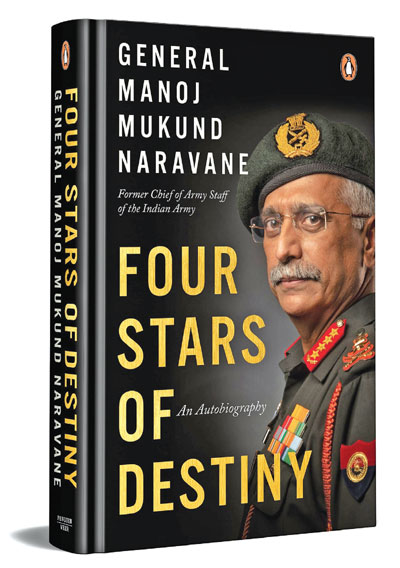
Distribution of Gen. Naravane’s memoirs has been
deferred to until after the General Elections
In most vocations, controversies can end careers. Not so for actors and authors. Controversies and loud, vocal criticism help boost a film or a book’s visibility and, thereby, its viewership or sales. Penguin Random House, in choosing to publish the excerpts that it chose, was only following stock prescriptions from book promotions 101.
The publication of the excerpts, expectedly, not only precipitated heated contestations over what the former COAS had to say of his time as the COAS but also rekindled a wider debate on the appropriateness of military veterans publicly articulating partisan political positions.
Civil-Military Relations
There are many sources of friction in civil-military relations. None generates more controversy than political advocacy by military veterans. Officers and soldiers in active service are oath-bound to carry out the orders of the political executive—heedless of the party in power and their own political beliefs. In the case of personnel in active service, there can be no argument against the need for them to refrain from publicly voicing or taking any partisan political position.
However, with military veterans, the issue becomes tangled. It could be argued that military veterans are private citizens and hence have the right, just like other citizens, to engage in political activity. Another view holds that although veterans have the right to articulate their political positions, they have a greater duty to the military that they served in to refrain from doing so. Those holding this view feel that when veterans engage in political advocacy, it erodes the apolitical standing of the military in the eyes of the political executive and the citizenry—diluting the political executive’s trust in the non-partisan character of officers and soldiers in active service.
Yet another view holds that requiring veterans to muzzle their voices diminishes the quality of public discourse and deprives the nation of a source of potentially valuable insights on issues of national interest. Those holding this view argue that veterans, in fact, are duty-bound to speak out on issues of public and national interest. They argue that the active participation of veterans in public discourse is in the best interests of the country that they served while in uniform.




 VIDEO
VIDEO