

A Second Chance
Aggressive investment in defence R&D and futuristic technologies is critical
 Cdr S. Shrikumar (retd)
History provides several cautionary instances of nations that stood within an arm’s reach of a transformative opportunity—only to lose the moment and slide into relative decline. One modern example is Argentina of the early 1900s. In around 1913, Argentina ranked among the world’s 10 richest countries by per capita income, rivalling and surpassing many European nations.
Argentina’s fertile Pampas generated enormous agricultural wealth that supported rapid urbanisation, triggered significant European immigration, and financed infrastructure development on a nation-wide scale. Contemporary observers predicted that Argentina would ride the wave of the second industrial revolution to achieve robust economic growth through diversification from commodities into steel, automobiles, and advanced manufacturing.
However, Argentina fell prey to the tragedy of missed opportunities. From the Thirties onward, successive governments went down the path of aggressive protectionism, import-substitution, nationalisation, and populist redistribution, prioritising short-term political gains over long-term, innovation-driven development.
Political instability, hyperinflation, debt defaults, and institutional decay eroded investor confidence and killed the people’s entrepreneurial spirit. Education and industrial R&D stagnated while brain drain emptied out Argentina’s human capital. What began as a promising march to industrial modernity ended as a wasted opportunity. Today, despite abundant resources and an educated population, Argentina remains stuck in the middle-income trap.
Nations that seize transformative moments of history (Australia, Canada, South Korea) surge ahead and those that do not, are doomed to forever rue their missed destiny.
The Indian Parallel
The persistent lament, among India’s social commentators and economists, is that the reason India trails the developed world in industrial and manufacturing capability is its colonial past. The commentators believe, that in the 18th-19th century—at the time of the Industrial Revolution—India, then a British colony, was prevented from participating in the transformative technological and economic shifts of the Industrial Revolution.
This telling of India’s history, posits that British rule systematically deindustrialised India, destroying its thriving textile, steel, shipbuilding, and other sectors of the economy to fuel Britain’s own industrial ascent. This left India as an agrarian backwater, condemned to being a supplier of raw materials for industries in Britain.
Shashi Tharoor articulates this forcefully in his 2016 book, An Era of Darkness: The British Empire in India. Tharoor argues that Britain’s Industrial Revolution was premised on the deliberate deindustrialisation of India. He details how the East India Company and later the British Crown imposed tariffs and regulations that flooded India with cheap machine-made goods from Britain, while restricting Indian exports—destroying indigenous industries. In a widely cited remark from his book, Tharoor points out that when western critics blame India for having ‘missed the bus’ of the Industrial Revolution, his response is, ‘we missed the bus because you threw us under its wheels.’
Tharoor highlights that a massive transfer of wealth out of India—hundreds of millions of pounds annually—financed Britain’s factories, railways, and global dominance, while India slipped from a manufacturing powerhouse (contributing nearly 25 per cent of global industrial output in the 18th century) to a deindustrialised colony by the 19th century.
Tharoor’s view echoes earlier Indian critiques. Economist and Indian nationalist Dadabhai Naoroji, in his seminal 1901 work Poverty and Un-British Rule in India, laid the foundation for this critique with his ‘drain of wealth’ theory. Naoroji calculated that Britain siphoned off roughly one-fourth of India’s annual tax revenue—tens of millions of pounds yearly. Naoroji linked this extraction directly to India’s impoverishment, famines, and industrial decline, arguing that the colonial system prevented capital accumulation and technological adoption essential for industrialisation.
Bayraktar_TB2_Runway
The counterfactual question, what might India have become had it remained independent and participated fully in the Industrial Revolution, will forever remain speculative. Without colonial extraction and deindustrialisation, India could plausibly have adapted its pre-existing artisanal and proto-industrial traditions (textiles, metallurgy, shipbuilding) to mechanised production, much like Japan did during the Meiji Restoration. Instead, when it attained independence in 1947, India inherited a fragmented, pre-dominantly agrarian economy with literacy rates below 12 per cent, negligible modern industry, and a per capita income that had been stagnant for centuries.
This lag compounded over time, and India not only missed steam power and factories but the follow-on transformative changes brought about through electricity, electronics, and automobiles. After independence, it struggled as a technological latecomer, perpetually importing technical know-how and remaining a net importer of manufactured goods. As a direct consequence of the missed opportunity in the Industrial Revolution, India is left carrying the burden of a deferment of its ascent to developed nation status.
An Honest Appraisal
Seventy-five years after Independence, has India been able to fulfil its economic and developmental potential? Comparisons with post-World War II Germany and Japan are instructive and, sadly, unflattering. Both Germany and Japan, emerged from the war, in 1945, facing total devastation—all their major cities in ruins, industrial centres razed to the ground, millions dead or displaced, and with economies in worse immediate straits than India’s at Partition. In 1946, West Germany’s per capita GDP was a fraction of its pre-war level and Japan’s industrial output had plummeted to one-tenth.
Yet, within two decades—by the Sixties—both Germany and Japan achieved ‘economic miracles’, to become global manufacturing and innovation powerhouses. Germany quickly again became the powerhouse of Europe’s industrial economy and Japan surged to become the world’s second-largest economy by the Eighties through its leadership in automobiles, electronics, and high-tech exports.
India’s intellectuals have offered a range of explanations to rationalise India’s failure to match the rapid post-war recovery of Germany and Japan. They cite the vastly longer duration and deeper structural damage of colonial rule, the trauma and economic disruption following partition, the absence of a Marshall Plan equivalent, the heavy burden of defence spending due to persistent regional conflicts, and the challenges of managing a vast, impoverished, and largely illiterate population under democratic constraints.

Wing_loong_MAKS2017
While the reasons cited are valid and not without basis, they cannot entirely explain India’s slow and halting recovery. Seventy-five years is not a brief interlude; it is a lifetime of sovereign policy-making. Other post-colonial nations—South Korea, Singapore, Malaysia, Indonesia, and Vietnam, inherited comparable legacies of poverty, war, and underdevelopment and yet achieved and then sustained high growth and technological catch-up within a generation.
The continuing persistence, in India, of low R&D spending, bureaucratic inertia, brain drain, a cultural preference for rote learning, and an ecosystem that does not encourage innovation are not colonial hand-me-downs, they are choices made by independent India’s policymakers. To continue invoking colonial trauma, and Partition scars, or the absence of a Marshall Plan-like framework as excuses, is to treat history as karma (destiny) rather than as the starting point.
How long can India continue to trot out these excuses to rationalise its slow recovery? Every additional decade of delay only deepens the lag. If India is ever to break out of its habit of always letting history’s tide recede before deciding to act, it needs to stop offering excuses for its failures and instead undertake some honest self-examination.
Indian commentators who put forward the ‘they had a head start’ argument for Germany and Japan, emphasise their pre-war intellectual capital. Both countries entered the war with highly educated populations, robust scientific establishments, and skilled workforces. Germany boasted world-leading universities, research institutes, and engineering traditions that produced industrial giants like Siemens and Bosch. Japan had Meiji-era modernisation, universal education, and a culture of innovation.
After the war, this human capital—scientists, engineers, industrial managers—remained available to lead their nations’ recoveries despite the widespread physical destruction. The Marshall Plan and the security umbrella provided by the US, allowed them to focus on economic reconstruction without heavy military burdens.
Cultural factors like work ethic, social cohesion, and merit-based systems accelerated recovery. Institutional reforms with Germany’s social market economy and Japan’s ministry of international trade and industry (MITI)-guided industrial policy of a state-led strategy designed to accelerate economic growth through ‘administrative guidance,’ protectionism, and strategic investments leveraged existing know-how for rapid catch-up via technology adoption and capital investment.
India, on the other hand, adopted socialist planning, emphasised heavy industry via public sector undertakings (PSUs) and stifled its economy with its ‘license raj’ bureaucracy, which discouraged innovation until the economic liberalisation of 1991. While post-war Europe and Japan benefited from open markets; India pursued import-substitution over genuine innovation.
Even today, gross expenditure on R&D in India remains stuck at 0.64 per cent of GDP (far below the 2-4 per cent in developed nations or even China’s 2.4 per cent), with defence R&D allocation at around Rs 29,100 crore in the budget for 2026-27—highly inadequate relative to needs. India’s system of education continues to emphasise rote learning over critical thinking and brain drain sees millions of skilled Indians emigrate for better opportunities. Bureaucratic red tape, PSU inefficiencies, corruption, and policy flip-flops have discouraged private-sector innovation. Reservations and political patronage prioritise equity over merit in institutions of higher learning and research.
Refusing to acknowledge these shortcomings and pinning the entire blame on our colonial legacy is living in denial. India’s slower growth (the ‘Hindu rate’ of 3-4 per cent until the Nineties), arose from both structural legacy disadvantages and poor policy choices post-independence. As economist Jagdish Bhagwati noted, policy choices, not just history, explain India’s persistent underperformance. Like Argentina, India risks turning this habitual laggardism into sustained structural decline.
The Changed Battlefield
The ongoing Russia-Ukraine and the Iran-US/Israel wars have demonstrated that the nature of modern conflict has undergone a fundamental change. The way wars are now fought is radically different from even the relatively recent Gulf wars of the Nineties and Noughties.
Traditional notions of air superiority through manned aircraft, massed tank formations, artillery dominance, extra-regional power projection through carrier battle groups, and precision munitions have been upended. Cheap FPV (first-person view) drones, loitering munitions, and AI-enabled drone swarms now dominate the battlefield, accounting for the majority of casualties in both Ukraine and West Asia. Electronic warfare and GPS jamming have rendered many legacy systems vulnerable. Massed swarms of low-cost drones overwhelm expensive air defences economically through saturation tactics. Autonomous marine platforms, underwater unmanned vehicles (UUVs), stealth platforms, and beyond-visual-range (BVR) engagements define the new reality of war.
Hybrid battle domains (cyber, space, maritime drones) blur lines between frontlines and the rear. In the Russia-Ukraine conflict, drones account for almost 80 per cent of casualties, with cheap FPV quadcopters and loitering munitions destroying tanks at fractions of the cost of conventional means of engagement.
Tapas MALE-UAV
Russia deploys fibre-optic naval drones immune to jamming and Ukraine innovates to develop potent sea drones to carry out AI-targeted strikes. Iran’s Shahed-136 ‘kamikaze’ drones saturate Israeli and US defences in mass salvos, proving that quantity has a quality on its own. Unlike the Gulf Wars’ ‘shock and awe’ from stealth fighters, the ongoing conflicts have proven the efficacy of attritional tactics—a USD20,000 drone defeats a USD10 million missile. Autonomy, AI for target recognition, and BVR engagements have also helped reduce human risk.
China’s recent successful test of the massive Changying-8 (CY-8) heavy-lift cargo drone—the world’s heaviest at 7-tonne take-off weight, 3.5-tonne payload, and 1,850-mile range—further illustrates how unmanned systems are expanding even into logistics. This development signals dual-use logistics drones for recon and supply in contested terrains, underscoring how unmanned systems now span functions ranging from combat to strategic sustainment.
India’s Redemptive Opportunity
History, normally unforgiving, occasionally offers second chances. India, after having missed the Industrial Revolution of the 18th/19th century, now stands at the threshold of another transformative opportunity. The ongoing revolution in the nature of modern warfare—driven by unmanned systems, artificial intelligence, autonomous platforms, and rapid technological convergence—presents India with the rare opportunity of finally reversing its record of missing historical junctures.
Although India has long blamed its colonial past for remaining a laggard in industrial and technological development, the current moment offers a genuine opportunity to develop competitive, cutting-edge technologies contemporaneously with the world’s leading powers. By decisively seizing this moment, India can not only catch up but potentially emerge a leader in critical future technologies.
This rare epochal moment, which allows India to leapfrog the existing gaps in defence technological capability, demands a will, vision and bold investments. Developing and manufacturing competitive indigenous drones, UAVs, UUVs, stealth systems, BVR tech, anti-drone systems, and integrated defences are essential to attaining developed-nation and credible military-power status. Failure will mean perpetually remaining a technology laggard and an importer of defence equipment and defence.
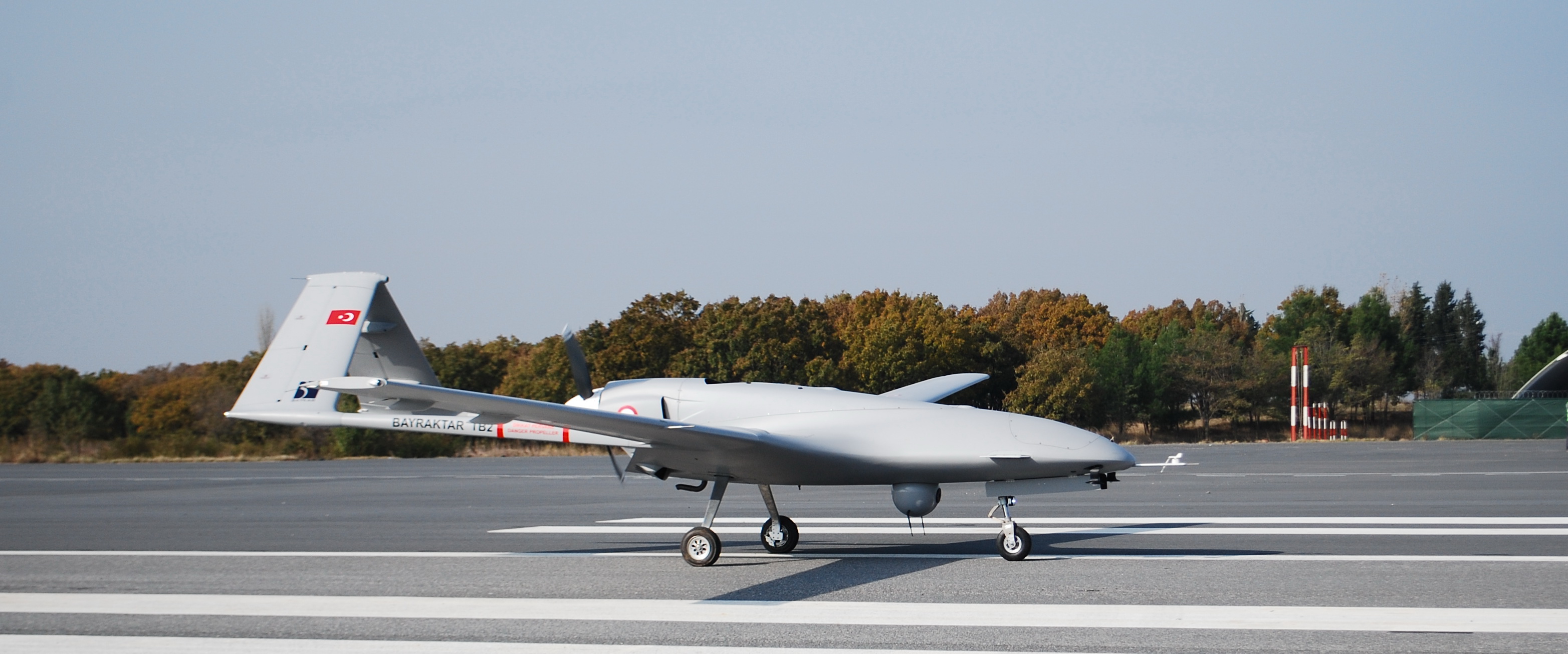
Global leaders in defence technology have moved decisively. The United States (US) deploys advanced platforms like the MQ-9 Reaper (armed MALE, precision strikes, 27+ hour endurance) and stealth RQ-180 for high-altitude ISR. China mass-produces Wing Loong II/III (Predator-equivalent UAVs widely exported) and CH-7 stealth UAVs, emphasising quantity and AI-powered swarms. Russia deploys Orion and Okhotnik stealth UCAVs with heavy payloads. Israel has Heron TP (strategic MALE) and Harop loitering munitions, battle-tested with EW superiority. Turkey has progressed rapidly through the Bayraktar TB2 (MALE), demonstrating that determined investments yield results. The Bayraktar TB2 and Akinci (HALE) have proven their cost-effective lethality against armoured vehicles, artillery pieces, and air defence systems in real-world combat performance across multiple conflicts in Nagorno-Karabakh, Libya, Syria, Ukraine, and the Turkish operations against Kurdish PKK (Kurdish armed guerrilla group) targets.
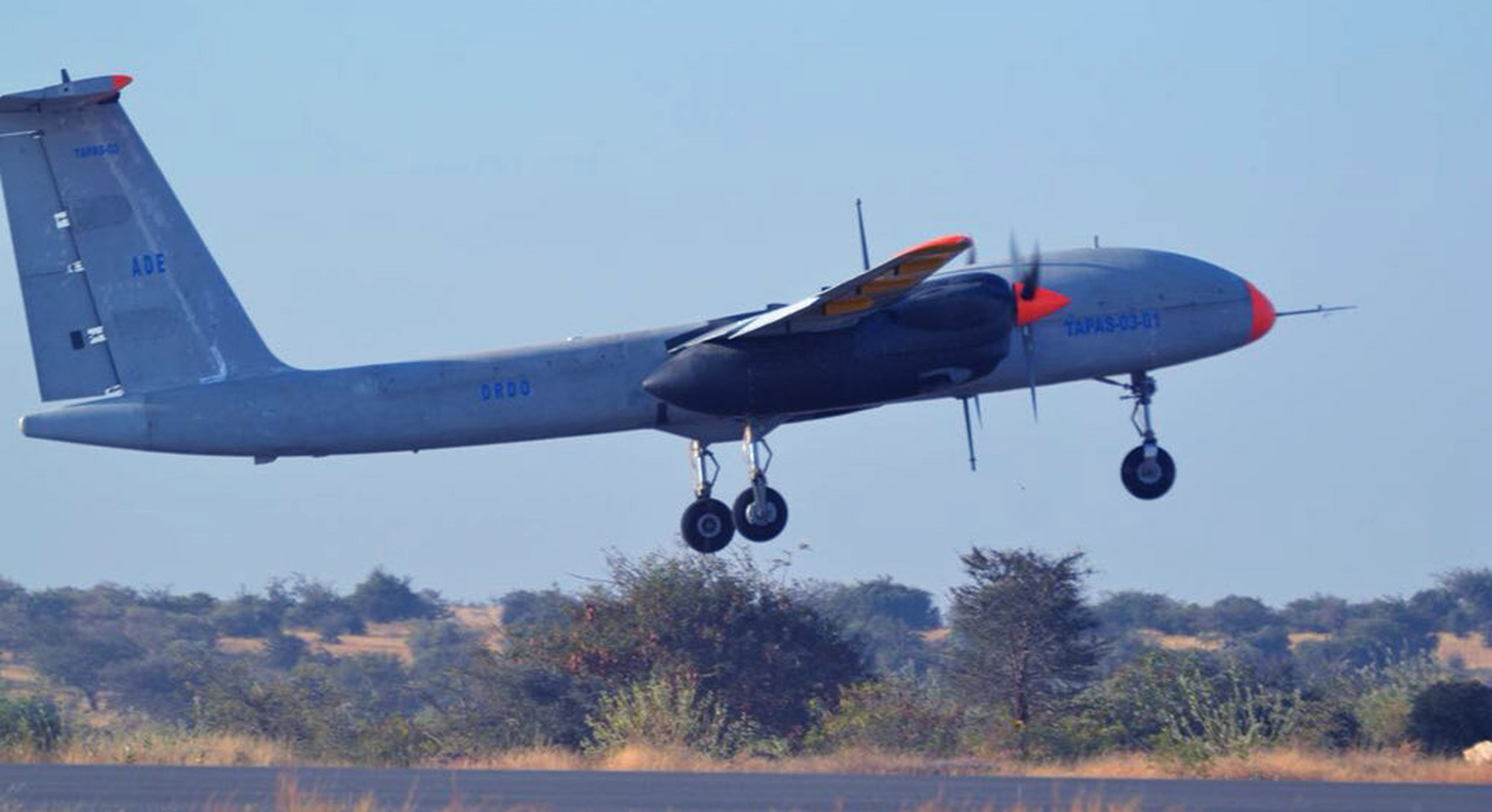
India, by contrast trails the leaders. Defence Research and Development Organisation’s TAPAS-BH-201 (Rustom-2) MALE UAV has underperformed after investments of over Rs 1,800 crore and several years of development. It failed key altitude/endurance requirements and has been demoted to technology demonstrator status. It remains in the prototype stage with limited combat capability. Indigenous efforts like Nirbhay or smaller tactical drones exist but lack scale or global parity.
India continues to place large import orders for drones from Israel, the US, and Russia—Russian strike drones in a USD25 billion deal, MALE tenders (favouring Israeli firms), and prior US MQ-9 Reaper deals. These purchases help meet short-term war-fighting capability requirements but reinforce long-term vulnerability and dependency.
Such continued reliance on imports is strategically suicidal. It perpetuates technological dependence, limits sovereignty in critical defence issues, and serves to ensure that India remains a price-chaser and follower rather than a technology-setter. Foreign suppliers will control upgrades, spares, and limit transfer of technology. Sanctions or supply disruptions (arising for e.g., from the ongoing Russia-Ukraine and Israel-Iran conflict) delay tenders exposing India’s defence preparedness to risks.
Without indigenous design and manufacturing capability, Indian defence products will, at best, remain derivative. Leading powers will, understandably, guard their cutting-edge technology and innovation. Equipment built on imported tech can only yield derivative and not innovative world-beating products. Continued reliance on the transfer of technology route will result in India, forever, being a second-rate military power reliant on others for its security.
The Way Forward
The path forward demands seizing the current fortuitous chance offered by history. This is a rare window of opportunity, when the gap with global leaders in the newly emerging defence technologies is still small and bridgeable. Every day of delay widens the gap, risking it soon becoming unbridgeable—leaving India, much like in the past, forever chasing and yet never catching up with the leaders.
India must aggressively invest in indigenous defence R&D and prioritise the development of all manner of Unmanned Aerial Vehicles (UAVs), Unmanned Aircraft Systems (UASs), Unmanned Combat Aerial Systems (UCASs), Unmanned Underwater Vehicles (UUVs) with competitive capabilities, heavy-lift cargo UAVs, stealth Unmanned Combat Aerial Vehicle (UCAVs), anti-drone systems, and integrated electronic warfare suites. Public-private partnerships, expanded initiatives like the iDEX, and raising R&D spending to two-three per cent of GDP could catalyse the Indian ecosystem, replicating the success stories of Israel and Turkey or even Iran/Ukraine (not to mention the examples of the US, Russia, and China).
Crucially, military technology is inherently dual-use. Advances in drones, AI targeting, materials science, and autonomy generate powerful civilian applications in precision agriculture, disaster response, healthcare delivery, logistics in remote areas, smart infrastructure, and autonomous transportation. Heavy-lift cargo UAVs (like China’s CY-8) can revolutionise supply chains, e-commerce, and high-altitude logistics systems. AI from BVR targeting can help build autonomous vehicles and materials from stealth platforms can boost analogous applications in the aerospace domain. Investments in frontier military technology help create high-skill jobs, regional innovation clusters, and export potential—driving broader national development.
India’s software prowess could be leveraged to integrate with hardware skills for the design of ‘smart’ systems to foster overall development—much like the US’ DARPA spin-offs birthed GPS and the internet. Staying in lockstep with global tech leaders will enable myriad beneficial spillovers—from battlefield EW to civilian 5G and from missile defence to space tech.
The commencement of the drone-age triggered industrial revolution offers India a genuine chance to escape the tragedy of untaken turns and claim its place among the world’s leading economic and military powers.
However, some may perceive a contradiction here. The first Industrial Revolution generated national wealth through the manufacture of commodities and machinery for general usage (mechanised textiles, steel, railways, and factories) that then translated into military superiority and imperial power. In contrast, the path being urged here for India envisages as its starting point a decisive push in military technologies, particularly unmanned systems, drones, AI autonomy, and associated frontier capabilities.
However, this is not a contradiction. It is a reasoned adaptation to the current realities. As already brought out, the present breakthrough innovations in autonomy, swarming, electronic warfare, advanced materials, and AI are intrinsically dual-use (and capital-intensive). The defence forces are the natural customers and primary financiers capable of driving these technologies to maturity at the required scale and speed. By seizing this moment of defence technology-led Industrial Revolution, India can catalyse the growth of the industrial, engineering, and innovation ecosystem it was denied during its colonial past. The inevitable spillovers into civilian applications, will then generate all-around wealth and sustained strategic power, mirroring the virtuous cycle that propelled the growth of the earlier industrial leaders of the 18th and 19th centuries, only in the reverse order.
The choice before India is stark and urgent. It must seize this opportunity with determination and strategic focus, or risk condemning future generations to yet another century of diminishment. This is a pivotal moment—a rare and not-to-be-missed opportunity if India is to finally keep its tryst with destiny.




 VIDEO
VIDEO