We do not take an oath to a religion or an oath to a king or queen or tyrant or wannabe dictator. We don’t take to an oath to an individual. We take an oath to the constitution.
—Former Chairman of Joint Chiefs of Staff US Gen. Mark Milley
India has been fortunate that the armed forces have remained apolitical and neutral. This has, tragically, not been the case of our neighbours. Military meddling in the democratic processes of countries like Pakistan, Bangladesh and Myanmar has had profound and often detrimental effects on their political systems, civil society and overall governance. Military involvement has damaged democracy in these nations. Historical experience highlights the dangers of political involvement by military leaders. The military’s role in political upheavals or coups serves as a cautionary example, reinforcing the need for neutrality of the armed forces to protect democratic governance.
The political neutrality of the Indian armed forces is maintained through a comprehensive framework that includes constitutional principles, professional military culture, regulatory guidelines, accountability mechanisms and a focus on unity and mission objectives. These factors collectively contribute to ensuring that the military remains an impartial entity dedicated to serving the nation without partisan bias. Any politicisation of the armed forces would erode its core competence of being a professional instrument of the last resort and reduce it to a pliable entity, obeying orders of political masters, which may run counter to the constitution.
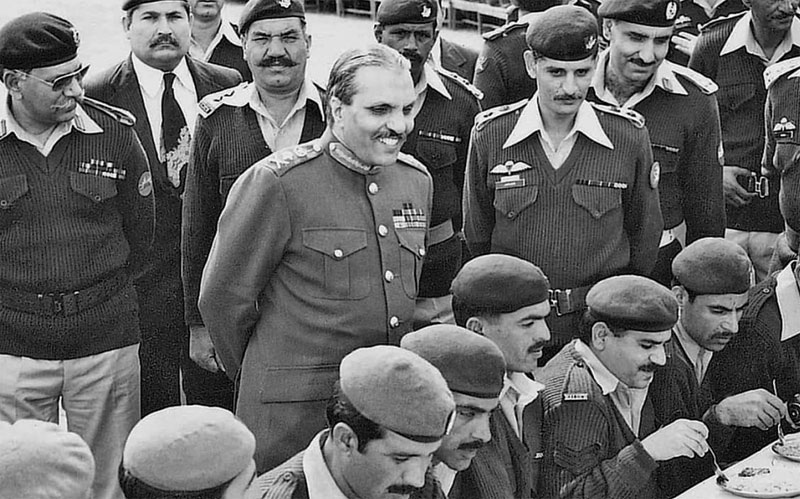
Pakistan Army Chief Gen. Zia ul Haq was deep selected by Prime Minister Z.A. Bhutto. However, Gen. Haq toppled his government in a coup and sentenced him to death by hanging
Pakistan has experienced several military coups since its independence in 1947. These interventions have been justified by claiming the need to restore order and stability. Prolonged military rule has weakened democratic institutions. Political parties have been marginalised, and civilian authorities were undermined. The military’s influence over the judiciary and media has curtailed democratic freedoms. There have been feeble attempts at restoration of democracy and although elections have occurred, they are often marred by allegations of manipulation and coercion. The military’s dominant role has created a culture where civilian governments have remained weak and ineffective.
Bangladesh had been more stable, until recently. In the past it had experienced military coups and interventions since its independence in 1971. The military often stepped in during periods of political instability. Military involvement has led to the erosion of political norms and democratic practices. The dominance of the military in political and economic spheres has sidelined civilian leadership. In recent anti-Hasina protests in Bangladesh, the Bangladesh Army played a controversial role. The army had been deployed in various capacities, including maintaining public order and assisting the police in managing demonstrations. There have been reports of heavy-handed response and clashes between protesters and security forces which resulted in violence and casualties. The role of the army in these protests is controversial. The military, initially, in conjunction with the police and Awami League storm troopers was involved in attempting to curb the movement. Later the military saw the writing on the wall and informed the Prime Minister that they would no longer act against their own citizens. This compelled her to resign and flee the country.








 VIDEO
VIDEO