

Not Just the Licence
India needs the ownership of its design to successfully make its defence architecture
Junaid Suhais
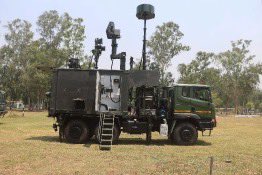
On the night of 8 May 2025, more than 500 Pakistani drones and missiles came into India across 15 military and civilian sites. What stopped them was not one system but a layered, mostly Indian-built shield: Defence Research and Development Organisation’s (DRDO’s) Akash intercepting swarming drones, Bharat Electronics Limited (BEL)-built Akashteer command network fusing sensor tracks in real time, the Indo-Israeli Medium Range Surface to Air Missile (MRSAM) holding the mid-range layer, and BrahMos, at roughly 70 percent Indian content, striking targets 314 kilometres inside Pakistani territory. Operation Sindoor did in four days what three decades of policy documents had not.
It answered, under fire, the question every Indian defence planner has asked since 1999 Kargil conflict: Does Aatmanirbhar Bharat actually work?
The uncomfortable part of that answer is where it stops. In the same week Akashteer was proving itself over Punjab and Rajasthan, the engine India has wanted since the Kaveri programme began in 1989 was still sitting in a boardroom contest between two European manufacturers, a contest that would run another full year without a decision. The missiles flew. The engine didn’t. That gap, between what India has learnt to build outright and what it has only learnt to license, assemble, or co-produce under someone else’s design authority, is the real story of India’s defence technology transfer programme since June 2024, told across three tracks moving at three very different speeds.
Three Tiers, Not One Ladder
The government’s own language treats transfer of technology (ToT) as a single, ascending staircase: licence, then joint development, then full indigenisation. The record since June 2024 tells a different story. It shows three tiers operating simultaneously, in different domains, at different speeds, and India’s position on each has almost nothing to do with how long the programme has run. Because BrahMos began as genuine joint intellectual property in 1998, India inherited both the production line and the right to redesign it. Because the C-295 began as licensed assembly in 2021, India inherited the line but not the pen. Two decades of patience have not closed that gap on their own. What closes it is the structure of the original deal.
Missiles have moved furthest. Submarines and manned aircraft remain closest to where they started. And fighter engines, the most jealously guarded technology in the business, are the live test of whether ‘full transfer of technology’ announced at a podium survives contact with a signed contract.
What made Sindoor’s layered shield function as a single system, rather than four separate weapons firing in the same general direction, was the Integrated Air Command and Control System (IACCS) fusing tracks from Akashteer, Akash and MRSAM into one real-time air picture. Kill-chain decisions, detect, identify, allocate the nearest interceptor, engage, ran through IACCS automatically rather than through a human relay between radar operators and gun crews. That net-centric backbone is itself a domestically built system, and its performance under a genuine multi-directional saturation attack is arguably the single clearest proof that India’s indigenisation programme has produced something more than a collection of platforms. It has produced an architecture.
The distinction that matters is not licence versus ownership in the abstract. It is know-how versus know-why. Know-how is the ability to manufacture, assemble and maintain a system to specification. Know-why is the understanding of the underlying design logic well enough to redesign it, adapt it, or replace a failed subsystem with something better. India has now accumulated enormous know-how across nearly every platform in its inventory. What the past two years have clarified is exactly where know-why stops, and it stops in a different place for every programme, depending on how the original agreement was structured rather than on how many years India has spent building under it.
Licensed to Assemble
The Tata-Airbus C-295 programme is the clean case of the first tier. The Vadodara final assembly line, inaugurated by Prime Minister Narendra Modi and Spanish Prime Minister Pedro Sanchez in October 2024, is producing more than 85 percent of the structural and final assembly of the 40 aircraft built on Indian soil, with 13,000 detail parts manufactured domestically and 37 India-based suppliers onboarded.
The first Made-in-India C-295 rolled out in May 2026, months ahead of the original September 2026 target, with indigenous content projected to climb from 48 percent on the earliest airframes to nearly 75 percent by the final batch. BEL and Bharat Dynamics Limited (BDL) are supplying the indigenous electronic warfare suite. What Tata Advanced Systems Limited (TASL) is acquiring, in the words of one industry account of the rollout, is critical know-how in aircraft assembly, systems integration and quality assurance, precisely the foundation TASL will need for India’s next transport and combat aircraft programmes.
Airbus, not TASL, still owns the airframe’s configuration, and Airbus has said as much in its own language: India is being positioned as a strategic resource hub for aircraft assembly, component manufacturing, engineering design and MRO support, not as a design centre in its own right. That distinction is precisely why TASL, alone among the three private consortia later shortlisted for the AMCA’s core airframe development, is the only bidder with an existing final assembly line to its name. Licensed assembly on one programme became the qualifying credential for a bigger one. It did not, on its own, produce the authority to design either.
Project-75I’s foreign original equipment manufacturer (OEM) shortlist tells the same story from a different angle. When the Request for Proposal (RFP) was issued in July 2021, five manufacturers were in contention: France’s Naval Group, Germany’s TKMS, Russia’s Rubin Design Bureau, South Korea’s Daewoo Shipbuilding, and Spain’s Navantia. Four years and one disqualification later, the field narrowed to a single compliant bidder, and the terms India secured, full construction inside Mazagon Dock Limited (MDL), AIP integration, combat-system localisation, are still terms for building someone else’s design under licence, not terms for owning the next one.
Project-75I tells the same story in steel instead of aluminium. Germany’s ThyssenKrupp Marine Systems, partnered with state-run MDL, was confirmed as the sole compliant bidder after the rival Larsen & Toubro (L&T)-Navantia offer was disqualified in January 2025 over an unproven air-independent propulsion (AIP) system. MDL and TKMS completed their Concept Design Agreement by 31 August 2025, cost negotiations closed in February 2026 at a valuation between Rs 66,000 and Rs 70,000 crore, and the finance ministry granted its approval on 29 May 2026, leaving only Cabinet Committee on Security (CCS) clearance outstanding. The six boats will be built on a next-generation variant of the German Type 214 design. Two decades after Project-75I was first conceived, construction under a foreign design authority remains the model. This is not a verdict on Indian shipbuilding capacity; it is a description of what the Strategic Partnership Model was actually built to transfer, and it is why India’s next conventional submarine, whenever it arrives, will still carry a European hull form.
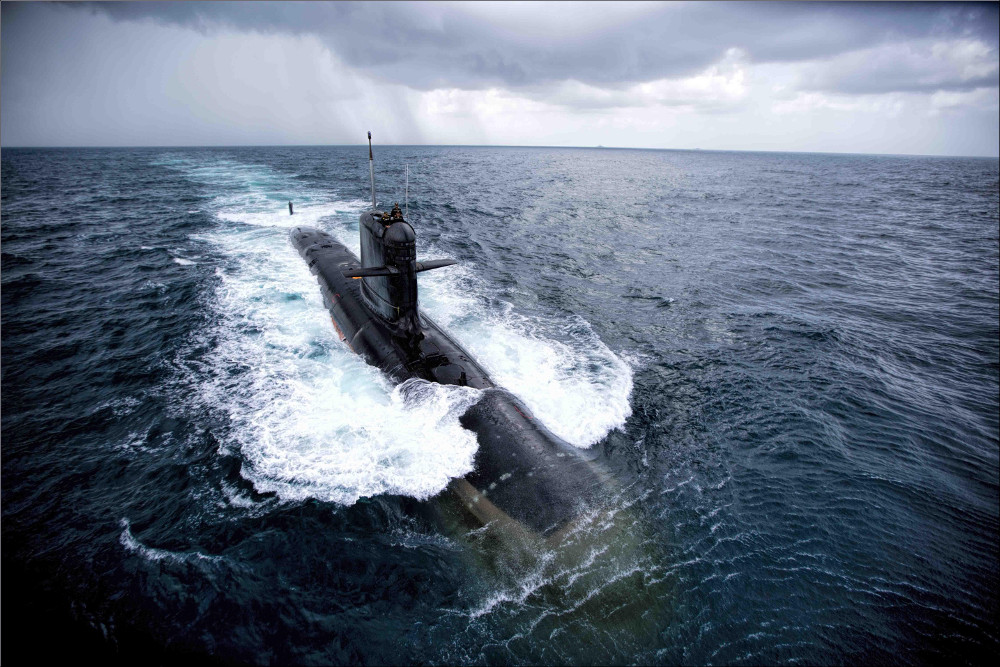
Set that against the undersea programme India runs entirely on its own design authority. INS Arighat, the second indigenous nuclear ballistic missile submarine, was commissioned in August 2024. INS Aridhaman, the third, was commissioned on 3 April 2026, giving India three operational SSBNs and, for the first time, a continuous at-sea deterrent. No foreign OEM holds design authority over the Arihant class. India’s indigenous attack submarine effort, Project-77, was approved in October 2024, but the first boat is not expected before 2036-37. As defence commentator Rahul Bedi wrote in The Wire, India builds nuclear-powered submarines with relative ease while stalling on the far less complex conventional diesel-electric fleet it has never built without foreign collaboration. The lesson is not that India cannot build submarines. It is that the programme India owns outright moves faster than the one it has spent 30 years trying to license.
Licensed assembly transfers hands, not the pen. That is not a flaw in the model. It is the model, and it is precisely why the next tier exists.
Partnership Without the Pen
The MRSAM occupies the middle tier cleanly. DRDO and Israel Aerospace Industries (IAI) have co-developed the system since the mid-2000s. It has been operational since February 2023 in sensitive sectors including the Sikkim frontier, and India signed a further USD 340 million contract in January 2025 for more than 70 additional systems, to be built domestically by BDL. During Operation Sindoor, MRSAM’s active radar-homing interceptors and phased-array radar formed part of the mid-range shell that, alongside Akash and the Russian S-400, neutralised the May 2025 drone and missile barrage. Production happens in India. The seeker architecture and core radar design remain joint Indo-Israeli intellectual property, not something New Delhi can redesign without Tel Aviv. The ministry of defence (MoD) has been explicit about wanting to close that gap over time. The second MRSAM India Eco-System Summit, convened in May 2025 with DRDO, BEL, BDL and IAI at the table, was explicitly framed around deepening indigenisation within a partnership neither side intends to unwind. That is the honest description of a Tier Two programme in good health: not a relationship India has outgrown, but one it is still actively investing in.
The GE F414 arrangement with Hindustan Aeronautics Limited (HAL) carries a longer and more instructive history. The groundwork runs back to an Industrial Security Agreement in 2019 and a 2021 protocol for exchanging classified defence-industrial information, followed by the formal government-to-government commitment made during Prime Minister Modi’s 2023 state visit to Washington. Three years of technical negotiation produced the April 2026 announcement, and the package HAL secured is, by GE’s own account, the most generous F414 transfer it has ever offered a foreign customer.
The GE F414 arrangement with HAL is the sharpest illustration this tier has produced, and it deserves more scrutiny than it has received. HAL secured what GE Aerospace calls the most generous F414 package it has offered any customer, roughly 80 percent technology transfer, ahead of the 59 percent South Korea received for its KF-21 programme. But the Full Authority Digital Engine Control system, the software that governs how the engine actually behaves under thrust, temperature and airflow variation, stays with GE. Independent reporting has been blunt about what this means in practice: the arrangement is best understood as a calibrated industrial arrangement in which technology diffusion is permitted, but overall technological control remains with GE. HAL will manufacture the hot-end components, the afterburner and final assembly, leaning on experience built producing the AL-31FP for the Su-30MKI. It will not own the logic that tells the engine how to fly.
Even that 80 percent package has since run into commercial turbulence. Reporting from June 2026 puts the per-engine cost at roughly three times the original estimate, rising from around Rs 70-80 crore to over Rs 200 crore, with the April 2026 HAL-GE announcement described by independent reporting as a technical agreement rather than a signed contract, leaving the extent of HAL’s design autonomy over the powerplant’s lifecycle still unresolved. As one senior defence correspondent has put it, the arrangement is likely to be more of licence production than actual developmental capability. Joint development, even at 80 percent, still means someone else keeps the crown jewel, and in this case, the price of even that has moved since the ink dried.
The Missiles That Stopped Needing Permission
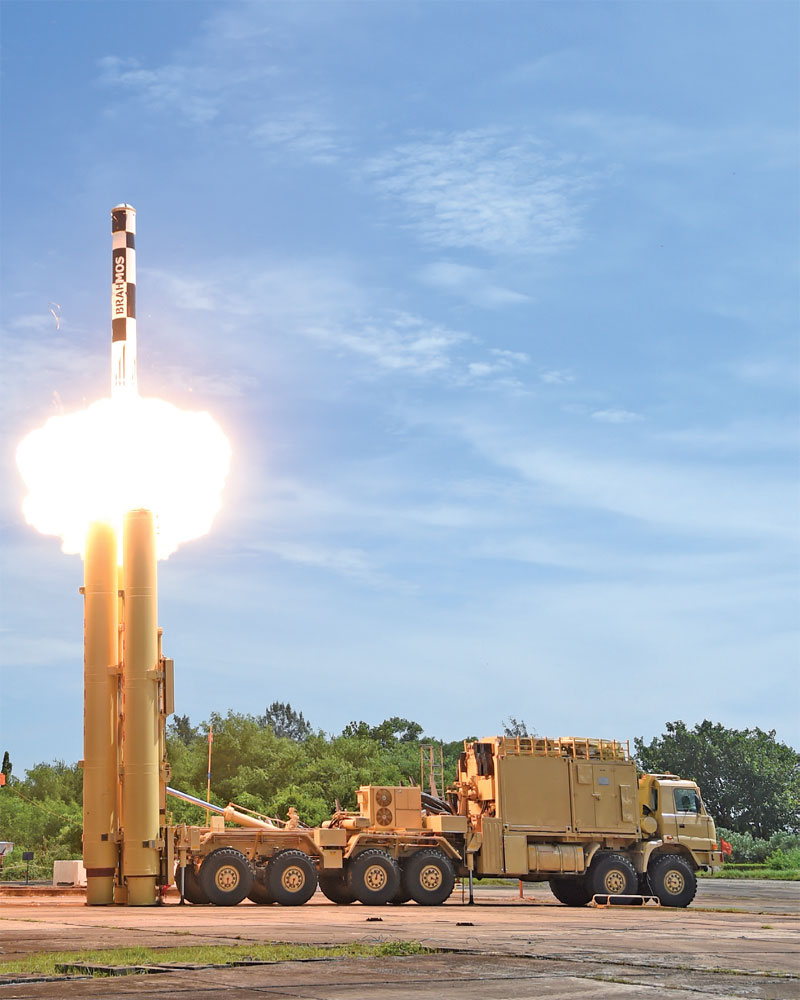
BrahMos is what the second tier looks like after it has had two decades to mature. The joint venture, DRDO holding 50.5 percent and Russia’s NPO Mashinostroyeniya 49.5 percent, has taken India from 15 percent domestic content in 2015 to 70 percent in 2024. The Lucknow integration facility, inaugurated in May 2025, dispatched its first consignment that October, and on 28 November 2025, DRDO flight-tested a fully indigenous solid rocket booster matching the performance of the original Russian motor. That is not manufacturing know-how. That is design authority over propulsion, the layer of the missile India was never handed and had to earn.
Operation Sindoor was the combat proof: BrahMos, at 70 percent Indian content, struck targets 314 kilometres inside Pakistani territory. The one residual constraint is structural rather than technical. Because the missile remains a formal joint venture, Russian consent is still required for export of jointly developed technology, which is why export negotiations with Vietnam, Indonesia and the UAE move only as fast as Moscow allows, even after the Philippines contract, worth USD 374.96 million and signed in January 2022, proved the model works commercially as well as technically. BrahMos Aerospace is now developing BrahMos-NG, a lighter airborne variant intended for integration with the Tejas, at a dedicated new facility, evidence that the joint venture is still generating fresh design work rather than simply servicing a finished product.
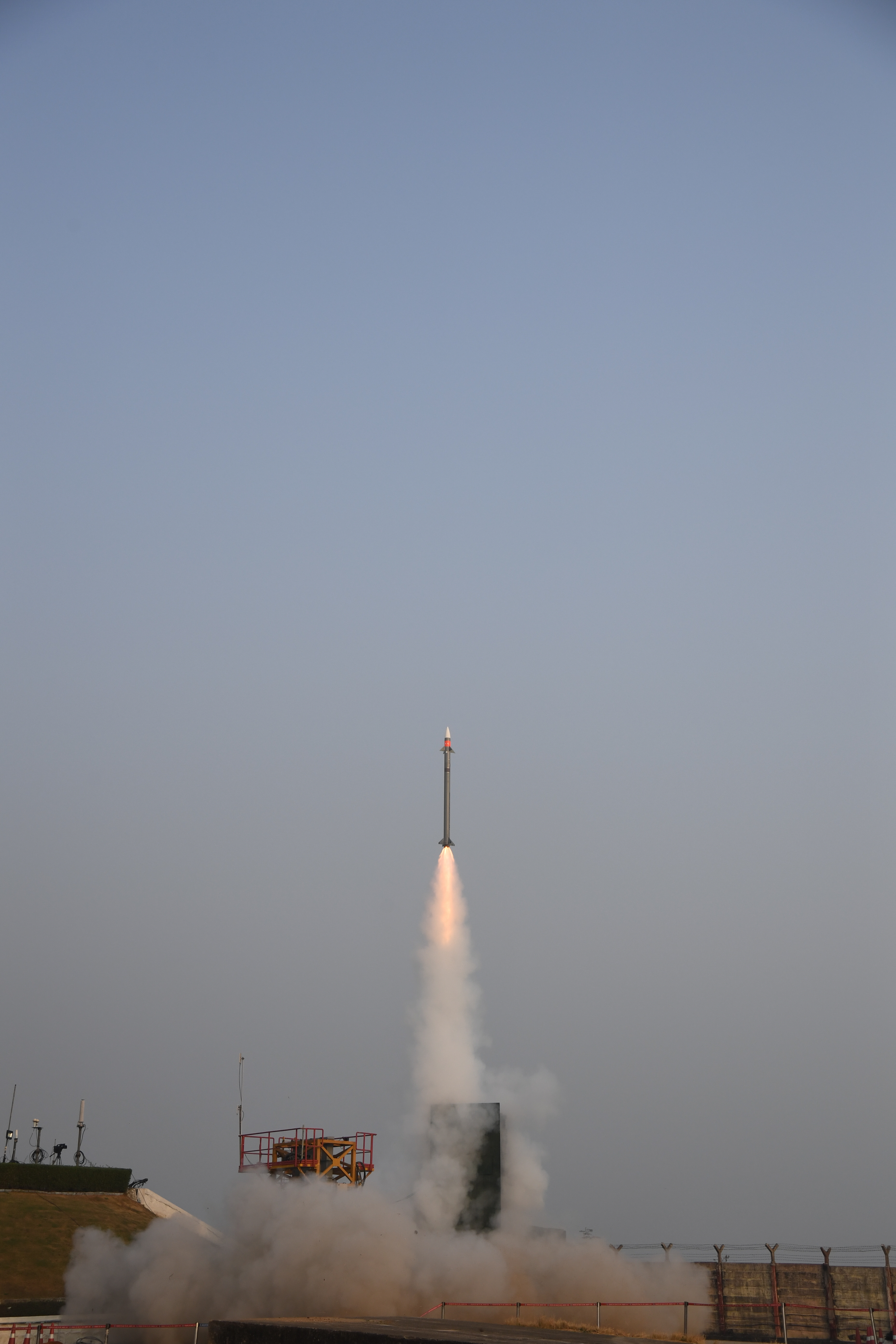
The Vertical Launch Short Range Surface to Air Missile (VL-SRSAM) is not a technology transfer story at all, and that is precisely what makes it the clearest marker of the far end of the gradient. It is a naval derivative of Astra, India’s own beyond-visual-range air-to-air missile (BVRAAM), running above 80 percent indigenous content and built explicitly to replace the Israeli-origin Barak-1. A 26 March 2025 flight test at the Integrated Test Range in Chandipur validated its near-boundary, low-altitude interception envelope against sea-skimming threats, and the system is now approaching induction aboard the navy’s newest destroyers. There was no foreign partner to negotiate with over VL-SRSAM’s control software or hot-section metallurgy, because there was no foreign partner in the design chain to begin with.
That is the real distinction the ToT gradient reveals once BrahMos and VL-SRSAM are placed side by side. One shows what mature joint development eventually produces if the partnership holds long enough. The other shows that the fastest way to full design authority has always been to never share it in the first place.
The Deal That Doesn’t Close
This brings us back to the engine we talked about at the beginning. At the Economic Times World Leaders Forum on 22 August 2025, defence minister Rajnath Singh announced, that France’s Safran would co-develop the indigenous 120-140 kN engine for the AMCA Mk2, the successor to the aircraft whose Rs 15,000 crore design and prototype phase the CCS had already cleared in 2024.
Safran’s chief executive described the offer as a complete ToT, including the hot section, the turbine architecture and single-crystal blade metallurgy that has kept fighter-engine design confined to a handful of states since the Kaveri programme first tried and failed to crack it in the Nineties. DRDO would hold the intellectual property. It sounded, on the day it was announced, like the top of the gradient.
The deal has not closed. In a 23 June 2026 interview to The Print, executive vice president (transformation) at Rolls-Royce India, Sashi Mukundan said that Rolls-Royce had submitted its final offer for the same contract, promising an engine core test by 2030, first flight by 2034 and production by 2036 if the contract is signed by the end of 2026. Mukundan also said that there are only three genuine aero-engine manufacturers in the world, and his company is one of them. Both bidders are now offering the same headline terms: full technology transfer, Indian ownership of the resulting intellectual property, a dedicated Indian propulsion hub. Neither has a signed contract. The CCS has not cleared either proposal.
It is worth being precise about what has and has not actually happened, because the two get conflated in coverage of the programme. A National Aero Engine Mission, launched in February 2026, is coordinating Indian industry, academia and government laboratories toward long-term propulsion self-reliance, and GTRE has continued parallel work on a Kaveri Derivative Engine, a dry variant without an afterburner intended for unmanned platforms like the Ghatak combat drone rather than for a manned fighter. That indigenous effort is real, ongoing and entirely separate from the Safran-versus-Rolls-Royce competition for the AMCA Mk2 itself, which remains an open contract, not a done deal wearing a new institutional name.
The stakes rose in June 2026 for an unrelated reason. HAL was excluded entirely from the AMCA’s core prototype development. The tender went to three private-sector consortia, TASL as a solo bidder, a Bharat Forge-BEML-Data Patterns group, and an L&T-BEL-Dynamatic Technologies combine, with the Aeronautical Development Agency (ADA) retaining design authority over the aircraft’s configuration throughout. That same month, the interim GE F414 arrangement covering the AMCA’s first prototypes hit its own cost dispute, the one described above, which independent reporting suggests is part of why both European bidders sense an opening. The engine that will define whether AMCA Mk2 achieves genuine propulsion sovereignty, rather than merely a more generous licence, is the one still being negotiated in a boardroom, more than a year after the podium announcement that made it sound settled.
The strategic clock is not standing still while the engine question runs. The MoD confirmed to Parliament’s Standing Committee on Defence in March 2026 that the Indian Air Force (IAF) is actively examining membership of one of the two Western sixth-generation fighter consortia, Britain, Italy and Japan’s Global Combat Air Programme or France and Germany’s Future Combat Air System. It is also separately preparing a government-to-government case for up to 114 additional Rafale fighters. Every one of those conversations assumes India has, or will shortly have, a credible indigenous propulsion track record to bring to the table. The AMCA engine has become the credential India needs before anyone lets it sit at the sixth-generation table as a design partner rather than a customer.
The Machine Behind the Platforms
None of this happens in a vacuum. The MoD notified its fifth Positive Indigenisation List in July 2024, covering 346 items that Defence Public Sector Undertakings (DPSUs) are now barred from importing past set deadlines, a binding procurement condition rather than a policy aspiration. Defence production reached a record Rs 1.54 lakh crore in 2024-25, and the defence budget rose from Rs 2.53 lakh crore in 2013-14 to Rs 6.81 lakh crore in 2025-26. Exports climbed from Rs 23,622 crore in FY2024-25 to a record Rs 38,424 crore in FY2025-26, a 62.66 per cent jump, with DPSUs contributing 54.84 percent of that figure. This is the demand-side pressure that keeps every tier of the gradient moving at once, licensed assembly, joint development, and the pursuit of indigenous origination, rather than allowing any one of them to stall while the others advance.
The supporting institutions have matured alongside the platforms. The SRIJAN portal, the government’s clearing house for import substitution, now lists more than 38,000 items with over 14,000 already indigenised as of early 2025. The iDEX innovation programme has run four Defence India Start-Up Challenges, drawing in more than a thousand start-ups. And in January 2026, India and the European Union signed a Security and Defence Partnership covering maritime security and counter-terrorism cooperation, widening the circle of partners India can draw technology from beyond the traditional France-Russia-Israel-United States axis that has defined every programme discussed above.
The Boardroom, One Year Later
Return to that boardroom one more time. The systems that stopped five hundred drones and missiles on the night of 8 May 2025, were, almost without exception, the ones India had already stopped asking anyone’s permission to build, upgrade or redesign: Akash, Akashteer, a BrahMos with an indigenous booster, a VL-SRSAM with an indigenous missile lineage stretching back to Astra. The engine that a defence minister announced with full confidence three months later is still, as of this writing, an unsigned contract contested by two foreign manufacturers, sitting exactly where full ToT meets the hardest test anyone can apply to it: does the intellectual property actually change hands, or does the licence?
Aatmanirbhar Bharat has not failed at propulsion. It has simply reached, later than everywhere else, the one domain where the world’s remaining engine-makers have the least reason to let it succeed on India’s terms. The missiles prove the model works when India owns the design from the start. The engine proves what it costs to buy that ownership from someone who would rather sell you the licence instead.






 VIDEO
VIDEO