Why this book and at this time?
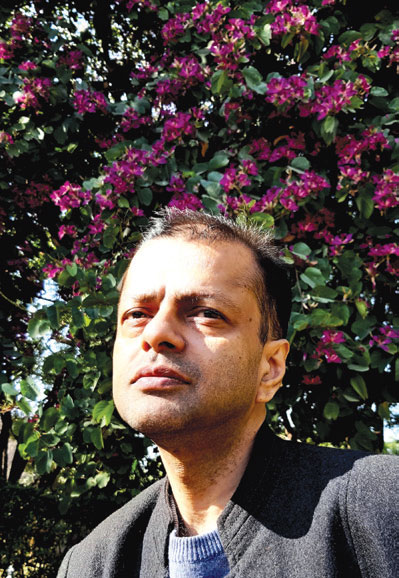
Nehru has been on my mind since 2014. One of India’s foremost political thinkers and leaders, Nehru faced a barrage of (mostly) narrowly motivated criticisms, and worse, crass insinuations by an active Hindu right-wing troll-army in the last few years on social media. As a political science student in JNU, I wrote my MPhil dissertation on Nehru and nationalism, and in my PhD thesis, I contrasted Nehru to Gandhi. But he was not in fashion in those days (late 1990s and early 2000s), or even later. The Congress had finished Nehru (since 1984).
Just when Nehru had been reduced to a trace in India’s political history, he suddenly occupied centre stage in 2014. It appeared that the new regime was still grappling with Nehru’s spectre and wanted to demolish it alongside establishing their new version of nationalism and India. The problem is, once you erect, or invent, a spectre, you can’t control its image, or fate, according to your fancy. The spectre takes on a life of its own. No demolition squad can erase a spectre. Nehru was bound to go out of hand. And contrary to the intentions of Nehru’s critics and detractors, he was back in the public imagination. I wanted to contribute my scholarly reflections on Nehru and found this the best time for it.
Do Nehru and his complex, self-reflective ideas have any space in today’s Indian society which has progressively been dumbed down to the extent that social media is the source of both information and knowledge?
The thick smog called social media has enveloped urban minds that have no time or inclination to read. The propaganda machinery circulates information and knowledge on social media like pamphlets of old. This is a kind of social engineering through pamphleteering. It does attract a sizable (particular urban) crowd that feeds on technology. This smog can’t be sustained for long, though it can do long-term damage. Complex, self-reflective ideas have always thrived within a far-flung minority.
In today’s anti-intellectual times, that minority faces a serious challenge. We have had a thoughtful education curriculum (but with notable limitations, with the caste problem and regional histories being under-represented). The current atmosphere of crude propaganda seeks to destroy the possibilities of that curriculum. In Nehru’s time, we had a slew of intellectually vibrant political leaders in the world: Sukarno, Nasser, Tito, Nkrumah, Lenin, Castro, among others. We saw such leaders even as late as Vaclav Havel. We also had authoritarian demagogues like Hitler, Stalin and Mao. Populist demagoguery is back with a vengeance. Spaces that foster critical self-reflection have shrunk. But people are resisting, and writing. Spaces lost always need to be regained.








 VIDEO
VIDEO