

Interview | L. ADANI MAO
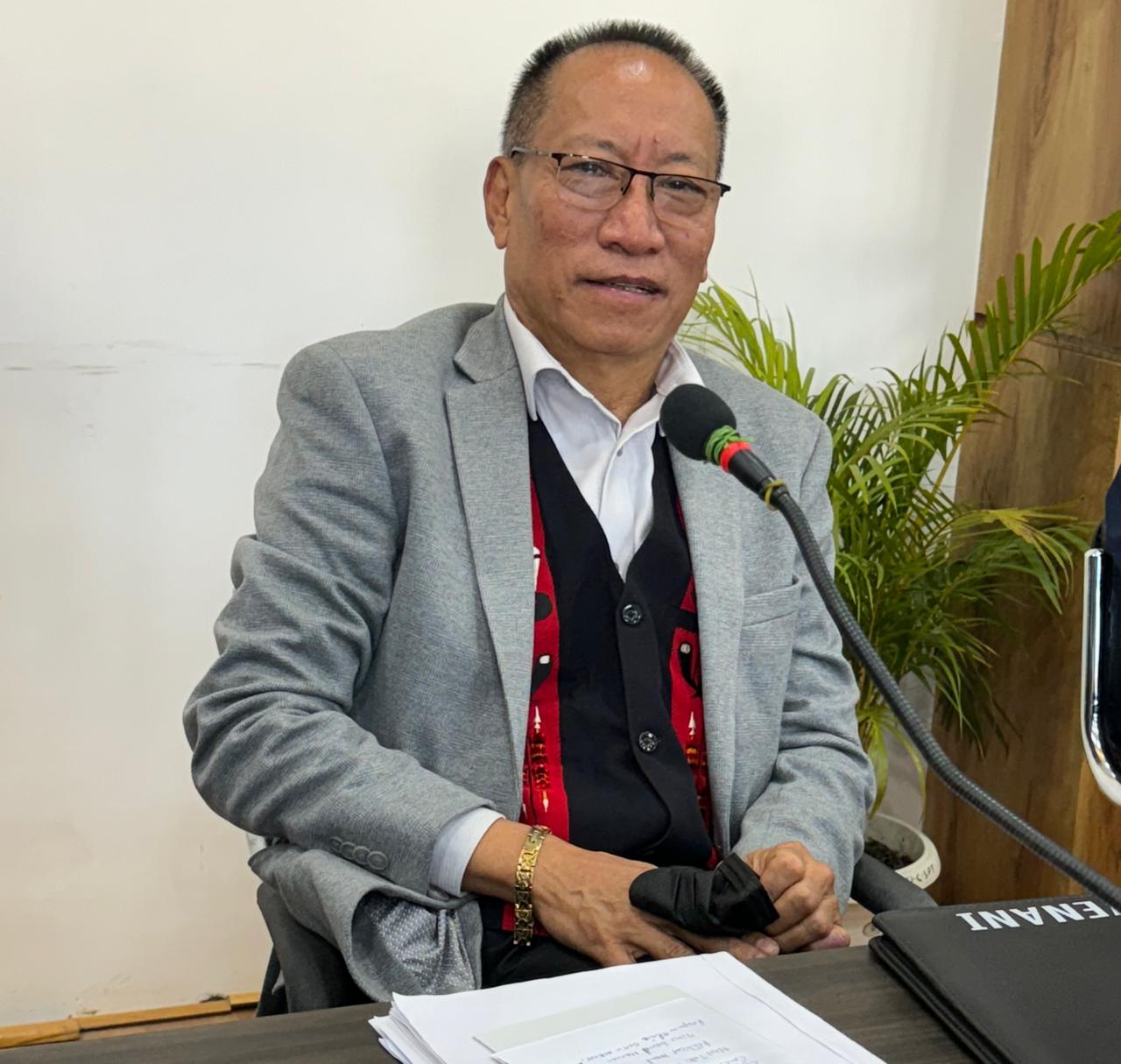
L. ADANI MAO is a senior Naga civil society leader from Manipur, based in Dimapur. He has been involved in Naga politics in Manipur since his student days when he worked in the All Naga Students Association of Manipur (ANSAM) during 1984-86 and also with the human rights movement. He belongs to Memei Naga (Mao) Naga tribe, concentrated in Senapati district on the Nagaland-Manipur border.
L. Adani joined the National Bank for Agriculture and Rural Development (NABARD) and was based in Guwahati from 1989-2008. He left his permanent job to dedicate his life to finding a political solution to the complex Indo-Naga conflict.
In 2011, he was elected as president of the United Naga Council (UNC), the apex body of the Nagas living in Manipur. He served his tenure from 2011 to 2014. During his tenure as president, he was involved in the Indo-Naga peace process, especially in tripartite talks between UNC, Union home ministry and Manipur state government.
L. Adani was appointed to the 51-member committee established by the central government to help establish peace and security in the state.
Known for his quiet diplomacy and mature understanding of the complexity of the political situation, L. Adani has been engaged in the recent hostage crisis which began on the 13 May 2026. He was in Delhi recently, accompanying the UNC team to discuss the situation in Manipur. He did not speak directly on the hostage crisis but his interview by Nandita Haksar covers several issues which have arisen in the course of the violence in Manipur.
Adani, thank you very much for taking time off for this interview because I know it is a difficult and stressful time. The Nagas group of more than 30 tribes have come together and have been fighting for the integration of Naga-inhabited areas under one administration. Among all the ethnic groups and tribes living in the Northeast, the Nagas were the first to raise the banner of revolt against the Indian State on 14 August 1947.
Over time several pan-Naga organisations have sprung up including the Naga Student Federation, the Naga Hoho and the UNC in Manipur which represented the Nagas. And they have worked together with common tribal platforms. Since around 2020s, Nagas have started describing themselves as ‘indigenous’ or ‘native’. I am referring to organisations such as Federation of Haomee and Native People’s Committee. This raises a very difficult question of whether citizenship should be based on ‘indigeneity’. This demand has repercussions beyond Manipur. How will you distinguish between an outsider and an indigenous person in the context of Manipur? Can people, who are not indigenous, then be denied citizenship?
Much before India became an independent nation, that is prior to 15 August 1947, the first settlers or indigenous communities were already living in the land for centuries which now covers the state of Manipur. I agree that citizenship does not and cannot be based purely on indigeneity. Any person can become a citizen if prescribed norms are fulfilled and the reasons for application of citizenship are in order.
In the context of Manipur, the influx of illegal immigrants particularly from across the Indo-Myanmar border bypassing the due process for being granted citizenship after India’s independence, and in increasing numbers over the years has overwhelmed those communities living there for centuries. Issues of land ownership, cultural practices, demographic changes upsetting balance of power and opportunities, and inter-community relations have come into play.
This feeling, as well as fears, is real and is being lived out in the state in the last four decades or so. The Nagas in general do not shift their villages, and they have lived settled lives in their own ancestral domains since centuries. The Meiteis in the valley also have a similar concept of ancestral domain. When this age-old practice is aggressively intruded upon, naturally there will be reactions in the form of fear, distrust and exclusiveness. Taking these sensitivities and background into consideration, one should be able to distinguish outsiders from indigenous persons in the context of Manipur.
How do you define the role of the UNC? How have problems been tackled during your time as president of the UNC?
The UNC is the apex body representing all the Naga tribes in Manipur. It is not an NGO nor is it like any other social organisation. But it is a distinctive model based on the tribal traditional system and practice of representation in Naga society.
Subscribe To Force
Fuel Fearless Journalism with Your Yearly Subscription
SUBSCRIBE NOW
We don’t tell you how to do your job…
But we put the environment in which you do your job in perspective, so that when you step out you do so with the complete picture.





 VIDEO
VIDEO