

Baptism by Fire
Theatre Commands structure needs reshaping not rejection
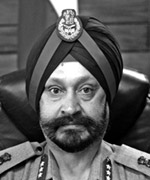 Lt Gen. HJS Sachdev (retd)
The concept of theatre commands represents one of the most consequential structural reforms under consideration in India’s higher defence organisation. As modern warfare becomes increasingly multi-domain, time-compressed, and technology-intensive, the traditional service-centric command architecture is being reassessed worldwide. Integrated theatre commands bring land, air, maritime, cyber, and space capabilities under a unified commander.
However, the creation of theatre commands is not merely an organisational exercise. It carries profound implications for operational doctrine, force structuring, logistics, inter-service relationships, and resource allocation. Models adopted by major powers such as the United States and China, while instructive, are shaped by their own geopolitical ambitions, geographic scale, and economic capacity. India’s strategic circumstances demand a solution rooted in indigenous realities rather than imported templates. Consequently, in this article, I examine the rationale underpinning such commands in India and critically evaluate existing proposals in the backdrop of India’s unique strategic environment.
The Evolution
Conceptual Recognition: The first conceptual impetus can be traced to the Kargil Review Committee (KRC), 1999-2000, constituted in the aftermath of the Kargil conflict. While the KRC did not explicitly recommend the creation of theatre commands, it unequivocally highlighted serious deficiencies in joint planning, intelligence coordination, and command integration among the Services and laid down the intellectual foundation for integrated command structures by underscoring the need for jointness at the operational level.
Institutional Foundations: Building on the KRC’s findings, the Group of Ministers (GoM) on National Security Reform (2001) sought to translate conceptual recommendations into institutional reforms. The GoM recommended the establishment of the Integrated Defence Staff (IDS) and the appointment of a Chief of Defence Staff (CDS). Although theatre commands were not explicitly mandated, the GoM report recognised that integrated operational planning was indispensable for future conflicts.
A more direct articulation of theatre-level integration appeared in the Naresh Chandra Task Force Report (2012). The report acknowledged that India would eventually need integrated theatre commands to prosecute modern wars effectively. The Task Force treated theatre commands as a logical end state, contingent upon the evolution of joint doctrine, trust, and institutional maturity. The Shekatkar Committee (2016) added resource-optimisation and efficiency rationale. Its recommendations emphasised reducing duplication, improving combat effectiveness, and reallocating manpower and finances toward operational capability. Although primarily focused on force optimisation, the committee implicitly supported theatre commands to achieve unity of effort and cost efficiency.
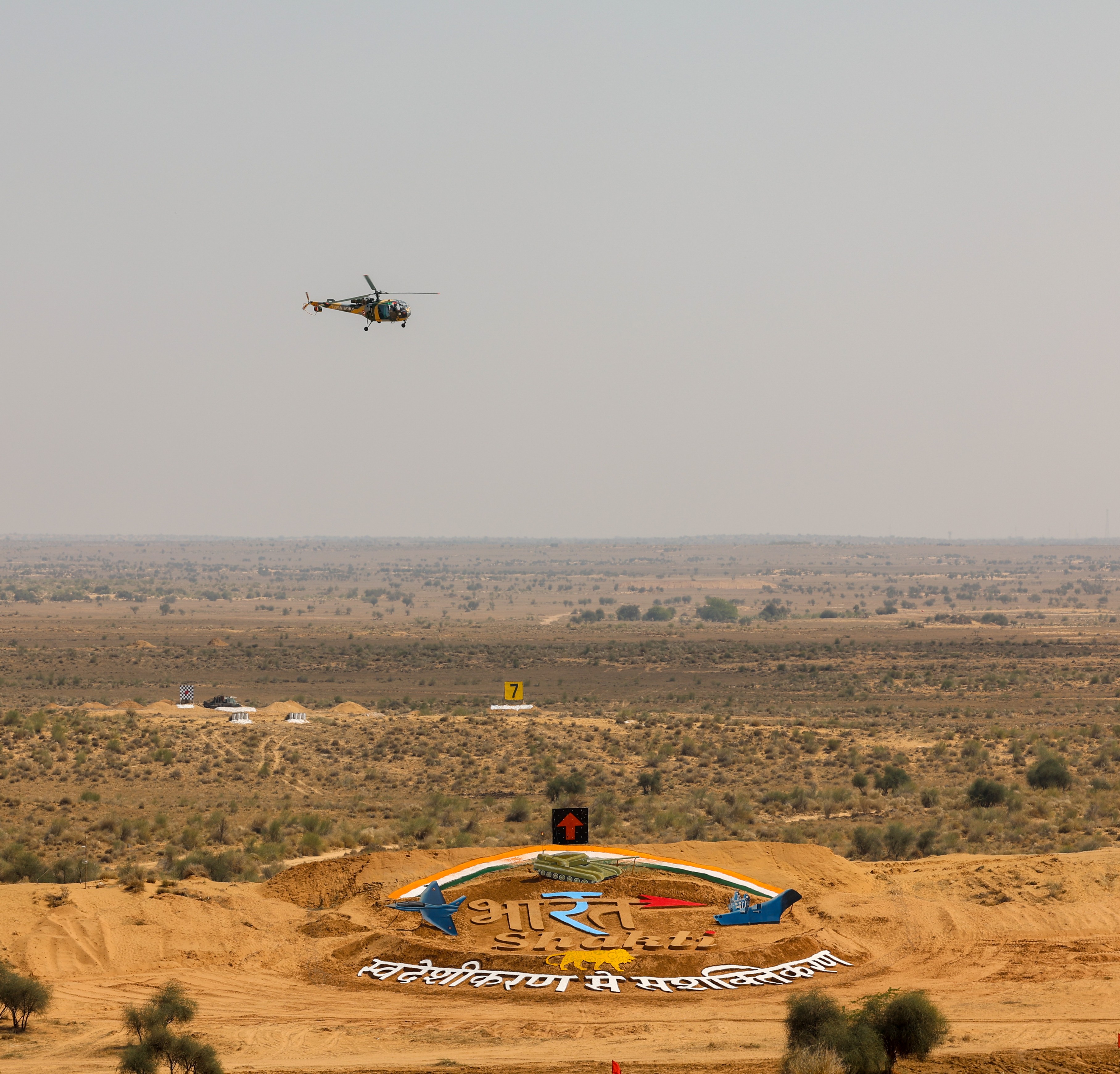
lEFT & ABOVE The air and land segment of tri-service exercise
Bharat Shakti was held in Pokharan in 2024;
Prime Minister Narendra
Modi with defence minister Rajnath Singh at the exercise
Operational Advocacy and Policy Intent: For the first time, Integrated Theatre Commands were openly articulated as a reform objective rather than an academic construct, by the CDS in December 2019, General Bipin Rawat. He consistently argued that future conflicts would be multi-domain, time-compressed, and contested across multiple fronts, requiring unity of command and integrated employment of land, air, maritime, cyber, and space capabilities. Under his stewardship, theatre commands became central to India’s defence reform discourse.
The Rationale
Higher Defence Organisation: Theatre Commands bring in a clear separation of responsibility between force generation and force employment, with the present service HQs focused on the former and the Theatre Commands focused on the latter.
Subscribe To Force
Fuel Fearless Journalism with Your Yearly Subscription
SUBSCRIBE NOW
We don’t tell you how to do your job…
But we put the environment in which you do your job in perspective, so that when you step out you do so with the complete picture.





 VIDEO
VIDEO